
Fire at the doorstep: Time to shift from emergency response to governance
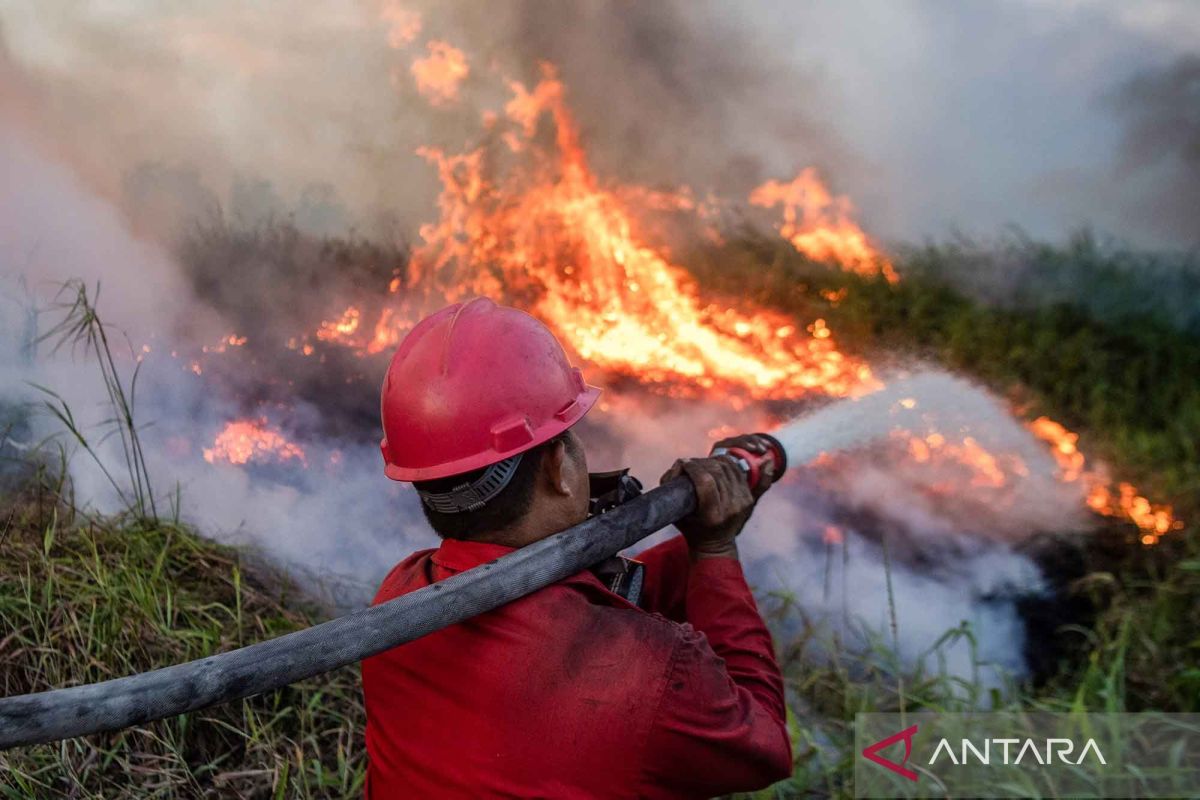
It is time for Indonesia to move beyond mere ‘emergency response’ towards a firm, transparent, and credible ‘governance response’.
The morning was still young when an ornamental plant seller began inspecting the rows of plants lined up in front of his stall. He examined each pot one by one. His hand touched the surface of the growing medium to check whether the soil still held enough water.
Plants that were starting to dry out were immediately watered. Dust-covered leaves were cleaned. Yellowing or damaged parts were pruned so they would not disturb the others. This work was done before the plants wilted.
There was nothing special about this task. For an ornamental plant seller, caring for plants is part of the daily routine. If the plants are healthy, remain fresh, and grow well, their selling price is maintained.
He did not wait for damage to occur before looking for a solution. The condition of the plants was checked first so that problems could be identified before they grew larger.
The simple way an ornamental plant seller cares for his merchandise can serve as a mirror for Indonesia in facing forest and land fires, which once again threaten biodiversity and the respiratory health of the community.
The essence of the problem is no longer about how quickly we extinguish the flames, but rather how we manage forests and land so they are not vulnerable to burning.
This threat is becoming increasingly real amid this year’s climate dynamics. The Meteorology, Climatology, and Geophysics Agency (BMKG) projects that the El Niño phenomenon will persist until the end of 2026, with its peak in August to September. The lengthening periods without rain in various regions further heighten the risk of drought and land and forest fires.
Amidst these threats, prevention is non-negotiable. Once land is scorched and parched, the energy and costs required for suppression will be far greater than the investment needed to maintain the area’s moisture from the start.
According to data from the Ministry of Forestry, the total area of national land and forest fires from January to August 2026 has reached 107,465.47 hectares, with 54 percent occurring in forest areas and 46 percent in other use areas.
The distribution also shows that land and forest fires are not confined to a single region. West Kalimantan recorded the largest area (38,680.47 hectares), followed by Riau (15,477.95 hectares), East Nusa Tenggara (10,538.30 hectares), Maluku (7,091.07 hectares), and South Papua (6,281.81 hectares).
The escalation of fires has become increasingly worrying since late July. In South Sumatra, 520 fire incidents were recorded, scorching 664.87 hectares of land across 12 districts. At the same time, Jambi recorded 213.05 hectares of land burned in nine districts and two cities.
In early August, the flames crept into conservation areas. In Bromo Tengger Semeru National Park, East Java, more than 800 hectares of beautiful landscape were reduced to soot in just 10 days.
Severe fires also struck the peatland ecosystem in South Sumatra, spanning six districts and cities. The most critical impacts hit Ogan Ilir, Palembang City, and Banyuasin—areas directly adjacent to residential zones, toll road infrastructure, fuel depots, and government centres.
Local residents are now forced to breathe amidst a shroud of haze, and school activities are threatened with suspension if rain does not fall within the next week.
This series of events shows that land and forest fires are not solely the result of dry weather. Land conditions, flammable vegetation, and human activities also determine how quickly a fire develops and spreads.