
Fire at Mount Rinjani Successfully Extinguished, Mitigation Efforts Continue
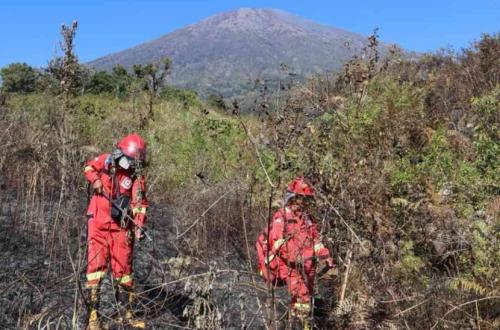
A forest and land fire (karhutla) that struck the Mount Rinjani National Park (TNGR) area in Lombok, West Nusa Tenggara (NTB), has been successfully extinguished. Although the main fire has been brought under control, teams on the ground are still conducting sweeps and monitoring to ensure there are no embers or fire sources that could reignite.
Forestry Minister Raja Juli Antoni said early detection and rapid response remain necessary to deal with the threat of forest and land fires. According to him, early warning systems, including hotspot monitoring, need to be utilised to prevent fires from spreading more widely.
“Do not wait for the fire to grow. Utilise our early warning system through Sipongi+ hotspot monitoring and other technologies, carry out early detection, and handle it as early as possible,” he said in a statement on Monday (10/8/2026).
The fire struck the TNGR area on Friday (7/8/2026). The fire was dominated by savanna cover and dry shrubs that are highly flammable during the dry season.
After receiving the report, a joint team immediately moved to handle the situation on the ground. At least 30 hectares of the TNGR area were affected by the fire.
The fire was brought under control on Saturday (8/8/2026). After the main fire was extinguished, the team continued sweeping to ensure there were no embers or fire sources that could potentially reignite.
Follow-up monitoring was carried out until all points were confirmed to be completely extinguished. This step is necessary because the burned area has savanna vegetation and shrubs that are highly flammable, especially during the dry season.
Head of the Forest Fire Control Centre for the Java, Bali, and Nusa Tenggara Region (Dalkarhut Jabalnusra) Bambang Setyo Antoko said the speed of response and cross-party collaboration were key in preventing the forest fire from spreading more widely.
According to Bambang, the speed of Manggala Agni together with area managers and all elements on the ground in carrying out suppression was key to early forest fire control.
“This collaboration must continue to be strengthened, because the success of fire control is a shared responsibility,” said Bambang.
Although the fire has been extinguished, Bambang assessed that fire handling does not stop after suppression. Monitoring and vigilance remain necessary, particularly in areas with savanna vegetation that is highly flammable during dry conditions.
Bambang explained that Mount Rinjani National Park is one of the important conservation areas in West Nusa Tenggara. The area has ecological functions in maintaining biodiversity, habitat for various flora and fauna, water systems, and ecosystem sustainability.
In addition, the Mount Rinjani National Park area has social and cultural value for surrounding communities and has been part of community life for generations. Therefore, conservation efforts for the area need to be carried out together, one of which is through forest fire prevention and control involving various parties.
Bambang emphasised that the success of fire control in Sembalun could not be separated from the synergy of various elements involved on the ground.
“The suppression operation in Sembalun demonstrated the importance of synergy between Manggala Agni, area managers, the TNI, Polri, MPA/MMP, the community, and other related elements. Working together on the ground allowed the fire to be quickly localised and extinguished before it spread more widely,” he said.
He also reminded all ranks and the public to increase vigilance against the potential for forest and land fires, especially during the dry season.
If they see smoke or signs of fire, the public is expected to report immediately to officers so that handling can be carried out as early as possible.