
Fire at Cikolotok Landfill in Purwakarta Still Uncontained, Arson by Scavengers Suspected
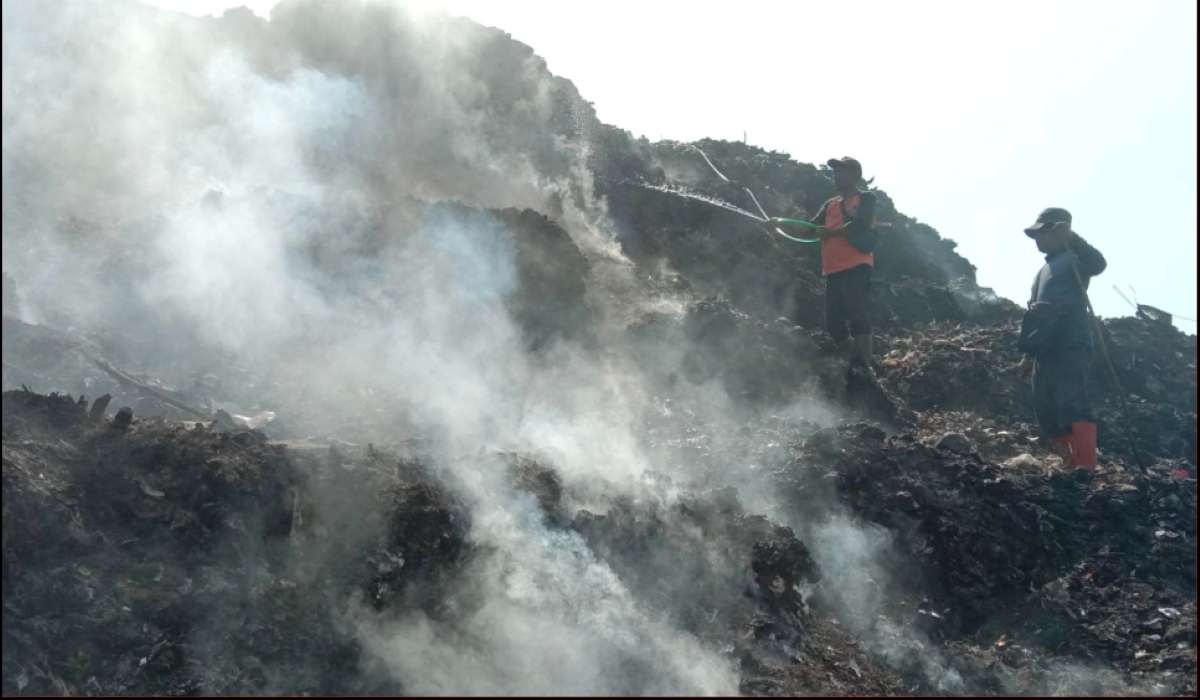
The fire at the Cikolotok Final Disposal Site (TPA) in Margasari Village, Pasawahan District, Purwakarta Regency, West Java, has not been fully extinguished as of Thursday (9/7/2026). Officers on the ground are still finding several hotspots and plumes of smoke in the waste disposal area.
The Purwakarta Regency Environmental Agency (DLH) and the Fire Department are continuing their efforts to extinguish the fire. Based on observations at the location, officers are spraying water onto the smoke points using hoses from water tank trucks that have been placed on standby.
Anggoro, Head of the Waste Division at the Purwakarta DLH, stated that while the situation is not as severe as the previous day, the extinguishing process is still hampered by natural factors. “We continue to try to extinguish the fire, although weather factors and strong gusts of wind greatly affect the process in the field,” Anggoro said on Thursday (9/7).
Regarding the cause of the fire, Anggoro revealed a suspicion of intentional action. Based on initial information, the fire originated from the burning of used goods by an individual in the area. “The cause of this fire involved an element of intent by a scavenger who burned a discarded mattress at the Cikolotok TPA,” he explained.
It is estimated that the fire has so far scorched an area of one hectare out of the total TPA Cikolotok area of nearly 10 hectares. Officers claim that the hotspots have been successfully localised so that they do not spread to a wider area.
The Purwakarta Regency Government has appealed to scavengers and herders around the Cikolotok TPA not to discard lit cigarette butts or burn rubbish carelessly. The current dry weather and strong wind conditions make the open area highly susceptible to large fires.