
Finishing the Job at Home: Asmawiyah’s Mission and the Kresek Indah Waste Bank
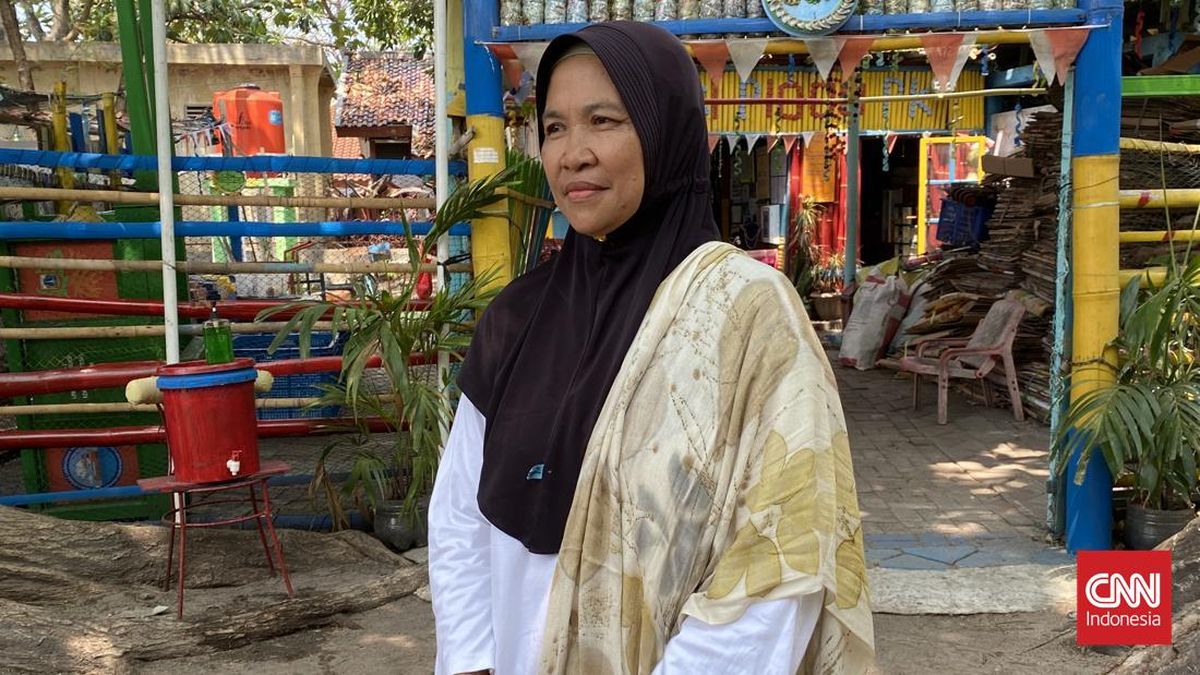
Asmawiyah, a participant in the 2026 Pilah Olah Sampah Heroes programme, has mobilised residents of RW 01 in Pulau Kelapa, the Thousand Islands, to tackle their waste problem.
Through a waste-sorting and processing campaign run by a waste bank, Asmawiyah and residents of RW 01 no longer send rubbish to mainland Jakarta.
“There is no more waste being taken to Jakarta. We have to deal with our rubbish here on the island,” Asmawiyah said on Friday (6 November).
The waste bank in RW 01 Pulau Kelapa is called Bank Sampah Kresek Indah. Established in 2020, it now has more than 400 account holders.
Asmawiyah said this figure represents all the residents of RW 01 Pulau Kelapa, and includes people from other neighbourhood units as well. She said the waste bank was initially set up in response to local residents’ concerns, particularly those of women in RW 01.
“They were troubled when they saw people still throwing rubbish into the sea or dumping it indiscriminately,” Asmawiyah said.
This concern prompted them to ensure that waste on Pulau Kelapa would not end up in the sea. The waste bank has six members, four women and two men, and operates throughout the week.
From Monday to Friday, members go around collecting waste that residents have sorted. On Saturdays and Sundays, they sort the collected rubbish again at the waste bank.
Asmawiyah said the waste collected each month can amount to several tonnes.
“We collect more than one to two tonnes of waste at this waste bank each month,” she said.
The waste is then put to use and processed according to its type. Organic waste is generally turned into compost, while leaves are sorted for use in ecoprinting.
Ecoprinting is a technique for creating patterns on fabric using natural materials, including leaves. Products made by Bank Sampah Kresek Indah include bags, scarves and clothing.
Plastic bottles and used packaging are turned into handicrafts, such as accessories, mats and bags.
“About 60 account holders have taken part in the training. They can now make mats and turn bottles into accessories,” Asmawiyah said.
Residents’ involvement—from sorting waste and signing up as account holders to helping process materials—is crucial to the waste bank’s work. Asmawiyah said one way she brings residents together is by inviting them to sit down and talk.
“By sitting together, we can understand residents’ concerns: why some sort their waste and others do not,” she said.
Education is then provided to help residents who do not yet understand, or find it difficult, to sort and process waste. Information is also made accessible through social media such as Facebook and printed materials such as brochures.
The waste bank has further strengthened its ties with residents by establishing groups under its umbrella, including the ASKHA Group.
“The ASKHA Group is made up of women, the wives of fishermen. Fishermen’s wives are often overlooked by the kelurahan, so we wanted to find a way to empower them,” Asmawiyah said.
The 25 to 30 waste-bank account holders in the group can take part in a savings-and-loans scheme. They can use the money for various needs, from children’s school supplies to business capital.
ASKHA members also take part in various training courses, including ecoprinting.
“When the men go fishing, there are sometimes difficult periods. This gives the women an activity that can generate income,” Asmawiyah said.
These efforts have strengthened Pulau Kelapa’s waste-sorting and processing system. Residents of all ages, from schoolchildren to adults, have developed the awareness and skills to take part in the environmental initiative.
Asmawiyah said her initiatives began out of a need to manage waste, but over time that need became a responsibility that also brought benefits.
“I can’t just walk away. There are still very few people willing to do this wholeheartedly. Sometimes their work gets in the way,” she said.
The Pilah Olah Sampah Heroes 2026 programme is highlighting the practical work of people such as Asmawiyah, whose individual efforts have grown into a collective movement.
The DKI Jakarta Provincial Government programme aims to recognise environmental champions who take concrete action and encourage others to care about waste.
As of Friday (6 November), 15 participants had passed the field-verification stage. They will now be assessed further to determine who advances to the final judging stage.
The winners of the Pilah Olah Sampah Heroes programme will receive their awards from Jakarta Governor Pramono Anung. The awards ceremony is scheduled for Tuesday (10 November).
Source: jawawa.id (https://jawawa.id/newsitem/finishing-the-job-at-home-asmawiyahs-mission-and-the-kresek-indah-waste-bank-1793969468)
Originally published by CNN Indonesia (https://www.cnnindonesia.com/nasional/20261106184948-20-1424233/tuntas-di-tanah-sendiri-misi-asmawiyah-dan-bank-sampah-kresek-indah), translated from Indonesian