
Findings from the Similarity Test of PISA 2025 Questions on Senior High School Students
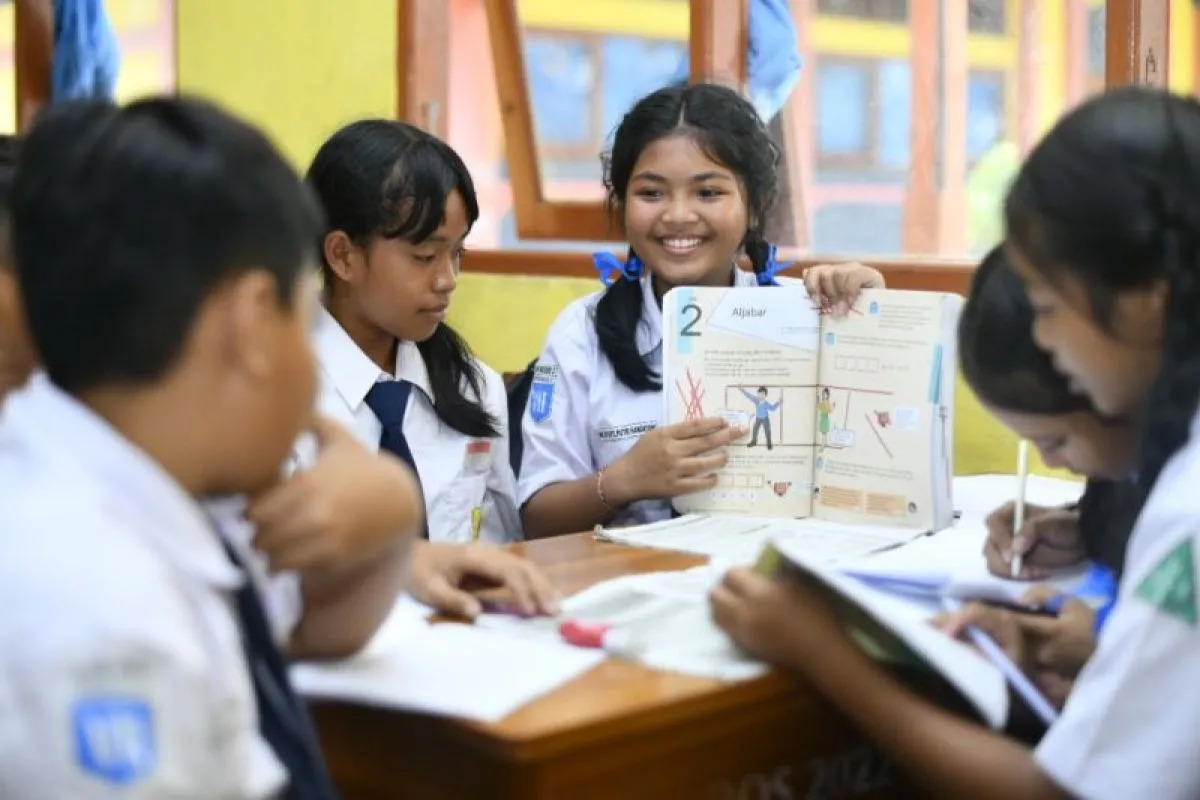
The Programme for International Student Assessment (PISA), conducted by the Organisation for Economic Co-operation and Development (OECD) every three years since 2000, evaluates the educational achievement of 15-year-old students. PISA is a large-scale comparative study worldwide. In 2022, PISA was participated in by 81 countries. Its purpose is to evaluate and predict student performance in basic abilities and three important literacies: reading, mathematics, and science, as well as the skills students will need when they enter society.
The PISA assessment has changed its objectives over time. In 2003, the test measured general problem-solving skills focusing on cross-curricular competencies. In 2012, the test specifically assessed creative problem-solving to address non-routine life situations and obtain solutions through creative processes. In 2022, it launched an assessment of creative thinking in solving problems logically, through the process of creating, evaluating, and developing original and diverse ideas.
The 2025 PISA test focuses on science literacy and digital problem-solving, with results scheduled for release through the OECD PISA Portal in 2026. The PISA study can predict that academic excellence is not an absolute prerequisite for individual success in the future, but having basic reasoning abilities and literacy followed by creative thinking skills enables individuals to survive in a rapidly changing future life.
Since 2018, the PISA reading literacy assessment has aimed to understand text content, use and evaluate texts in diverse contexts, distinguish between fact and opinion, and include various tasks aimed at evaluating the quality and credibility of text content, including assessing understanding of simple sentences as an important prerequisite for understanding more complex and in-depth texts.
Mathematical literacy demonstrates students’ ability to reason mathematically, including formulating, using mathematical thinking logic, and interpreting mathematics in various contexts. In the 2025 PISA trial, mathematical literacy abilities have developed more broadly to include understanding simple data; computer and digital simulations; and the use of mathematical tools conceptually, procedurally, and factually to describe, explain, and predict various sensed phenomena.
In science literacy, students are able to engage with various issues and ideas related to science so that they are capable of explaining phenomena scientifically through the process of seeking, compiling, and evaluating scientific investigation designs as well as interpreting and using data and scientific evidence critically. This ability influences students to be responsive to various issues related to health, environment, social, political, and economic matters.
Although Indonesia’s ranking increased by 5 to 6 points, the average PISA test scores in 2022 decreased compared to the 2018 results. The 2022 PISA results placed Indonesia at 69th out of 81 OECD participating countries, with a total score of 1,108, up from the previous ranking in 2018 with literacy ability details as follows: mathematics rose from 74 to 69, reading from 73 to 68, and science from 71 to 65. However, there was a decline in literacy scores from 2018 to 2022: mathematics from 379 to 366, reading from 371 to 359, and science from 396 to 383. This score decline is thought to have been caused by the closure of schools in Indonesia for almost 24 months due to the Covid-19 pandemic, which significantly reduced students’ learning opportunities and abilities through school.
The 2025 PISA test focuses on science literacy with a major update in the form of adding an innovative learning domain that measures students’ ability to solve problems independently through critical thinking processes related to environmental science topics, climate change issues, the role and identity of science in students’ lives, and sustainability processes in socio-scientific contexts. The 2025 PISA questions use a computer-based question system with dynamic difficulty levels that adapt to students’ ability levels.
A joint team from two faculties at Institut Teknologi Bandung, the School of Life Sciences and Technology and the School of Business and Management, has conducted a study with questions similar to the 2025 PISA test. This research used the PISA Meteoroid and Crater question, which combines information related to explanatory text, diagrams, and images to test students’ understanding of astronomical phenomena. There are three craters labelled A, B, and C, where crater A is the outermost crater with the largest diameter, B is a small crater located inside crater A, and C is a small crater located separately beside it. The question asks students to order the craters based on two criteria: the size of the meteoroid and the sequence of formation time. The mechanism of visual perception allows students to process information.
Source: jawawa.id (https://jawawa.id/newsitem/findings-from-the-similarity-test-of-pisa-2025-questions-on-senior-high-school-students-1787201426)
Originally published by Media Indonesia (https://mediaindonesia.com/opini/923880/temuan-hasil-uji-kemiripan-soal-pisa-2025-pada-siswa-sma), translated from Indonesian