
Finding Cultural and Structural Common Ground Among NU Leaders
The second century of NU requires both aspects simultaneously. NU needs the strength of the pesantren to preserve its spiritual essence, alongside organisational capabilities to ensure direction remains on course. It requires both deep-rooted tradition and managerial competence at the same time.
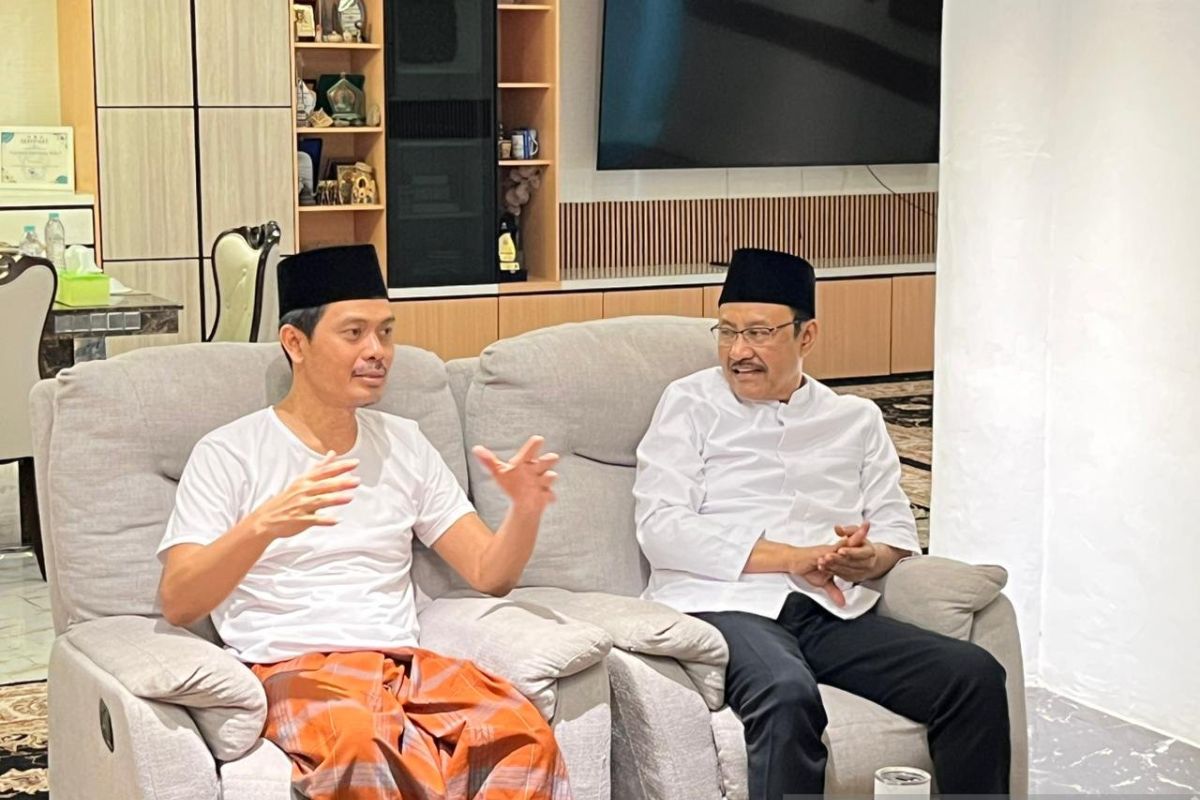
Jakarta (ANTARA) – The meeting between KH Imam Jazuli (Kiai Imjaz) and Saifullah Yusuf (Gus Ipul) on 25 May 2026 at the historic Bina Insan Mulia Islamic boarding school in Cirebon, West Java, was more than a routine goodwill visit. It carried deeper symbolic significance beyond mere location and timing.
Amid NU’s dynamics ahead of key milestones in its second century, the meeting appeared to convey a message that NU requires a convergence of the pesantren’s cultural energy and the organisation’s structural strength.
Conversely, the meeting also demonstrated that NU’s elite communication still operates within the pesantren’s characteristic wisdom, not always erupting in public discord but functioning through mutual respect and connection.
This tradition has long enabled NU to navigate numerous conflict waves without losing its cultural roots.
Notably, the meeting took place at Bina Insan Mulia, a space recognised from the outset not just as an educational institution but also as a venue where ideas, pesantren traditions, and efforts to build the future converge.
The venue serves as a small metaphor for NU itself: traditional yet open, rooted yet progressive.
Thus, the meeting held more significance than mere organisational political communication. It brought together two faces of NU at the same table.
Kiai Imjaz has long been recognised as a representative of mainstream pesantren. His influence has grown not through public commotion but through extensive cultural networks and the ability to embrace diverse forces, particularly the political wing of NU, the National Awakening Party (PKB), which holds power at the centre.
In a situation where NU is often fragmented by competing interests, such capabilities are crucial. He can speak the language of the pesantren while also bridging the worlds of politics, bureaucracy, and power.
Kiai Imjaz appears to understand that NU’s second century requires more than preserving heritage; it must also provide direction. His writings and ideas frequently advocate for NU to be visionary, strengthen education, build economic independence, expand civilisational diplomacy, and remain a unifying home for all elements.