
Finding Comfort in a Kos for Around Rp1 Million
With a limited budget, prospective boarding-house residents must weigh rent, facilities and location before choosing where to live. These considerations are especially important for those just starting their careers on modest salaries.
Muhammad Zakky Chaidir experienced this while looking for somewhere to live during an internship in Jakarta. With a maximum budget of Rp2 million a month, he did not want to rush into a decision. He reviewed dozens of room listings, contacted administrators one by one to ask about prices and facilities, and visited three boarding houses to see what might become his home for the next few months.
“I’m suited to places around Rp1 million. The numbers work with my salary, especially as I’m an intern. I don’t think a boarding house costing more than Rp2 million is possible for an intern,” he told detikX.
The 23-year-old is from Bandung, while his nearest family live in Bogor. Commuting from Bogor to Jakarta was an option, but he considered how much time he would lose travelling after a full day at work. He usually finished at about 6pm or 6.30pm.
“I don’t think going back and forth to Bogor is worth it, especially as I usually finish at six or half past six. It would take up so much of my time. So in the end I decided to rent a room here,” Zakky said.
After taking a closer look at five boarding houses, Zakky chose Casa 77 in Kebon Jeruk, West Jakarta. With rents starting at Rp1 million a month, he felt it offered the combination he wanted: a price within his means, a location close to work, and facilities and service he considered adequate.
“It has the facilities, the location is great, and it’s very close to my office. And it’s comfortable — 1,000 per cent comfortable. When I came to view it, I fell in love with it straight away,” he said. The walk from the boarding house to his office at MNC Studios takes just 12 minutes.
Zakky invited detikX to see the place, where he had been living for a week. Casa 77 is in a small alley about 15 metres from Jalan Panjang in Kebon Jeruk, West Jakarta. Motorcycles can pass through fairly easily, although the alley is too narrow for cars to move freely.
At first glance, Casa 77 appeared better maintained than one might expect of a boarding house with rents starting at around Rp1 million. The three-storey building has a rooftop. A modern tropical style is combined with industrial touches and natural elements, from the large wooden front door to wooden furniture and plants placed around the building.
The corridors linking the rooms form part of residents’ everyday shared space.
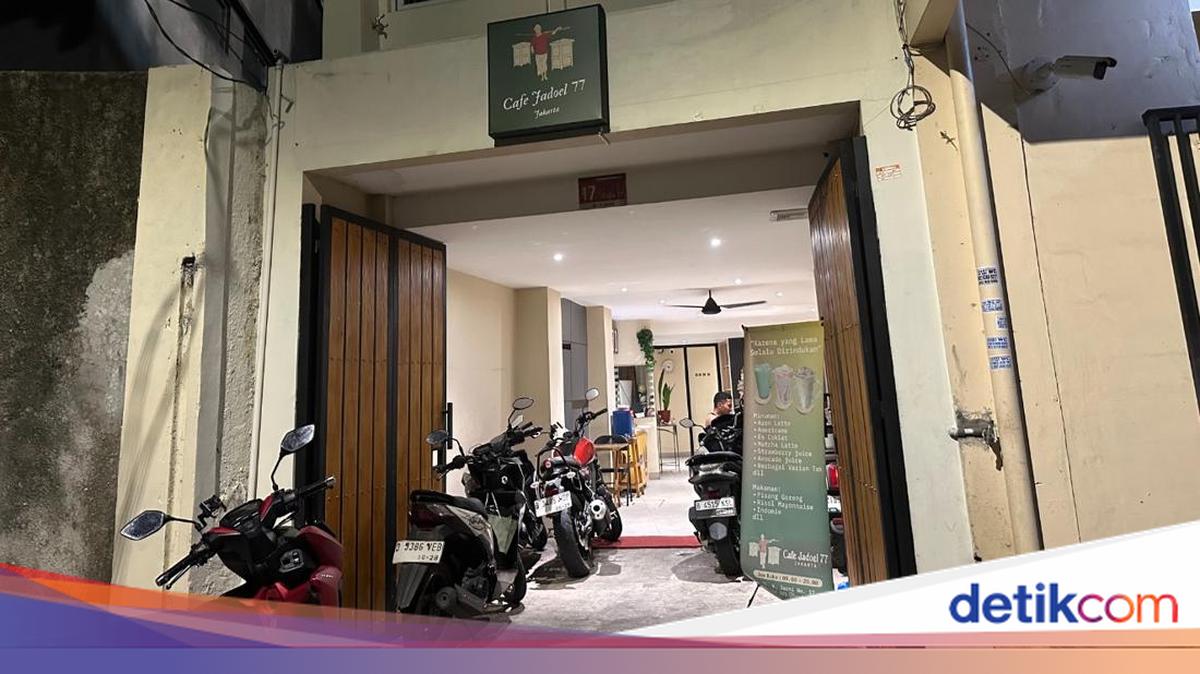
Several motorcycles are parked in the front yard, which is also used for café activities. A green sign reading Cafe Jadoel 77 marks the building. Although space is limited, the front area has been arranged to serve several purposes.
Zakky then showed detikX his room on the first floor. Measuring about 2 by 3 metres and costing Rp1.6 million, it is furnished with a bed, desk, chair, wardrobe, air conditioning and an en-suite bathroom. Neutral-coloured furniture fills the compact space, with a light-wood wardrobe featuring woven panels among the details.
Room size was one of the compromises he had to make. Zakky admitted that the space felt cramped, particularly because he had brought many belongings from home. But he understood this limitation as a consequence of the rent he had chosen.
“As for the size, yes, but we have to be realistic: this is around Rp1 million. It’s not too good to be true. There are downsides too; I think the room is small, and I brought a lot of things from home,” Zakky said. Electricity is not included in the rent.
The lack of a water heater was another minor drawback for him, although it was not a priority. As long as the room was comfortable enough to rest in and met his basic needs, he felt it was still good value for his budget.
He also economises on food. Zakky said he had not ordered food online since moving to Casa 77. Instead, he prefers to buy food nearby or prepare something simple himself.
“I don’t think my budget stretches that far. And everything is close by. If I need anything, I can just walk from here,” he said.
Outside the room, residents have access to several shared spaces. On the second floor there is a kitchen and a refrigerator for storing food and drinks. A communal area with a long table and several chairs can be used for meals, work or relaxation.
There are more facilities on the rooftop. It has a bamboo gazebo, seating, tables and plants, and is also used for drying clothes. From there, residents can see nearby Jakarta buildings and the city lights at night. The mix of wood, bamboo and greenery offers a change from the more functional rooms.
Zakky sometimes uses the rooftop to relax and look at the city lights. For him, it is an alternative way to unwind after work without going elsewhere and spending extra money.
Rent Tailored to Residents’ Means
Behind daily life at Casa 77 is Ahmad Satiri, 60, who looks after the boarding house. A retired automotive-sector worker, he now has a different role from his previous job. For him, looking after the property means not only keeping the rooms and shared areas in good condition, but also helping residents when they face difficulties.
Casa 77 began operating in July 2025 and has 27 rooms. The management did not set rents at around Rp1 million from the outset. Ahmad said prices were adjusted after they assessed market conditions and considered what prospective residents could afford.
Monthly rents range from Rp1 million to around Rp2 million, depending on the facilities selected. At Rp1 million, residents generally get a room, access to the kitchen and shared spaces, and a bathroom shared between two rooms. At around Rp1.5 million, rooms have air conditioning and an en-suite bathroom, with electricity charged separately. The Rp2 million rate includes electricity, water and Wi-Fi.
New residents must also pay a Rp500,000 deposit. Ahmad said it serves as security against damage during a resident’s stay. It is returned when they move out if no damage is found.
The different rates, Ahmad said, reflect the financial means of prospective residents. He cited cleaners, office boys and support-service workers as groups who could afford a room costing around Rp1 million. Rates above Rp1.5 million are aimed at workers with higher incomes.
This takes account of residents’ need to divide their earnings among various expenses. As well as rent, they must pay for food and transport. Casa 77 therefore provides a shared refrigerator for storing food.
“Boarding houses usually provide a fridge for storing food, especially ingredients and things needed for cooking. We try to make it possible for residents to bring food from home instead of buying it outside. That helps them save money too,” Ahmad told detikX.
Ahmad said Casa 77 is aimed, among others, at interns who usually stay for three to six months and workers transferred to offices in West Jakarta. For these groups, accommodation is not only about rent, but also about making everyday routines easier.
However, Ahmad believes comfort cannot be created through prices and facilities alone. He tries to keep the atmosphere open and informal. Residents are encouraged to contact him if they have a problem or notice something lacking in the boarding house.
The rooftop provides a shared space where residents can relax or take a break from the routine of staying in their rooms.
“We’re open. For example, we’re ready to be contacted 24 hours a day. Someone might say, ‘Sir, I’m sorry, I’ll be back late.’ I’ll say, ‘That’s all right; if you feel afraid, just contact me.’ We have two staff members at the boarding house,” he said.
That approach sometimes means his relationship with residents goes beyond rent and accommodation. Ahmad said he had once listened to a resident who felt more able to accept his words than advice from their own parents. He chose to listen rather than lecture.
“If you have a problem, just tell me. If you want to cry or get angry, go ahead,” Ahmad said.
There have also been more amusing moments. Ahmad recalled being introduced as a resident’s father when their partner came to visit. He said the resident did so to avoid raising suspicion.
“She said I was her father: ‘This is my dad’ — meaning she didn’t want to be bothered.” The story is one example of the closeness that can sometimes develop between a caretaker and boarding-house residents.
Ahmad sees the residents as his responsibility while they are at Casa 77. He wants them to feel safe returning home, including when they are dealing with personal problems. He said this openness and readiness to help are part of his efforts to make residents feel at home.
“I always tell the residents, ‘If anything happens, I’ll protect you.’ For example, something happened recently: a resident had broken up with her partner, but he wouldn’t accept it, and then, as these things go, they argued. So I said that if anything happens here, I’ll protect the resident. That’s why the women living here are happy,” Ahmad said.
Ahmad also said he sometimes makes allowances when residents face financial difficulties. Some have struggled to pay for various reasons, requiring their payment dates to be adjusted. In certain cases, he prefers to discuss a payment arrangement rather than treating a late payment as an offence that cannot be tolerated.
“Usually they tell me what’s going on. For example: ‘Sir, I’m sorry, my financial situation is like this.’ We help. Someone might say, ‘Sir, I’m sorry, I used my rent money because my parent is ill.’ We give them some leeway: ‘All right, take care of your parent first.’ We make it easier for them,” Ahmad said.
This approach shows another side of running rental accommodation, one that is not always apparent in advertisements. Price and facilities may be the first considerations, but the relationship between residents and management also helps shape the experience of living there.