
Financial Accountability for Quality Education
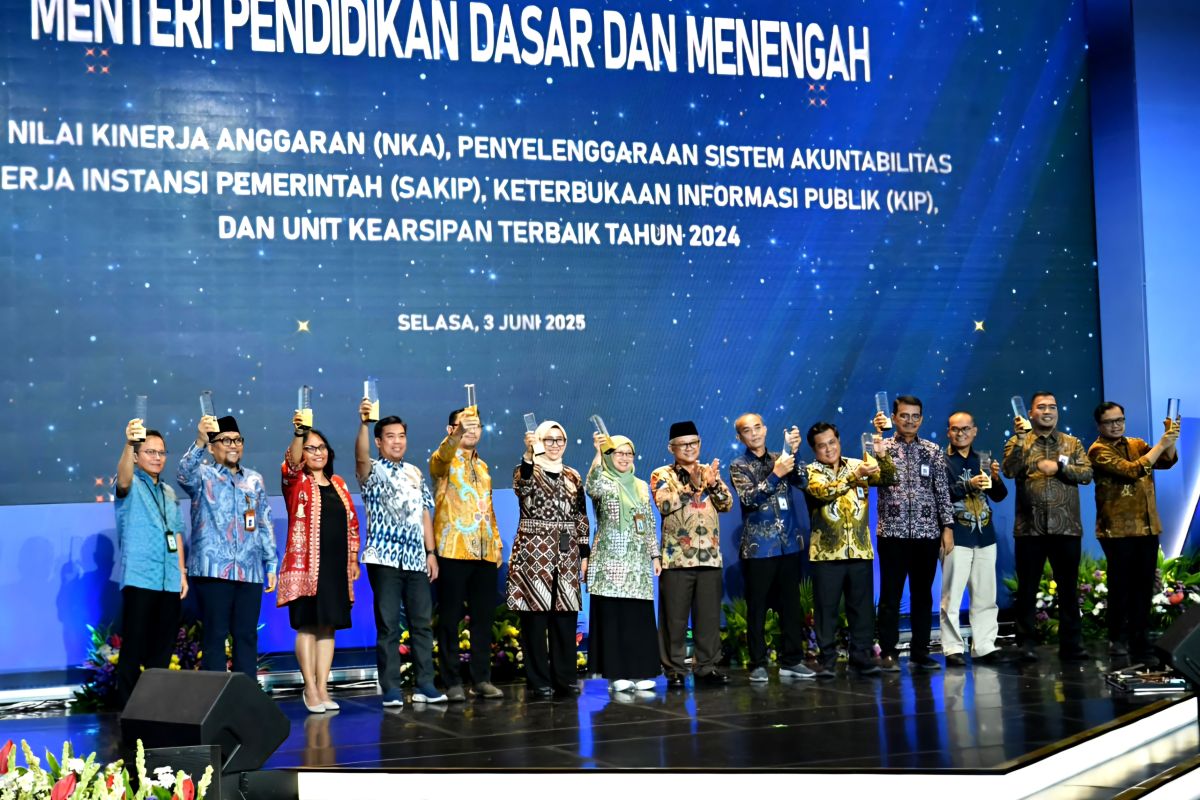
Jakarta (ANTARA) - Amid high public expectations for improving the quality of national education, reassuring news has emerged from the Ministry of Education. The Ministry of Primary and Secondary Education’s (Kemendikdasmen) 2025 Fiscal Year financial report successfully obtained an Unqualified Opinion (WTP) from the Audit Board of the Republic of Indonesia (BPK RI). This achievement is evidence of Kemendikdasmen’s commitment to realising financial governance that is accountable, transparent, and responsible in accordance with the principles of good governance. Furthermore, it strengthens public trust that every rupiah of the education budget is managed responsibly to support the delivery of quality education services for all Indonesian people. However, behind this achievement, a critical, objective, and continuous improvement-oriented perspective is necessary. The WTP opinion is not the final goal, but rather an important foundation in building accountable, transparent, and high-integrity governance. The success in maintaining this opinion must be accompanied by strengthening the oversight function, both through internal control systems, inherent supervision, and external oversight, so that every state financial management process runs in accordance with regulations and can minimise the risk of irregularities. The quality of financial governance is not only measured by the accuracy of preparing financial reports, but also by the effectiveness of oversight in ensuring that every rupiah of the State Budget (APBN) is managed efficiently, on target, and provides real benefits for students, teachers, education personnel, and educational units. Thus, oversight is not merely a control mechanism, but also a strategic instrument to ensure that every education policy and budget is truly aimed at improving the quality of education for Indonesian children. An official Kemendikdasmen report (2026), delivered by Minister Abdul Mu’ti during a Working Meeting with Commission X of the Indonesian House of Representatives (DPR-RI) on 15 July 2026, noted that the 2025 budget realisation reached Rp62.77 trillion, or 96.64 percent of the ceiling of Rp64.34 trillion. If blocked budget allocations are excluded, the absorption rate reached 98.55 percent, with a budget performance rating of ‘very good’. This financial performance was accompanied by other governance achievements, including a BB rating for the Government Agency Performance Accountability System (SAKIP), an A rating for the Public Service Index (IPP), and a Stakeholder Satisfaction Index (IKPK) score of 88.70. These statistics demonstrate that the Ministry’s success is measured not only by high budget absorption but also by the quality of governance and public services provided. From a public administration perspective, these achievements reflect the application of good governance principles. The United Nations Development Programme (UNDP, 1997) asserts that good governance is underpinned by accountability, efficiency, participation, and the rule of law. This aligns with the views of David Osborne and Ted Gaebler (1992) in ‘Reinventing Government’, which urges modern bureaucracy to shift from merely ‘rowing’ (spending funds) to ‘steering’ (creating public value). This paradigm is evident in the policy direction of Kemendikdasmen under Minister Abdul Mu’ti’s leadership. The budget is prioritised for strategic programmes: school revitalisation, digitalisation of learning, character education, the Smart Indonesia Programme (PIP), improving teacher quality and competence, vocational education, and the 13-year compulsory education programme. From a strategic management perspective, as proposed by Fred R. David (2017), Kemendikdasmen has demonstrated the ability to realise strategic alignment by synchronising planning, implementation, and budget evaluation with national development goals. This alignment is a crucial foundation to ensure that every programme and budget expenditure makes a real contribution to achieving development goals in the education sector. Consistent with the Balanced Scorecard (BSC) concept introduced by Robert S. Kaplan and David P. Norton (1996), the performance of public organisations cannot be measured solely from the financial aspect. Performance assessment must also include the perspective of service recipients, the effectiveness of internal processes, and organisational learning and development. Thus, the WTP opinion is an important indicator in the aspect of financial governance, but it must be accompanied by improvements in the quality of education services, the effectiveness of programme implementation, and strengthened oversight so that the benefits are truly felt by the community. The combination of the WTP predicate, SAKIP, and the Public Service Index proves a balance between financial health and the effectiveness of internal processes. Minister Abdul Mu’ti’s strategic leadership has successfully consolidated a culture of accountability within the primary and secondary education bureaucracy, in line with John P. Kotter’s (1996) theory on the importance of building an adaptive direction for change. The achievement of the WTP opinion by Kemendikdasmen must serve as capital to strengthen the management and oversight of the education budget so that it has a real impact on improving the quality of primary and secondary education. Accountable, transparent, and effective budget management must be able to reduce disparities in access to education, improve the quality of learning, and expand opportunities for quality education services across all regions of Indonesia. Ultimately, every education policy and budget is an investment in civilisation to build excellent human beings, leading to graduates who are superior, globally competitive, and possess strong character as a foundation for welcoming Indonesia’s future.