
Financial Access Expands, but Public Literacy Fails to Keep Pace
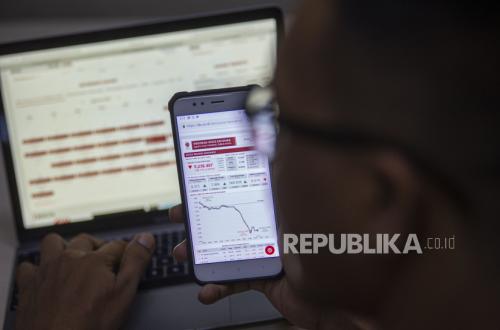
Public access to financial services in Indonesia is expanding, but the ability to understand risks and make sound financial decisions has not grown as quickly. This condition presents a challenge for the futures trading industry, including brokerage firms that deal directly with clients in transaction decision-making.
Data from the 2025 National Survey of Financial Literacy and Inclusion (SNLIK), compiled by the Financial Services Authority (OJK) and Statistics Indonesia, shows the national financial inclusion index has reached 80.51 percent. However, the financial literacy index has only reached 66.46 percent.
This gap is more pronounced in the 18-25 age group. The financial inclusion rate for this group reached 89.96 percent, while its literacy rate stood at 73.22 percent. This means the majority of young people have access to financial products and services, but their understanding has not fully kept pace with the expansion of that access.
The gap between access and literacy is a challenge for economic development and the financial services industry. The wider the public’s access to financial products, the more important the ability to understand risks and make appropriate financial choices becomes.
Finex CEO Agung Wisnuaji said brokerage firms have a responsibility to ensure clients understand the risks before conducting transactions. Information transparency and education are crucial so that the expansion of access to financial services does not lead to misguided decisions.
‘Indonesia’s independence inspires us to support the independence of every trader, which is the freedom to make their own decisions and build their financial future. That is why we build systems that prioritise the interests of traders and are committed to always being on their side,’ Agung said in a statement on Wednesday (12/8/2026).
The gap between access and literacy also increases the risk of the public being exposed to financial offers they do not fully understand. The methods include offers of investment profits, paid signal groups, and fraud using the names and identities of licensed entities.
The PASTI Task Force noted that impersonation of licensed entities is one of the most frequently reported methods in early 2026. Meanwhile, since commencing operations in late 2024, the Indonesia Anti-Scam Centre (IASC) has received more than 515,000 reports. The amount of victims’ funds successfully blocked reached approximately Rp 585.4 billion.