
Finance Ministry's Institutional Structure to Be Overhauled, Here's a Glimpse from PANRB
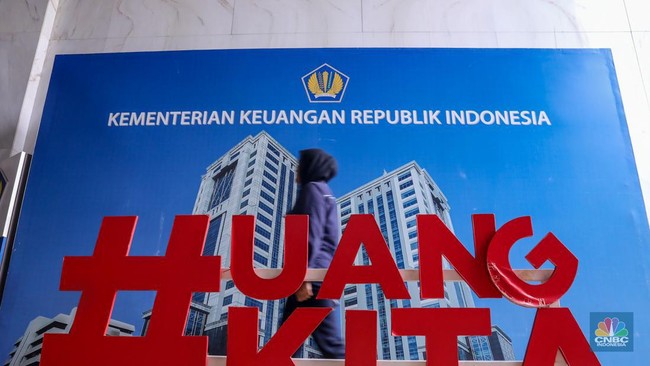
The restructuring of the Ministry of Finance’s organisational and work procedures (OTK) is currently underway, supported by the Ministry of Administrative and Bureaucratic Reform (PANRB).
Discussions regarding this matter were held between teams from the Ministry of Finance and the Ministry of PANRB, led directly by the Deputy for Institutions and Procedures of the Ministry of PANRB, Nanik Murwati, at the Ministry of PANRB office in Jakarta on Monday (6/7/2026).
According to a press release from the Ministry of PANRB on Wednesday (8/7/2026), the discussions on restructuring the Ministry of Finance’s work procedures are a follow-up to the organisational restructuring proposal submitted by the Minister of Finance, Purbaya Yudhi Sadewa, in 2026.
The discussions focused on aligning the institutional structures of several Echelon I units to ensure that the execution of organisational tasks and functions becomes increasingly effective, efficient, and adaptive to the dynamics of government governance.
Nanik stated that organisational restructuring is part of the government’s ongoing efforts to build an agile, accountable, and result-oriented bureaucracy. According to her, every institutional arrangement must be directed towards ensuring that the organisational structure is capable of supporting more optimal business processes.
“Organisational restructuring needs to ensure that structure, tasks, functions, and business processes run in alignment. In doing so, the organisation can work more effectively, responsively, and be able to meet the needs of services as well as the implementation of strategic government tasks,” Nanik said, as stated in the press release.
She added that institutional strengthening must also consider the potential for overlapping authority and the effectiveness of coordination between work units. This is essential so that every unit has a clear role and is able to support the achievement of organisational performance in a more integrated manner.
“The restructuring is expected to clarify the division of roles, strengthen internal coordination, and minimise the potential for overlapping execution of tasks and functions within the Ministry of Finance,” Nanik emphasised.
During the meeting, discussions also covered several crucial aspects of institutional transformation, including the strengthening of operational functions, the restructuring of technical implementation units, and the organisational effectiveness of public service agencies. The restructuring is directed so that every work unit has a structure appropriate to its function and is able to carry out its mandate more accountably.
Strengthening the Ministry of Finance’s work procedures is also part of the effort to support the sustainability of digital operations and increasingly modern state financial governance. With a more adaptive institutional structure, the implementation of services and strategic tasks in the field of state finance is expected to run more agilely, integratedly, and on a performance-based basis.
Furthermore, this organisational restructuring is being pursued comprehensively through the harmonisation of institutional policies. This step is necessary to ensure that the planned organisational changes remain in line with statutory regulations and the principles of good governance.
This meeting also served as a discussion space to strengthen the direction of institutional transformation in the digital era. By prioritising agile organisational principles, the Ministry of PANRB, together with the Ministry of Finance, seeks to ensure that changes in organisational structure can impact the improvement of internal work effectiveness as well as the quality of services provided to stakeholders.