
Finance Minister Warns of Rising Global Volatility as Indonesia Faces New Risks
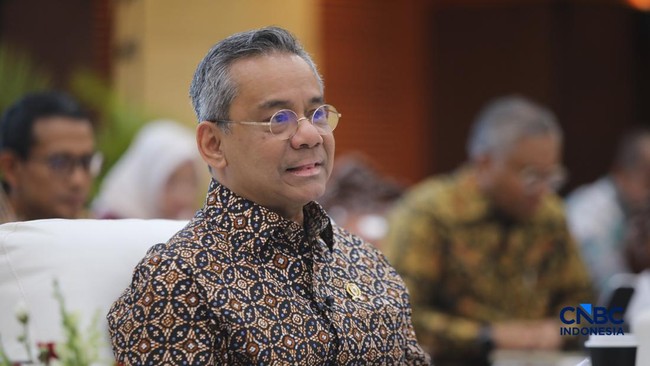
Jakarta, CNBC Indonesia — Finance Minister Suahasil Nazara said rising global volatility and uncertainty are new risks that Indonesia needs to watch closely.
The situation has been driven by increasingly fluid geopolitical developments, which could affect global economic growth and commodity prices.
Suahasil said geopolitical developments, including tensions involving the North Atlantic Treaty Organization (NATO) and Russia, had heightened uncertainty in global trade. This presents a challenge for the world economy, affecting both developed and developing countries.
“Global economic prospects remain clouded by geopolitical developments. Yesterday, NATO and Russia also became part of the story. As a result, volatility indicators have risen,” Suahasil said during a presentation on the state budget on Friday (9 October 2026).
The indicators showing increased volatility include the bond market volatility indicator (VIX), the bond market volatility index (MOVE) and the oil volatility index (OVX).
He said global economic growth in 2026 was projected to be lower than in 2025. The slowdown could affect global demand for commodities and their prices, ultimately influencing the performance of the state budget (APBN).
One development of concern to the government is the price of Brent crude, which has reached US$105 a barrel. Higher oil prices could put pressure on the state budget, on both the revenue and expenditure sides, depending on energy prices and their impact on the domestic economy.
Meanwhile, prices for several of Indonesia’s leading commodities have been showing a less favourable trend. Suahasil said crude palm oil (CPO) prices had tended to decline for several months in 2026.
A similar trend has been seen in nickel prices. Gold prices have fallen since March and weakened again in July and August. Copper prices have also moved in the same direction, while coal prices have remained at a particular level.
These commodity price movements need to be monitored because they can affect state revenues, particularly those from natural resources and international trade.
Nevertheless, Suahasil said Indonesia’s economic fundamentals remained fairly strong in the face of external shocks. National economic growth remained positive, at 5.4%.
The government is awaiting Statistics Indonesia’s (BPS) release of third-quarter 2026 growth data to assess the resilience of the domestic economy amid rising global uncertainty.
“We are grateful that Indonesia has high resilience. Growth remains good at 5.4%. We are now waiting for BPS’s third-quarter growth figures,” he said.
In addition to geopolitical uncertainty and falling prices for some commodities, the government is watching higher oil prices, global interest rates remaining higher for longer, and a stronger US dollar.
Suahasil said several major central banks were continuing to maintain tight monetary policies. This has driven up bond yields and poses a challenge to the global economy and financial markets.
A stronger US dollar also warrants attention because it can add pressure on developing countries, including Indonesia, through exchange-rate movements and financing conditions in financial markets.
The government needs to prepare for these risks to prevent them from disrupting economic stability or the implementation of the state budget.
“We need to recognise these global shocks and risks, but we also need to mitigate them and respond,” he said.
Source: jawawa.id (https://jawawa.id/newsitem/finance-minister-warns-of-rising-global-volatility-as-indonesia-faces-new-risks-1791517860)
Originally published by CNBC Indonesia (https://www.cnbcindonesia.com/news/20261009100414-4-774653/menkeu-warning-volatilitas-global-naik-ri-hadapi-ancaman-baru), translated from Indonesian