
Finance Minister Purbaya Responds to Chinese Investors' Letter on Indonesia's Investment Climate
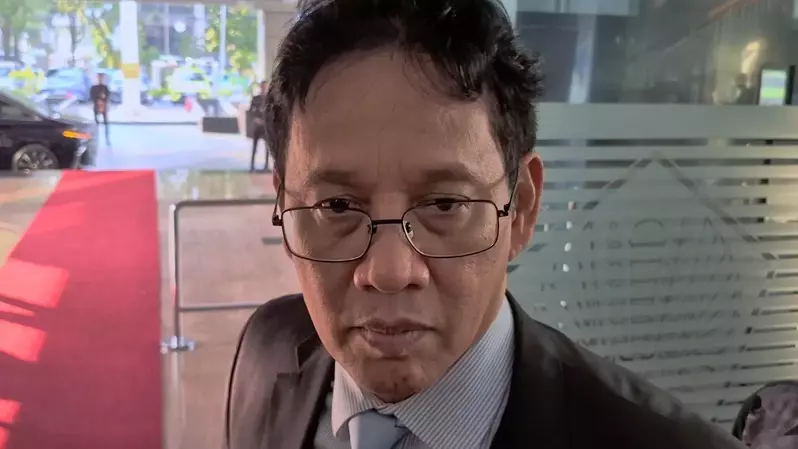
Finance Minister Purbaya Yudhi Sadewa has responded to a letter from the Chinese Chamber of Commerce to President Prabowo Subianto containing complaints about the investment climate in Indonesia. Although he acknowledged several concerns from Chinese investors, Purbaya stressed that the government prioritises national interests in every economic policy.
The letter highlighted several policies deemed burdensome to the business world, ranging from the obligation to deposit natural resource export proceeds (DHE SDA), increases in mineral royalties, nickel ore quotas, forestry law enforcement, work visas, to electric vehicle incentives.
Responding to one of the main concerns regarding the DHE SDA regulation, Purbaya assessed that the policy should not pose a significant issue for Chinese investors, as the government has prepared certain exemptions.
“If companies do not borrow money in Indonesia, they are exempt from DHE SDA; there are such exemptions. So China should have no problem,” Purbaya said when met at his office in Central Jakarta, quoted on Thursday (14/5/2026).
The new DHE SDA regulation is scheduled to take effect from 1 June 2026. Under this policy, natural resource exporters are required to place a portion of their export proceeds in state-owned bank consortium (Himbara) banks and convert a maximum of 50% of the funds into rupiah.
In addition to DHE SDA, the Chinese Chamber of Commerce also protested increases in taxes and levies in the natural resources sector. They viewed the rises in mineral royalties, stricter tax audits, and large fines as creating anxiety among business players.
“Taxes and fees, including mineral resource royalties, have been raised repeatedly, accompanied by increased tax inspections and even large fines reaching tens of millions of US dollars, creating panic among companies,” the Chinese Chamber of Commerce wrote.
Purbaya affirmed that policies related to mineral royalties and export duties are still in the discussion stage and have not been implemented. “They haven’t been imposed yet because it’s just a plan. Let it be, but we will prioritise our country’s interests,” he asserted.
Furthermore, the Chinese Chamber of Commerce highlighted the reduction in nickel ore quotas in the Mining Work Plan and Budget (RKAB), which is seen as disrupting downstream industry development, including the new energy and stainless steel sectors. They also complained about law enforcement in the forestry sector, including fines against Chinese investment companies related to forest area permits.
“Indonesia’s Special Task Force for Forest Management has imposed a record fine of US$180 million on a Chinese investment company for not having a valid forest area borrowing permit,” the letter stated.
Indonesia-China Investment Relations
Other complaints related to the suspension of several hydroelectric power plant projects, work visa processes deemed increasingly complicated, plans to eliminate electric vehicle incentives, and reductions in tax facilities in special economic zones.
Nevertheless, Purbaya assessed that Indonesia-China investment relations must be viewed reciprocally. He admitted that the Indonesian government has also raised objections regarding business practices of some Chinese entrepreneurs in Indonesia that are deemed non-compliant with regulations.
“I have complained to them; many Chinese entrepreneurs here also conduct illegal business. I asked him to fix it at the time, and he promised to warn them. So it’s two-way, actually, no problem,” Purbaya said.
Purbaya added that the government is committed to maintaining a balance between investment certainty and protection of national interests in managing resources and domestic economic policies.
Previously, the Minister of Energy and Mineral Resources (ESDM), Bahlil Lahadalia, responded to the protest letter sent by the Chinese Chamber of Commerce to President Prabowo Subianto. Bahlil stated that he had communicated directly with the Chinese Ambassador to provide explanations regarding various mineral resource policies, including revisions to the nickel Benchmark Mineral Price (HPM) formula.
“Some have already communicated with me; the ambassador has also talked to me, and I gave good explanations,” Bahlil revealed when met at the building of the Attorney General’s Office of the Republic of Indonesia, Jakarta, on Wednesday (13/5/2026).