
Finance Minister Offers Fuel Discount to Ease Burden on Households and Businesses
Jakarta, CNBC Indonesia — Nigeria’s Finance Minister, Taiwo Oyedele, on Thursday officially launched a series of tactical measures to cushion the energy shock, including a special petrol discount for public transport operators. The move comes ahead of the country’s general election.
Oyedele said the latest discount was solely intended to “ease pressure on households and the business sector”, while avoiding a return to fuel subsidies, AFP reported on Friday (9 October 2026). Speaking to reporters in Abuja, he outlined the programme.
“We are offering a discount on petrol supplied by NNPC Limited for the next 30 days, in the first phase, with priority given to public transport operators across the country,” Oyedele said, referring to Nigeria’s state-owned oil company, which operates an extensive network of petrol stations nationwide.
“It is not a subsidy. The government is simply saying that we are selling to you at cost,” he stressed.
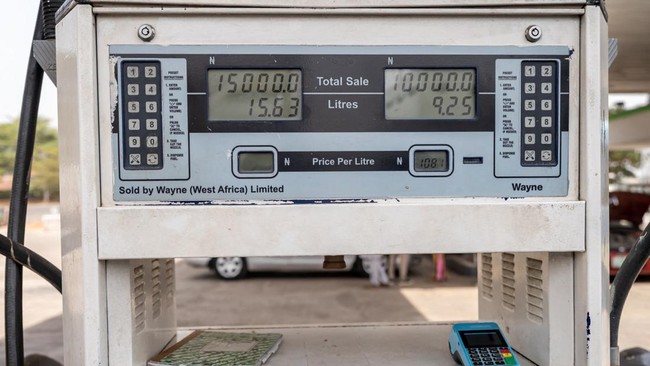
Fuel prices in Nigeria have surged to around 1,400 naira (about Rp17,800) per litre, from 830 naira before the outbreak of war in the Middle East. The increase has been exacerbated by limited government intervention, as authorities have largely left prices to market forces.
Petrol was previously much cheaper, before President Bola Tinubu scrapped the costly fuel subsidy early in his term. The pivotal decision turned pump prices into a highly contentious political issue, particularly as the president seeks a second term in January’s election.
For the longer term, the Tinubu administration says it will introduce what the finance minister calls “price modulation” to moderate volatility at petrol stations. The government has disclosed that it is negotiating a price cap of 1,350 naira per litre.
“Pump prices should not follow every swing in global crude oil prices or the exchange rate,” Oyedele said.
“If costs rise above the cap, refiners and importers will absorb the shortfall and recover it later when crude oil prices or the exchange rate allow, without breaching the cap,” he explained.
He added that the policy was neither a subsidy nor price control, and that the cap would be reviewed regularly each month. Nigerians are due to go to the polls on 16 January.
Tinubu has pursued sweeping economic reforms since taking office in 2023, including scrapping the main fuel subsidy and allowing the naira to float freely. Although economists have broadly backed the drastic measures, they have driven up the cost of living and deepened hardship in Africa’s most populous country.
Cheap petrol had long helped keep food and goods prices down, and some people regarded it as the most important government benefit they received amid decades of poor public services and widespread corruption. Tinubu, however, has argued that the reforms avert a much greater crisis, given that the subsidy had become an entirely unsustainable fiscal burden.
Opposition criticism
The Nigerian Democratic Congress, which has nominated Peter Obi as its presidential candidate, strongly criticised Thursday’s price-relief measures. It accused the government of seeking to reintroduce petrol subsidies through the back door.
In an interview with AFP last month, Obi said that, if elected, he would bring down consumer prices largely by cracking down on corruption. Another opposition candidate, Atiku Abubakar, questioned the effectiveness of the populist policy on social media.
“What happens on Day 31? Nigerians wake up to the same brutal prices, the same punitive transport fares, and the same rising food costs,” Abubakar said.
Abubakar has proposed a “targeted” subsidy, which he described as capped and budgeted production support tied specifically to fuel refined domestically in Nigeria, to help lower prices at the pump.