
Finance Minister: Finance Ministry Programmes Aim to Keep the State Budget Sound as a Development Instrument
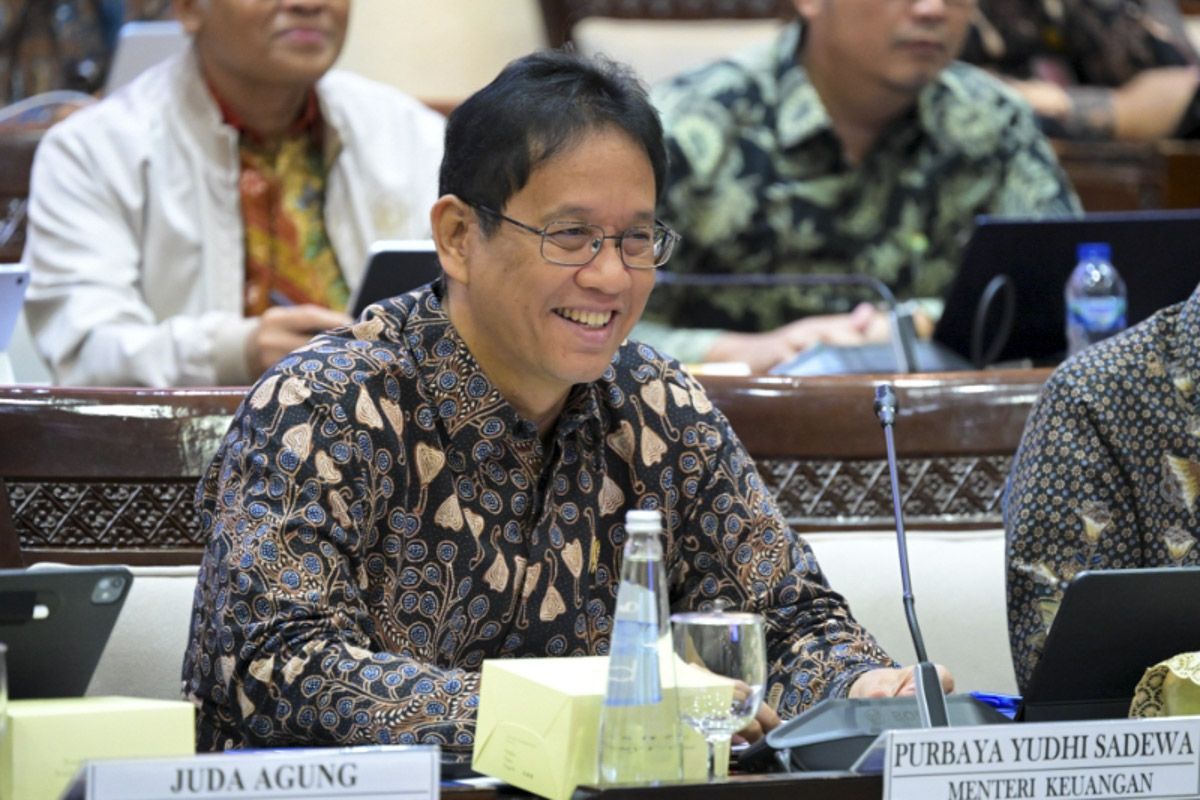
The State Budget must continue to be kept healthy, credible and sustainable so that it can function optimally.
Jakarta (ANTARA) — Finance Minister Purbaya Yudhi Sadewa said the Finance Ministry’s programmes form part of efforts to safeguard the State Budget (APBN) so that it remains able to carry out its role as a development instrument as well as a protector of the people’s economy.
“The APBN must continue to be kept healthy, credible and sustainable, so that it can function optimally as a shock absorber, support the development agenda, and serve as an instrument to realise public welfare,” Purbaya said in a statement in Jakarta on Tuesday.
In line with that direction, the 2027 economic and fiscal strategy is aimed at driving an economy that “Grows Higher, Prosper Faster” through strengthening synergy between fiscal policy, monetary policy, the financial sector, and investment support.
The policy covers accelerating economic transformation towards high value-added activities, improving the effectiveness of flagship programmes, strengthening social protection, empowering micro, small and medium enterprises (UMKM), and reinforcing support for farmers, fishermen, teachers and vulnerable workers.
The Finance Ministry has drawn up its 2027 Work Plan, directed at supporting a healthy, credible and sustainable State Budget. In its implementation, the ministry will run five main programmes: the Fiscal, Financial Sector and Economic Policy Programme; the State Revenue Management Programme; the State Expenditure Management Programme; the Treasury, State Assets and Risk Management Programme; and the Management Support Programme.
The five programmes are designed to strengthen the ministry’s role in overseeing the eight clusters of the National Priority Work Programme (PKPN), namely food sovereignty, energy and water independence, education, health, poverty reduction, downstreaming and industrialisation, infrastructure, housing and disaster resilience, and the people’s economy and villages.
The implementation of these priorities is reinforced by various enablers, including defence and security, law enforcement, governance, digitalisation, and economic diplomacy.
Under the fiscal, financial sector and economic policy programme, the ministry will strengthen harmonisation and debottlenecking to support investment acceleration and economic transformation, including the downstreaming of strategic industries.
Meanwhile, state revenue management is directed at strengthening the integration of export-import and logistics business processes, increasing oil and gas lifting, and reinforcing tax oversight and service quality.
On the expenditure side, the ministry will strengthen central and regional public financial management, including through modernising the budgeting system and building capacity for regional financial management.
As for treasury, state assets and risk management, the ministry will support energy independence through government guarantees, accelerate infrastructure investment through creative financing, and optimise the management of State-Owned Assets (BMN).
Digital transformation and strengthened business processes are also part of the 2027 Work Plan through the Management Support Programme. The agenda includes developing the Indonesia National Single Window, strengthening the Coretax System, the Smart Customs and Excise System, a system for handling tax crimes, and digitalising business processes through the Finance Ministry’s Office Automation.
Building on the performance foundation laid throughout 2026, the ministry is committed to continuing improvements in state financial management in 2027. The work plan is directed at maintaining fiscal health while ensuring the State Budget becomes increasingly effective in supporting economic growth and accelerating the realisation of public welfare.