
Finance Minister explores JBIC support for infrastructure and energy projects
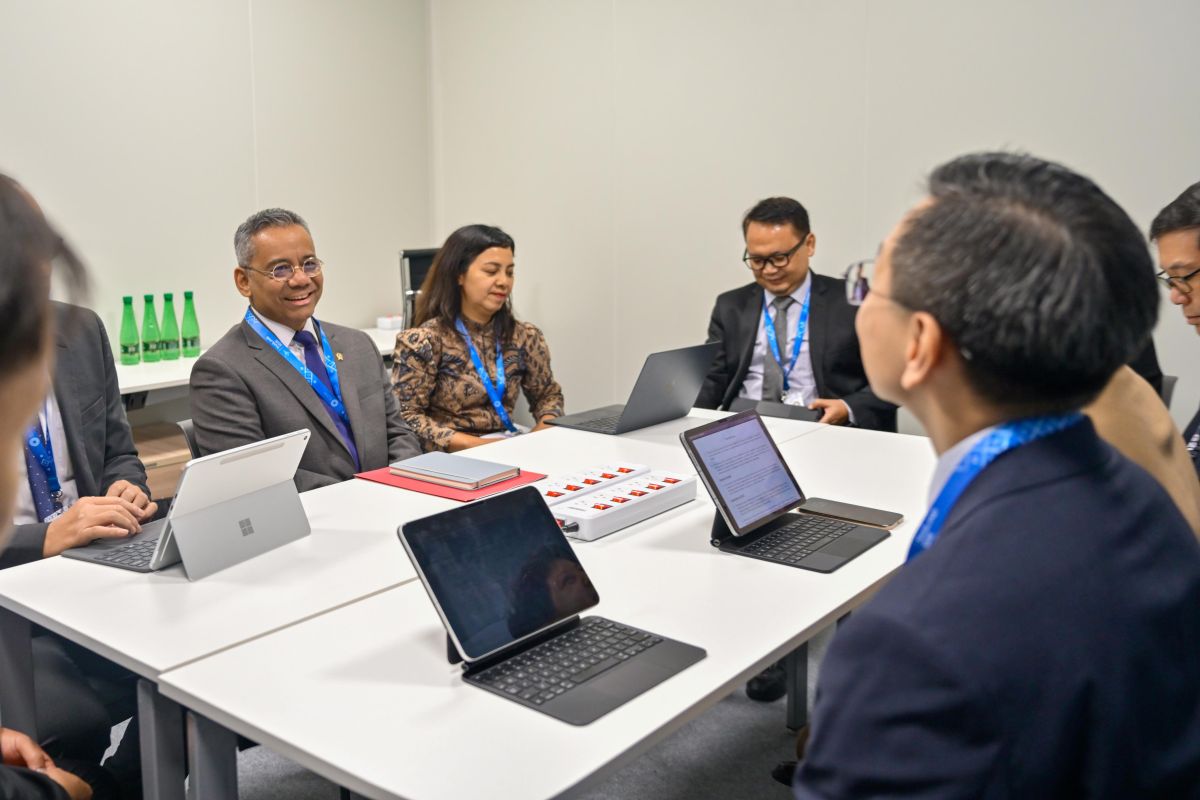
Jakarta (ANTARA) - Finance Minister Suahasil Nazara has explored support from the Japan Bank for International Cooperation (JBIC) for infrastructure and energy projects.
The discussions took place during a bilateral meeting with the JBIC governor in Bangkok, Thailand.
Suahasil said in a press statement in Jakarta on Thursday that the talks included support for developing a waste-to-energy facility in Legok Nangka, West Java. He also encouraged exploration of potential cooperation between JBIC and state-owned infrastructure financing firm PT Sarana Multi Infrastruktur (Persero), covering both new and ongoing projects.
On energy security, the two sides discussed opportunities to strengthen energy supplies and support the development of projects aligned with Indonesia’s development priorities.
Suahasil reaffirmed Indonesia’s commitment to achieving net-zero emissions by 2060 or earlier, and to developing a carbon market as part of the transition to a low-emissions economy.
Discussing the carbon tax, he stressed that the instrument was not solely about raising state revenue, but was also intended to encourage businesses to adopt more environmentally friendly practices.
“For me, implementing a carbon tax is not simply about generating more revenue. The policy is intended to provide incentives for businesses to adopt practices that are more carbon-friendly,” he said.
Alongside the meeting with JBIC, Suahasil held a series of bilateral discussions with Thailand, Singapore, the World Bank and the International Finance Corporation (IFC).
In his meeting with the World Bank, the minister discussed the challenge of maintaining fiscal credibility while supporting economic growth. The talks focused on balancing growth targets, limited resources and the effectiveness of government spending.
The World Bank said it was ready to support Indonesia’s development priorities, including the development of micro, small and medium-sized enterprises (MSMEs) through a strategy focused on digital finance and the Agricollect initiative in the agricultural sector. The bank also outlined its involvement in health programmes in Indonesia.
With the IFC, Suahasil explored ways to strengthen exports and support MSMEs.
At a meeting with Singapore’s Second Minister for Finance, Indranee Rajah, Suahasil exchanged views on the region’s economic outlook and opportunities to deepen financial cooperation within ASEAN. Discussions covered carbon market development, the use of blended finance to support nature-based solutions, and stronger infrastructure and energy connectivity, including through the ASEAN Power Grid.
The two sides also discussed opportunities to share experience in the use of artificial intelligence and digitalisation. The regional cooperation is expected to strengthen connectivity, expand business opportunities and support sustainable economic growth.