
Finance Minister evaluates FTA impact, explores economic potential from industrial sector
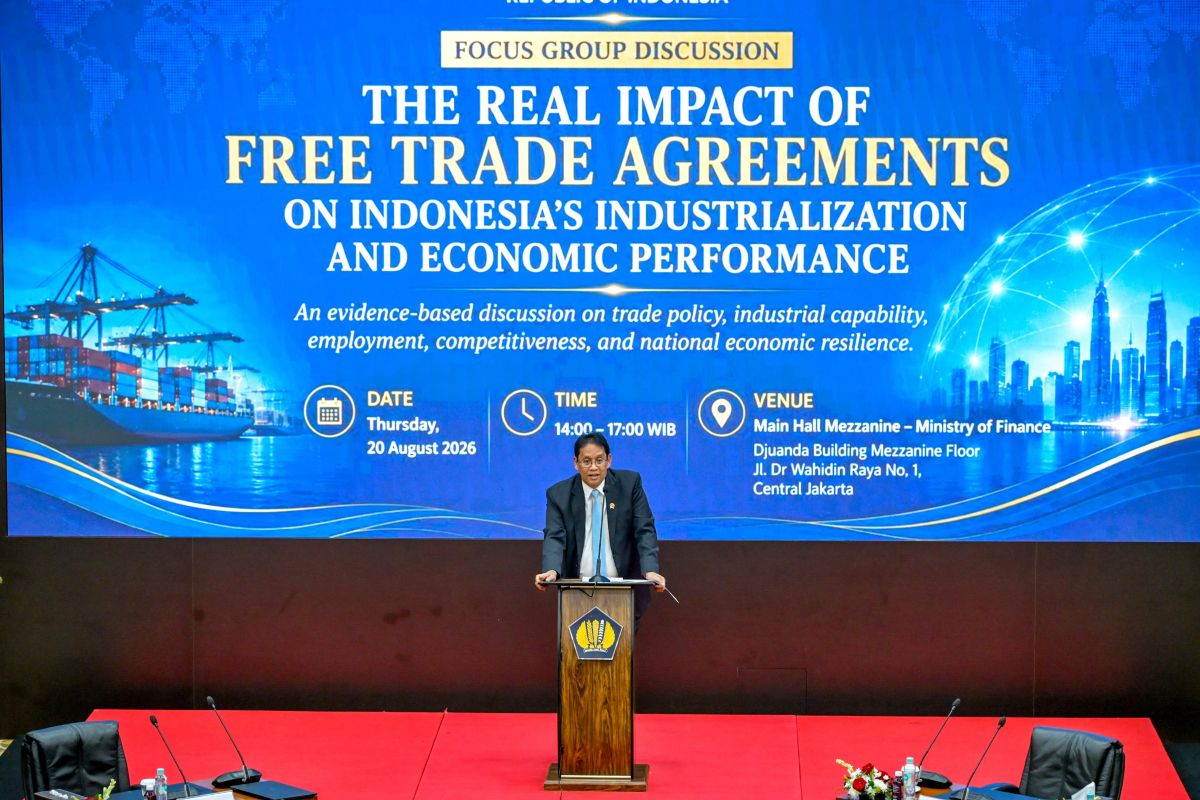
Finance Minister Purbaya Yudhi Sadewa is evaluating the effects of free trade agreements (FTAs) while exploring the economic potential emerging from affected industrial sectors.
“Next September, we will change the Ministry of Finance’s approach from economic potential, including free trade, so that economic growth can accelerate to at least 6 percent by the end of 2026,” Purbaya said during the Free Trade Agreements on Indonesia Industrialization and Economic Performance event, as quoted from a written statement in Jakarta on Thursday.
The Finance Minister wants to conduct mapping based on the real impact on each industry. Industries that have no prospects need to be identified, while sectors that can still be saved must receive the right strategy.
He also highlighted new industries that are not yet Indonesia’s main strength but have high growth prospects, such as data centres.
According to him, Indonesia has a significant opportunity to attract data centre investment, but the government must ensure energy availability to support the development of this industry.
In addition, Purbaya also sees opportunities from Indonesia’s trade cooperation with Europe, particularly regarding products that use new and renewable energy.
He considers that trade facilities can be an opportunity for Indonesian industry to improve export competitiveness.
The Finance Minister cited the textile and footwear sectors as potentially benefiting from the use of renewable energy in their production processes. He also opened the possibility of strengthening geothermal energy investment through PT Geo Dipa Energi to support industrial estates.
“I have Geo Dipa, I can drill more geothermal wells, I invest there to supply energy to a textile industry centre or existing textile industries, so they can export to Europe more competitively,” he added.
Furthermore, the Finance Minister said that this approach underscores that the government needs to identify which sectors have opportunities to grow and then determine the necessary interventions.
Purbaya also sees that the challenge of free trade is not merely a matter of threat to domestic industry. Rather, he said, FTAs must be utilised to identify new opportunities, improve industrial competitiveness, strengthen energy, attract investment, and encourage value-added exports.