
Finance Minister: 2027 State Budget Designed Prudently Amid Global Uncertainty
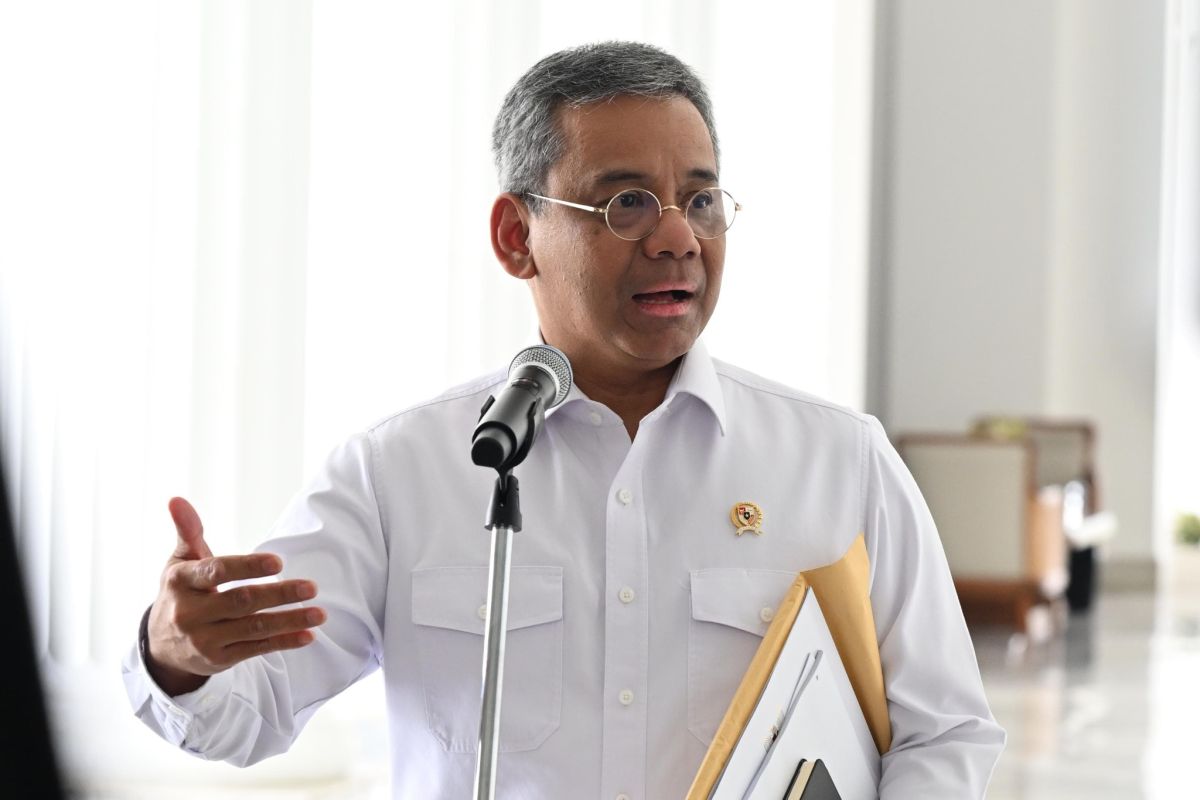
Amid various needs and pressures, the State Budget (APBN) continues to be managed prudently by maintaining a deficit below 3 per cent of GDP.
Jakarta (ANTARA) - Finance Minister Suahasil Nazara has ensured that the 2027 State Budget (APBN) is designed to be prudent and credible amidst high levels of global uncertainty.
She explained that the discussions for the 2027 Draft State Budget (RAPBN) are taking place against a backdrop of increasing geopolitical tensions and global trade fragmentation, which disrupt supply chains, increase price volatility, and add inflationary pressures.
“On the other hand, in the financial sector, interest rate hikes from the Federal Reserve, Europe, and Japan have the potential to affect global financial conditions and investor appetite for emerging markets like Indonesia. However, we are grateful that despite these difficult global challenges, Indonesia’s economic fundamentals remain resilient,” Suahasil stated during the 7th Plenary Session of the DPR RI, first session of the 2026-2027 period in Jakarta on Tuesday.
She reported that the APBN performance up to August 2026 remained solid. Indonesia’s cumulative economic growth in the first semester of 2026 was recorded at a robust 5.45 per cent (yoy), with second-quarter growth reaching 5.29 per cent.
State revenue has continued to grow, reaching Rp2,055.6 trillion, equivalent to 65.2 per cent of the APBN target.
This demonstrates that the APBN remains an instrument to support economic growth while simultaneously protecting the public.
Throughout 2026, Suahasil noted, the APBN was used flexibly and responsively to face various challenges, including disaster management and maintaining price stability, as well as ensuring energy and food availability amidst rising global oil prices and the threat of El Niño.
“The APBN provides various stimuli to maintain public purchasing power and the sustainability of the business world. This flexibility is still carried out with the principles of prudence and fiscal discipline. Amid various needs and pressures, the APBN is managed prudently by keeping the deficit below 3 per cent of GDP,” she said.
She emphasised that fiscal policy must remain prudent but not passive in facing various challenges.
“Fiscal policy must remain prudent but not passive. Fiscal policy must be present to maintain growth momentum and protect the community while maintaining its credibility,” Suahasil asserted.
The 2027 fiscal policy is designed to remain expansive, with a target deficit of 2.4 per cent of GDP.
Meanwhile, the Government and the DPR RI have agreed to an increase in state expenditure in the 2027 APBN by Rp9.07 trillion, rising to Rp4,106.26 trillion from the previous Rp4,097.19 trillion.
In detail, state expenditure consists of central government expenditure of Rp3,371.26 trillion and transfers to regions (TKD) of Rp735 trillion.
Furthermore, state revenue is agreed at Rp3,435.10 trillion, an increase of Rp9.07 trillion from the previous Rp3,426.03 trillion.
Specifically, tax revenue is set at Rp2,911.95 trillion, up by Rp4 trillion from Rp2,907.95 trillion. Meanwhile, Non-Tax State Revenue (PNBP) is pegged at Rp522.48 trillion, up by Rp5.07 trillion from Rp517.41 trillion.
The basic assumptions for the 2027 macroeconomics include an economic growth target of 6.0 per cent, inflation at 2.5 per cent, and a 10-year Government Securities (SBN) interest rate of 6.9 per cent.
The Rupiah exchange rate is set at Rp17,500 per US dollar, the Indonesian Crude Oil (ICP) price at 75 US dollars per barrel, oil lifting at 612,500 barrels per day, and gas lifting at 954,000 barrels of oil equivalent per day.