
Filep Wamafma Urges Inclusion of Papuan Customary Rights in Agrarian Reform Bill
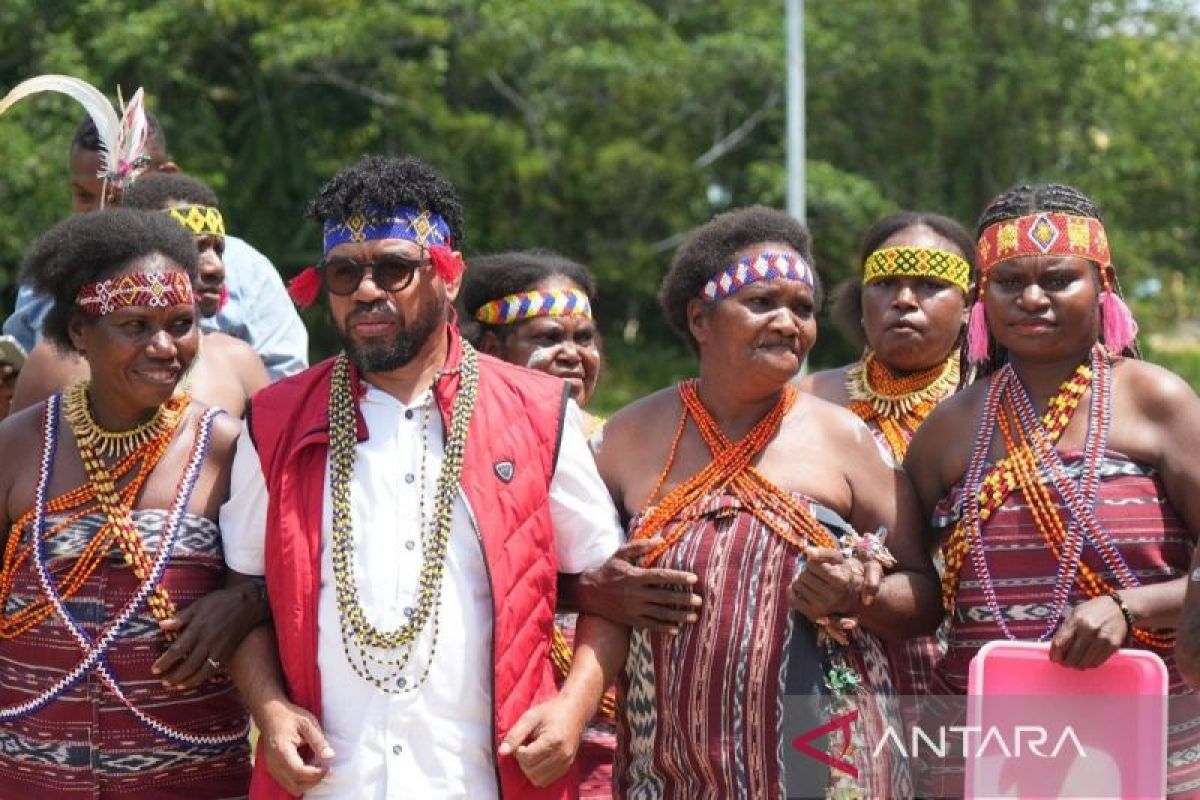
The Chairman of Committee III of the Regional Representative Council (DPD RI), Filep Wamafma, has requested that the discussion of the Agrarian Reform Bill accommodate the protection of customary rights and the specific needs of Papuan indigenous communities.
“For instance, by including a specific chapter on agrarian reform within the special autonomy region of Papua,” Filep stated in a briefing in Manokwari, West Papua, on Friday.
Filep noted that such regulation is essential so that the Agrarian Reform Bill can serve as an instrument to correct imbalances in land ownership and structural agrarian conflicts without neglecting the rights of indigenous peoples.
He referred to Law Number 2 of 2021 concerning Papua Special Autonomy, which mandates the recognition, respect, protection, empowerment, and development of indigenous rights, including customary rights (hak ulayat) and individual rights of customary law communities.
“Special considerations must be taken, including provisions for deliberation and agreement by customary law communities regarding the provision of customary land for various purposes,” he said.
This is crucial to ensure that customary territories in Papua are not automatically categorised as Agrarian Reform Object Land (TORA) simply because the community does not yet possess individual ownership certificates.
“The absence of individual certificates cannot be used as a basis to conclude that indigenous communities do not have rights over that territory,” he added.
He suggested that the government undertake identification and verification, mapping of customary territories, determination of rights, consultation, and obtaining community consent before issuing rights, permits, concessions, or any other forms of land tenure.
“The goal is to prevent conflicts resulting from the granting of permits or concessions when the status of customary territories has not yet been resolved,” he said.
He stated that the consent of indigenous communities must be given freely without pressure, prior to the decision to implement projects, and must provide space to reject or request changes to such plans.
“The Agrarian Reform Bill needs to regulate an integrated National Agrarian and Customary Territory Information System to prevent overlapping land ownership and licensing,” he said.
According to him, this system needs to contain data on customary law communities, territorial boundaries, customary rights, individual community land, customary forests, permits and concessions, business cultivation rights (HGU), management rights, forest areas, mining areas, National Strategic Projects (PSN), and agrarian conflicts.
“The issue of overlapping authority and concessions is indeed one of the issues being highlighted in the Bill’s discussions,” he concluded.
Source: jawawa.id (https://jawawa.id/newsitem/filep-wamafma-urges-inclusion-of-papuan-customary-rights-in-agrarian-reform-bill-1789165302)
Originally published by Antara (Indonesian) (https://www.antaranews.com/berita/5737395/filep-wamafma-dorong-hak-adat-papua-masuk-ruu-reforma-agraria), translated from Indonesian