
Fighting Cancer, Building Sovereignty
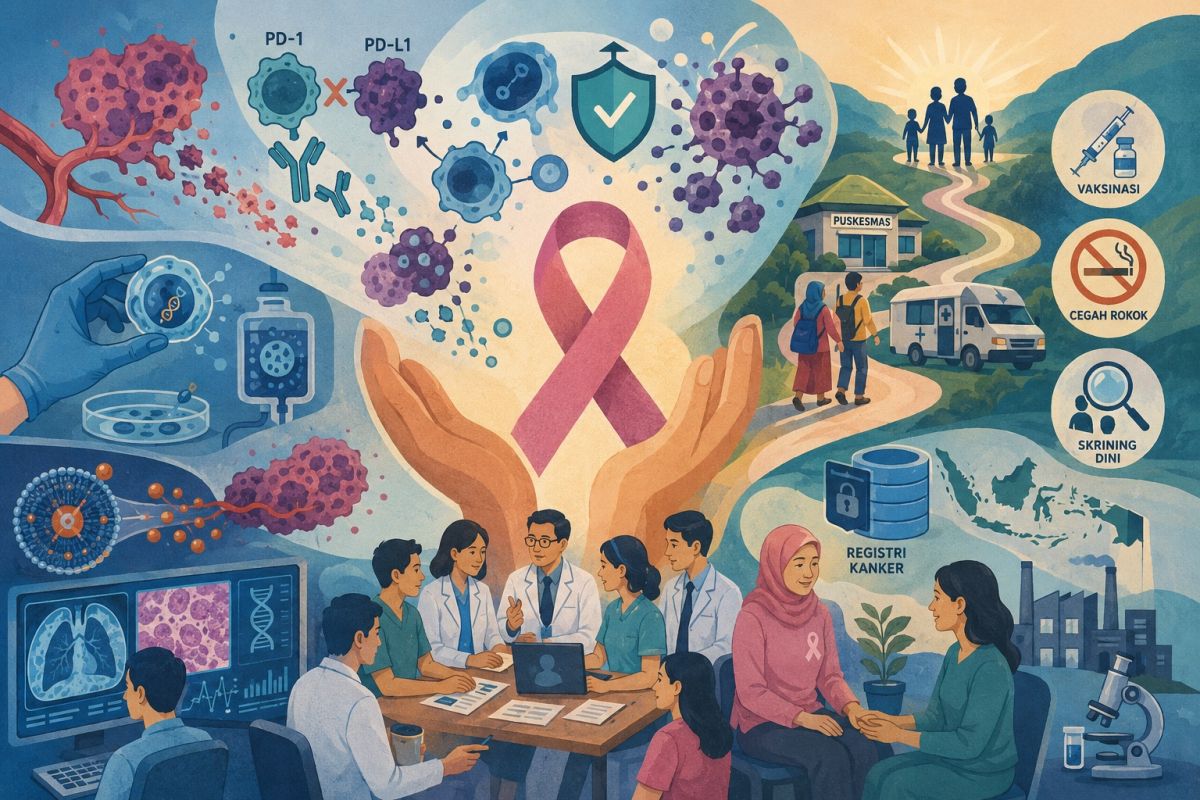
Cancer remains one of the biggest health threats in Indonesia. The Global Cancer Observatory estimates there were 474,283 new cases and 283,299 deaths from cancer in Indonesia in 2024. Guidelines published by the Ministry of Health in 2026 also note that more than 70 percent of patients arrive when the cancer is already at an advanced stage.
These figures highlight a very real problem. Many patients do not detect the disease early. Some must travel long distances, wait for examinations, or face significant costs. As a result, the opportunity to obtain the best treatment can be diminished.
Indonesia has actually established a National Cancer Plan for 2024-2034. The policy direction includes prevention, early screening, treatment, palliative care, case recording, and improved governance. The challenge is to ensure that this plan is truly felt in hospitals, community health centres, and the lives of patients.
Cancer is not a single disease
Cancer is often discussed as if it were a single disease. In reality, cancer consists of many different types. Breast, lung, liver, or bowel cancers have different characteristics and treatments. Even two people with cancer in the same organ can respond differently to the same drug.
Cancer can also spread to other organs, a process known as metastasis. Once it has spread, the properties of the cancer cells in the new location can differ from the original tumour. This is why doctors often need to perform repeated examinations to understand the changes in the disease and select the most appropriate therapy.
Furthermore, a tumour does not exist in isolation. It is surrounded by blood vessels, supporting tissue, and immune cells. The environment around the tumour can protect it from drugs or hinder the work of the immune system. Therefore, cancer treatment is not simply about killing one type of cell, but about confronting a disease that constantly changes.
The immune system can be tricked
The immune system has the ability to recognise abnormal cells. However, cancer cells originate from the body’s own cells, so their appearance is often similar to healthy cells. The immune system must be careful not to attack normal tissue.
Cancer exploits this situation. Some tumours can disguise their identity markers or send signals that weaken immune cells. One example is the relationship between PD-1 and PD-L1, which acts like a brake pedal on immune cells.