
Field Training Programme Aims to Boost Oil Palm Farmers' Productivity and Fruit Quality
According to Hartono, a plantation practitioner from the Yogyakarta Plantation Community Academy (AKPY), farmers often focus solely on fruit weight, whereas the correct level of ripeness determines oil extraction rates and free fatty acid levels. “If the quality is good, the mill profits and the farmers’ fresh fruit bunch (TBS) price is also better,” he stated in Jakarta on Tuesday.
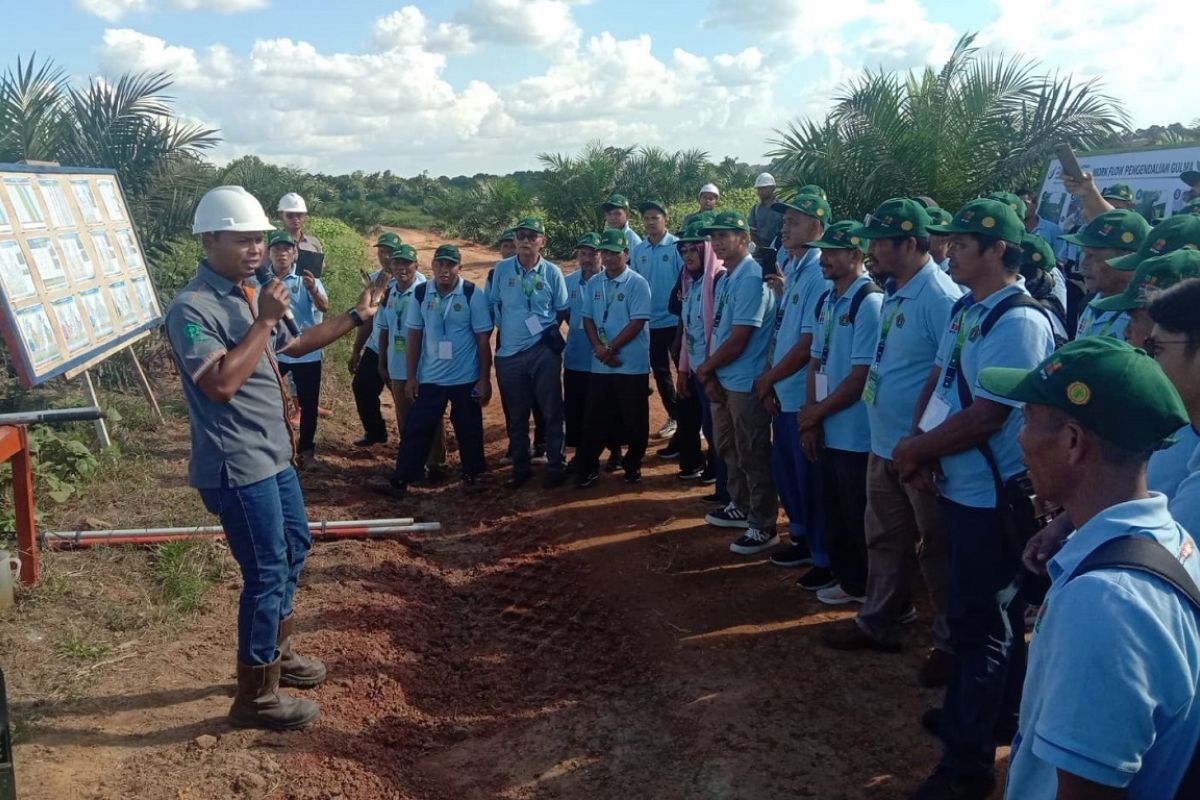
In relation to this, AKPY, together with the Plantation Fund Management Agency (BPDP) and the Directorate General of Plantations at the Ministry of Agriculture, held field training for oil palm farmers under the 2026 Plantation Human Resources Development Programme (SDMP). A total of 149 participants, comprising independent smallholders and extension officers from East Kotawaringin Regency (Kotim), Central Kalimantan, observed practical cultivation, harvesting, and post-harvest activities at oil palm plantations and mills.
They visited the plantation of PT Bumitama Gunajaya Agro (BGA) Region 3 Pundu for cultivation material, while 88 other farmers learned harvesting and post-harvest practices at the plantation and mill owned by PT Bisma Dharma Kencana (BDK). “The method of learning directly in the field is the most effective approach to improve farmers’ technical understanding, which ultimately increases the productivity and quality of fresh fruit bunches,” Hartono said.
AKPY plantation practitioner Tri Haryadi emphasised that field experience is a crucial part of the farmers’ learning process because they can see firsthand how best practice management is applied. They were therefore introduced to good plantation practices, starting from land preparation, seeding, planting, maintenance of immature plants (TBM), management of mature plants (TM), through to harvesting techniques and sorting of fresh fruit bunches (TBS).
Through this activity, he continued, it is hoped that farmers will not only take home knowledge but also a change in mindset, recognising that high productivity must go hand in hand with quality results and plantation management efficiency. At the BGA plantation, participants gained a deep understanding of the importance of using superior seeds as the foundation of productivity. BGA Region 3 Pundu Head, Lavin D. Saputra, stressed that seed quality is the starting point for a plantation’s success.
“Quality seedlings will become the foundation for healthy and productive trees. This initial step greatly determines the future yield of the plantation,” Lavin said. Meanwhile, PT Bisma Dharma Kencana Estate Manager Hery Subagyo stated that the success of an oil palm plantation is not just about high production, but also consistency in implementing technical standards and occupational safety.
“In the field, farmers can see firsthand how the process runs from upstream to downstream. Starting from plant maintenance, harvesting techniques, to how the fruit is assessed for quality at the mill,” he said. According to him, the company’s openness in receiving farmer visits is a form of contribution from the business sector in supporting the capacity building of smallholders. By synchronising theory and practice, the oil palm farmers of Kotim are expected to be able to apply better cultivation, harvesting, and post-harvest techniques on their own plantations, so that productivity increases, TBS quality is maintained, and farmer welfare can grow sustainably.