
FGD on Hajj Fund Benefits Discusses Individual Interests and Social Cohesion of Pilgrims
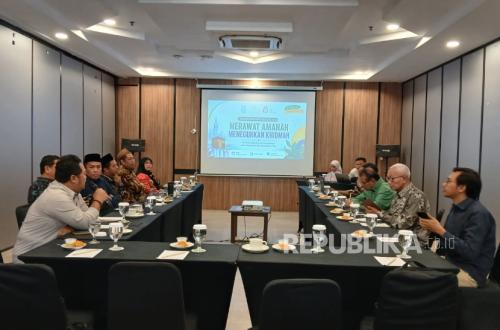
Public debate regarding the distribution of hajj fund benefits has drawn the attention of the Center for Religious Research and Society (CERAS). The research institute therefore organised a focus group discussion (FGD) titled “Merawat Amanah, Meneguhkan Khidmah: Menimbang Keadilan dan Kemaslahatan dalam Pengelolaan Nilai Manfaat Dana Haji” at UIN Syarif Hidayatullah on Wednesday (26/8/2026).
The event was also part of the series leading up to the 35th Nahdlatul Ulama (NU) Congress in Jombang. FGD participants discussed proposals to reformulate the 2027 Hajj Travel Cost (BPIH) subsidy scheme, recommendations from the 2026 NU National Conference of Religious Scholars regarding fairness in the distribution of benefit values, and discourse on strengthening individual account mechanisms for prospective hajj pilgrims.
Speaker from UIN Syarif Hidayatullah, Dadi Darmadi, Ph.D, examined the implementation of the hajj pilgrimage from sociological and anthropological perspectives. He emphasised the importance of reading hajj practice not merely as a religious ritual, but also as a social phenomenon involving power relations, economics, and complex community dynamics.
According to him, this perspective is often overlooked in debates on hajj fund management, which tend to focus more on fiqh and financial aspects. Dadi highlighted the tension between the individual interests of pilgrims and the social cohesion of the pilgrim community collectively. “This also determines how a hajj policy is accepted or rejected at the grassroots level,” said the Harvard University alumnus in a press release in Jakarta.
Source: jawawa.id (https://jawawa.id/newsitem/fgd-on-hajj-fund-benefits-discusses-individual-interests-and-social-cohesion-of-pilgrims-1787795609)
Originally published by Republika (https://khazanah.republika.co.id/berita/tkdlpp484/fgd-manfaat-dana-haji-bahas-kepentingan-individu-dan-kohesi-sosial-jamaah), translated from Indonesian