
Fertiliser redemption increases by 36 per cent, Pupuk Indonesia optimises distribution
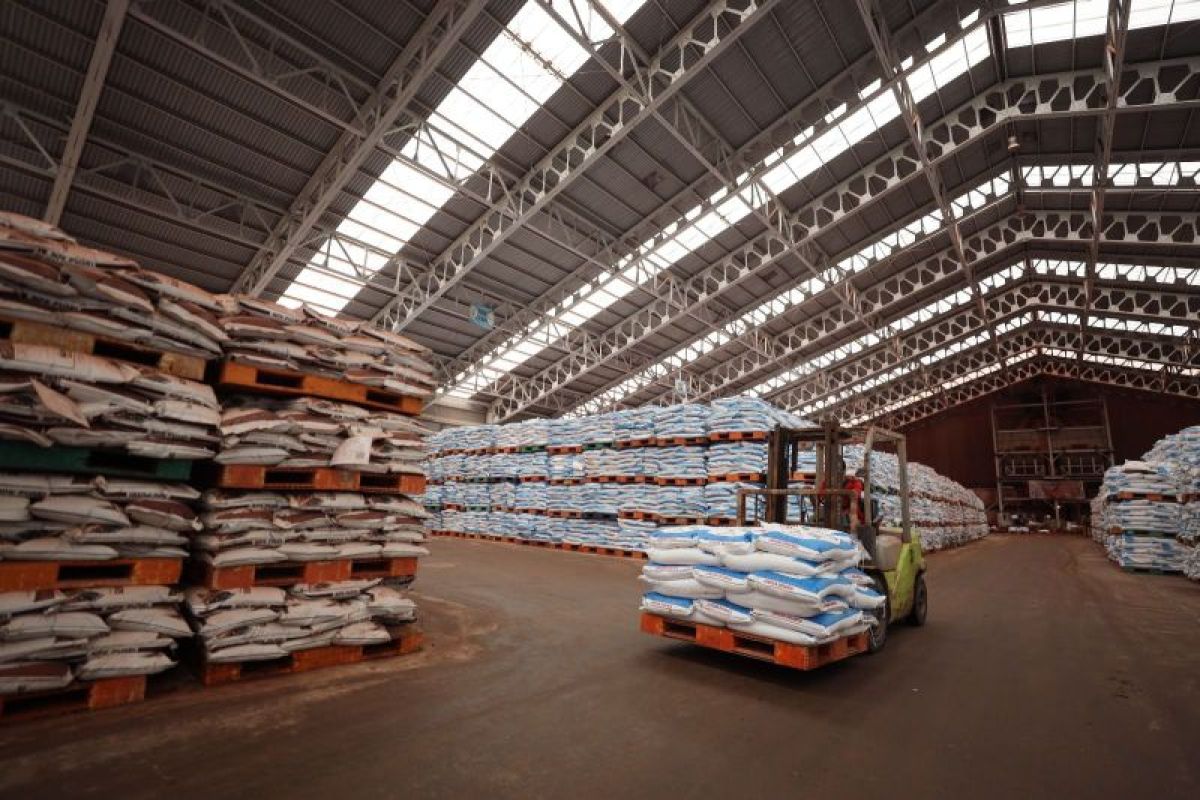
PT Pupuk Indonesia (Persero) is optimising the distribution of national fertiliser to support the increasing redemption of subsidised fertiliser, with realisations reaching 3.4 million tonnes as of early May, a 36 per cent increase year-on-year.
“The increase in redemption indicates high enthusiasm among farmers, especially after the reduction in the HET (Maximum Retail Price) of subsidised fertiliser and the simplification of distribution management,” said Pupuk Indonesia’s Corporate Secretary, Yehezkiel Adiperwira, in an official statement received in Jakarta on Friday.
He added that the reduction in the HET of subsidised fertiliser by 20 per cent occurred in October 2025.
He said that the increase in fertiliser redemption was also driven by the simplification of distribution management through Presidential Regulation Number 113 of 2025, which made access to subsidised fertiliser easier for farmers and distribution smoother.
In addition, the high fertiliser redemption was also influenced by the longer rainy season in several areas.
“Therefore, we continue to ensure that fertiliser distribution runs optimally so that farmers’ needs can be met quickly and appropriately according to the needs in the field,” said Yehezkiel.
The company is also continuing to maintain sufficient national fertiliser stocks, which as of 11 May, were recorded at 1.1 million tonnes.
The company also utilises the Command Centre and the i-Pubers application to maintain smooth distribution and ensure that stocks are maintained in each region, as well as to monitor redemption levels and stock conditions in real-time at each location.
He stated that the digital system allows the company to identify areas with high demand and carry out rapid stock reallocation without waiting for manual reports.
He added that the reallocation of fertiliser stocks is carried out with the support of integrated logistics infrastructure, ranging from ports, fleets of ships, to warehouse networks, so that the transfer of stocks between regions can be carried out more quickly to maintain the availability of fertiliser in areas with high redemption rates.
“Through the Command Centre and the i-Pubers system, we can monitor stock conditions in real-time up to the kiosk level. This system allows for a faster distribution response if there are areas with high fertiliser needs,” said Yehezkiel Adiperwira.