
Fertiliser Producers Struggle to Secure Gas, Warn of Consequences as DMO Falls Short
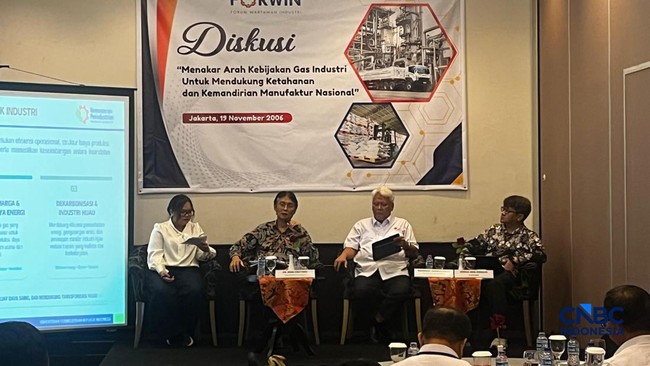
Jakarta — Indonesia’s fertiliser industry is still facing difficulties securing natural gas supplies despite receiving allocations under the Certain Natural Gas Price (HGBT) policy. The issue is not simply whether gas is competitively priced, but whether supply is reliably available in the quantities required for plant operations.
Indonesian Fertiliser Producers Association (APPI) chairman Nugroho Christijanto said several companies, including those in Aceh and East Java, were already experiencing the problem. Supplies falling short of allocations made it difficult for companies to maintain production efficiency.
“For fertiliser producers in Aceh, the gas supply cannot be fully met. When supply does not match the allocation, the first thing to come under pressure is efficiency,” Nugroho said at a Forwin discussion on Thursday (19 November 2026).
Natural gas is a key raw material in ammonia production, which is then used to make nitrogen-based fertilisers, including urea. Fertiliser plants currently operating in Indonesia have also been designed to use gas to particular specifications, making it difficult to replace this feedstock with another source.
When gas supplies fall below a plant’s technical minimum requirements, energy consumption can actually rise. This increases production costs and could weaken the competitiveness of domestically produced fertiliser.
“Ammonia plants that use natural gas as a feedstock are technically designed with minimum requirements that must be met. If those requirements are not met, energy consumption will increase. Efficiency is at stake. When efficiency comes under pressure, the competitiveness of the products is inevitably affected,” he said.
Given Indonesia’s geography, the Domestic Market Obligation (DMO) cannot simply set the proportion of gas that must be allocated to the domestic market. Transport infrastructure, pipelines, liquefaction facilities and regasification facilities must also be in place to ensure supplies reach factories.
“The DMO must be understood to mean that gas allocated for domestic use can also be delivered properly to the end user. We should not talk about production of 1,000 and a DMO obligation of 250 if we cannot distribute it,” Nugroho stressed.
Despite these supply problems, Indonesia’s fertiliser production capacity remains substantial enough to meet the needs of the agricultural sector, particularly food crops. APPI members have nearly 14 million tonnes of installed capacity across various types of fertiliser, with urea production of around 7.5 million tonnes and NPK production of around 5.5 million tonnes.
“Association members are currently tasked with meeting subsidised fertiliser demand of up to around 9.5 million tonnes. Thankfully, all of it can be supplied today. In 2025, we were able to meet all fertiliser demand,” he said.
Nugroho emphasised that gas shortages should not be viewed solely as an operational issue for fertiliser companies. Disruptions can feed through into production costs and fertiliser prices, and ultimately affect agriculture, which underpins national food security.
“I want to illustrate just how far-reaching its strategic role is. If fertiliser is unavailable or unaffordable, the prices of agricultural products will inevitably rise as well,” he said.
Source: jawawa.id (https://jawawa.id/newsitem/fertiliser-producers-struggle-to-secure-gas-warn-of-consequences-as-dmo-falls-short-1795096274)
Originally published by CNBC Indonesia (https://www.cnbcindonesia.com/news/20261119175905-4-786736/pengusaha-pupuk-curhat-gas-sulit-ingatkan-efek-buruknya-dmo-tumpul), translated from Indonesian