
Ferry Transport Needs Fairer Development Support
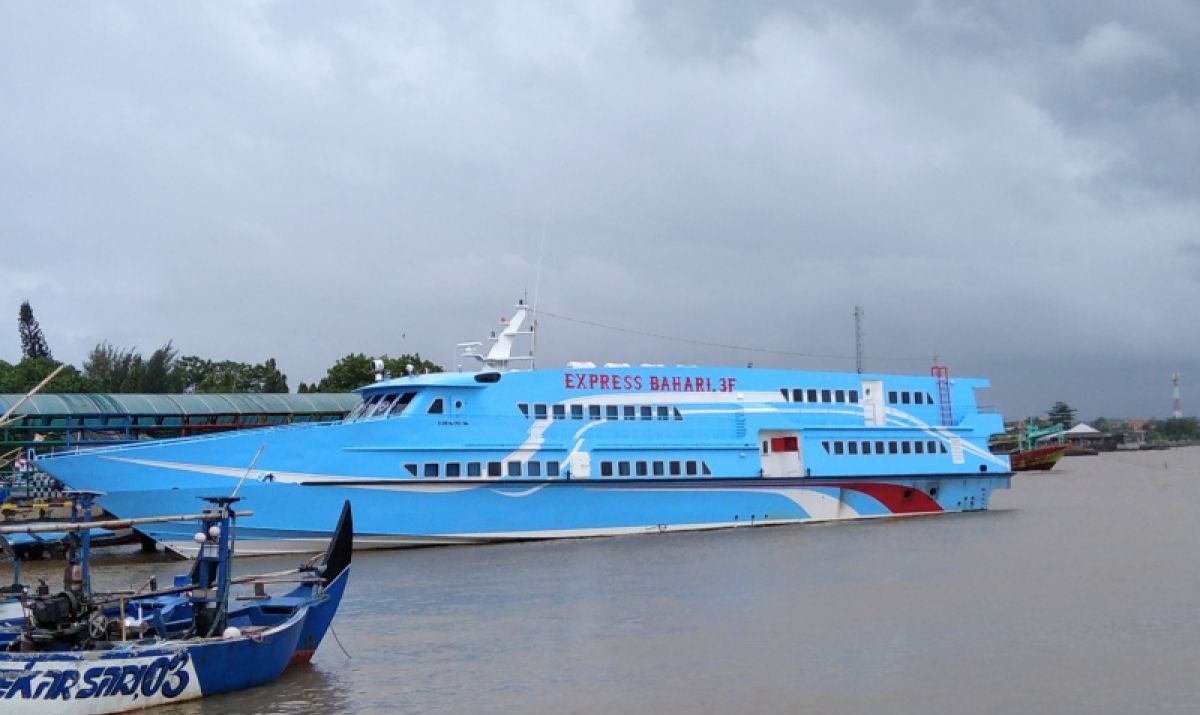
Ferry transport is considered to need fairer and more proportional development support, in line with its role in maintaining Indonesia’s connectivity as an archipelagic nation. This attention is important so that ferry transport can continue to develop while carrying out its role in connecting people, vehicles, and the distribution of goods between islands.
Commemorating the 81st anniversary of the independence of the Republic of Indonesia as well as 50 years of the national ferry industry’s journey, ferry transport is being encouraged to continue improving safety and reliability to strengthen inter-island connectivity. This effort is important because ferries are not only a mode of public transport, but also support the distribution of basic necessities, logistics, agricultural products, industrial products, energy, and tourism activities.
Chairman of the Central Executive Board of the Indonesian National Entrepreneurs Association for River, Lake and Ferry Transport (Gapasdap), Khoiri Soetomo, said that this momentum should be an opportunity to reflect and determine the future direction of ferry transport development.
“After 81 years of Indonesia’s independence, ferry transport should receive fair and proportional development attention like other modes of transport,” he said in an official statement.
According to Khoiri, this demand is not for special treatment, but for attention commensurate with the responsibility of ferry transport in maintaining Indonesia’s connectivity.
“We are not asking for privilege, but for attention that matches the magnitude of the ferry sector’s responsibility in uniting an archipelagic nation,” he said.
He considers ferries to be more than just a complementary mode of transport. For Indonesia as an archipelagic nation, the existence of ferries is an important part of the national connectivity system.
“Roads may end at the seashore, but Indonesia’s journey must not stop there. Ferry vessels are ‘moving bridges’ that continue the journey of people, vehicles and goods between islands,” he said.
Every day, ferry transport supports public mobility and the distribution of various needs, from basic commodities, agricultural products, industrial products, and energy to other commodities. Therefore, disruption to ferry services has the potential to affect supply chains, logistics, tourism, industry, SMEs, and the prices of public necessities.
In terms of safety, Gapasdap believes that responsibility cannot be borne solely by ship operators. Safety is a chain involving regulators, operators, port managers, ship crews, vehicle owners, logistics companies, drivers, cargo owners, law enforcement officers, supporting industries, and service users.
“Every safety incident should not stop at the question of who is at fault. We must ask what is wrong in our system and what must be improved together so that the same incident does not recur,” said Khoiri.
Therefore, a safety culture needs to be developed from mere safety awareness into a safety culture. Safety must become a shared habit and awareness, not just a rule that is obeyed when inspections take place.
Improvements in ship safety standards must also go hand in hand with improvements in the quality and capacity of infrastructure. Piers, movable bridges, load capacity, basin depth, breakwaters, berthing facilities, navigation, road access, buffer zones, and safety and rescue facilities need to be developed in line with ship developments and traffic growth.
“We must not demand increasingly modern ships while the infrastructure lags behind. Better ships require better ports,” he stressed.
According to Khoiri, safety must also be ensured from the process on land, at the port, during loading, during the voyage, until passengers and goods arrive at their destination. Therefore, compliance by service users is an important part of building ferry transport safety.
He invited the public to apply the same safety compliance when using ships as when using aeroplanes. According to him, the value of human safety should not be differentiated based on the mode of transport.
“When boarding a plane, we are willing to be checked, follow baggage rules and safety instructions. We are compliant on planes, and we must be equally compliant on ships,” he concluded.