
Female Palm Oil Farmers Level Up, Garden Yields Also Boosted
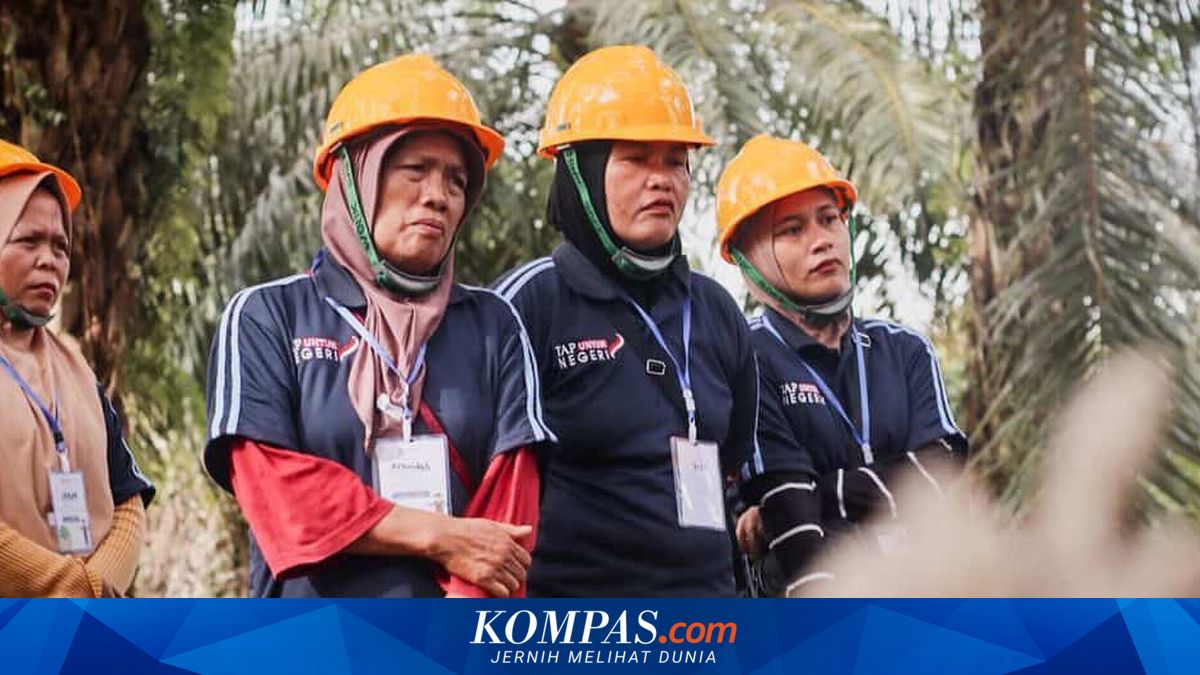
JAKARTA — Female palm oil farmers are beginning to take on a larger role in garden management, moving from simply following habits to becoming more independent managers. This change not only impacts farming methods but also holds potential for more optimal garden yields.
In various palm oil smallholder centres, women are now increasingly active in determining cultivation processes. They are involved from seedling selection, determining fertilisation timing, to ensuring harvests are carried out properly. This role has grown alongside increasing awareness that garden success is not determined solely by labour, but also by knowledge.
“I really only just found out that small palm trees shouldn’t be cut yet,” said Ida Farida, a palm oil farmer from Mendik Village, Paser, East Kalimantan, in a press statement on Tuesday (21/4/2026).
“Previously I didn’t know, so I just harvested randomly. Now I know the science behind it, so I understand better which ones are ready to harvest and which aren’t, so the results can be better too,” she continued.
The shift in perspective began to be felt after Ida attended the PERKASA (Quality and Prosperous Farmers) training, which focuses on enhancing farmers’ capacities through practical field learning.
In the training, participants not only understood harvesting criteria but also garden maintenance aspects that were often overlooked before.
“I also just found out that dead palm trees shouldn’t be left alone,” Ida revealed.
“In the past, I just left them because I didn’t know. After it was explained, it turns out they can be a source of disease and spread to other plants, so now I cut them down immediately,” she added.
Syarifah, a PERKASA training participant and Secretary of Sembuluh Dua Village, said the situation directly impacts production results. According to her, many farmers do not yet understand proper fertilisation, harvesting, and plant care methods.
“The community previously did not know how to fertilise, harvest, and care for plants properly, so the yields obtained were not maximal,” she said.
“After attending the PERKASA training, we now know the right timing, the correct methods, and the reasons behind every action in the garden. PERKASA has opened our horizons and made us more confident in managing the garden ourselves,” she continued.
The PERKASA training is designed with a combination of 40 percent basic theory and 60 percent direct field practice over three days. This scheme aims for farmers to immediately apply the techniques learned and build confidence in independently managing gardens.
To ensure the training results are truly implemented, the company conducts periodic monitoring post-training. This mentoring becomes key so that changes in farming methods are not just temporary, but become a new standard in enhancing garden productivity.
In addition, the company also provides agronomy consultation services via WhatsApp at 0811-2220-1210. This service is not only for training participants but also for the general public who want to learn better palm oil cultivation practices.
The company also distributes the book “TAP for the Nation: Sharing Experiences for the Nation” which comprehensively summarises agronomy standard procedures in simpler and easier-to-understand language, so it can be accessed by more farmers.