
Feeling Encircled by China, Russia, and North Korea, Japan Boldly Establishes New Intelligence Agency
Japan is entering a new chapter in its security policy. After decades of limiting its defence and intelligence apparatus due to post-World War II trauma, Tokyo is now building a more centralised national intelligence agency to counter rising threats from China, Russia, and North Korea.
The New York Times reported on Monday, 13 July 2026, that Japanese leaders have been quietly seeking advice from the United States, Australia, and Germany in recent months. These consultations covered intelligence technology, personnel requirements, and priority setting for the new Japanese agency.
The move is no longer just a concept. Japan’s parliament passed a law on Wednesday, 27 May 2026, establishing the National Intelligence Council and the National Intelligence Bureau. The legislation provides the foundation for one of the most significant overhauls of Japan’s intelligence coordination system in recent decades.
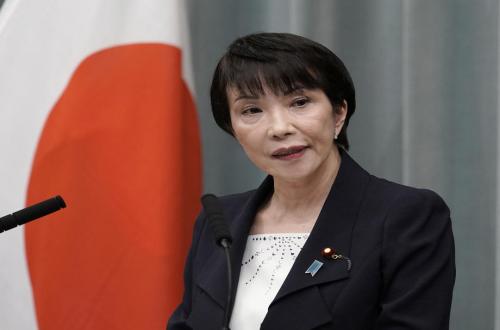
Prime Minister Sanae Takaichi described the enactment as a first step towards strengthening the country’s intelligence capabilities. For Takaichi, military and diplomatic power cannot be effective if the government fails to acquire and process strategic information independently.
“Without strong information capabilities, Japan will also lack diplomatic capacity, defence capability, economic standing, and technological expertise,” Takaichi said at a press conference on Monday, 19 January 2026.
The statement shows that the intelligence reform is not seen merely as a matter of catching spies. Tokyo wants to make information a core element of national power, on par with diplomatic, military, economic, and technological strength.
Currently, Japan’s intelligence system is scattered across various institutions. Strategic information is gathered by bodies including the Cabinet Intelligence and Research Office (CIRO), the National Police Agency Security Bureau, the Public Security Intelligence Agency under the Ministry of Justice, the Ministry of Foreign Affairs’ intelligence unit, and the Defence Intelligence Headquarters at the Ministry of Defence. Each agency has its own networks, interests, and chain of command. The system has often been criticised for creating bureaucratic silos that hinder information sharing and slow the delivery of analysis to the prime minister.
Under the latest reform, CIRO will be upgraded to become the National Intelligence Bureau. This new body will be tasked with collecting, integrating, and analysing information from various ministries and government agencies.