
Feed Mixer Technology Cuts Production Time by up to 74 Percent
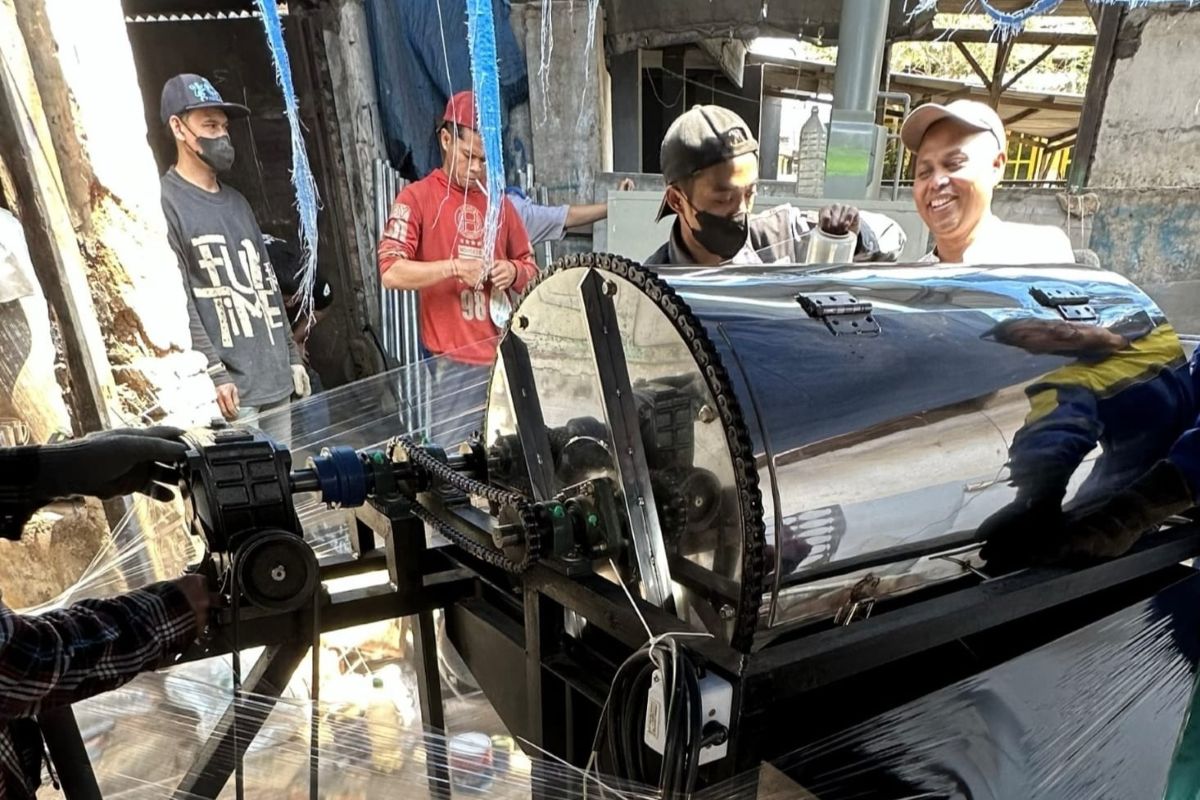
Livestock farmers in Malang Regency, East Java, have begun utilising appropriate technology to improve feed production efficiency. The application of a feed mixer with a rotating drum system has been proven to cut feed ingredient mixing time by up to 74.47 percent. The technology was introduced through a training and mentoring programme for the Yayapo Pullet farmer group in Kidangberik Hamlet, Kidangbang Village, Wajak District, in July 2026.
The programme was implemented by a team of lecturers from the State Polytechnic of Malang (Polinema) through BIMA 2026 grant funding from the Directorate of Research and Community Service, Directorate General of Research and Development, Ministry of Higher Education, Science, and Technology (Kemendiktisaintek).
Based on field test results, the machine, which has a capacity of up to 50 kilograms per batch, is able to complete the feed mixing process in an average of 5 minutes and 6.4 seconds. This duration is significantly shorter than the conventional method, which takes around 20 minutes.
The application of the machine not only accelerates the production process but also reduces labour requirements in the feed mixing process. Where two workers were previously needed, the task can now be performed by a single operator. This efficiency allows labour to be redirected to other activities in farm operations, particularly livestock maintenance and management.
Polinema Implementation Team Leader Talifatim Machfuroh said the application of technology needs to be accompanied by mentoring so that the equipment can be used optimally and sustainably by partners.
“Through this training, we are not only handing over the machine, but ensuring operators understand how to operate, clean, and maintain it safely. The application of this machine is expected to help Yayapo Pullet accelerate the production process and use technology independently,” said Talifatim.
To support operator independence, the training was carried out in several stages, from theory delivery and demonstration of tool use to direct practice at the farm site. Participants were introduced to various machine components, including the drum, frame, drive motor, transmission system, electrical installation, and feed outlet channel. Participants then practised all stages of operation, from loading ingredients to stopping the machine after the mixing process was complete.
Occupational safety aspects were also an important part of the mentoring. Farmers were given an understanding of checking the condition and stability of the machine before use to prevent technical disruptions during operation.
In addition, participants received education on machine cleaning procedures after use and basic periodic maintenance. These steps were taken to maintain machine performance while extending its useful life. The mentoring activity involved a number of Polinema lecturers, namely Ilham Saiful Fauzi and Zakiyah Amalia, as well as students who helped with the training process in the field.
From the partner side, Yayapo Pullet Chairman Ahmad Zainul Safitri, along with farm managers and operators, was involved in the entire series of activities. The collaboration between the higher education institution and the farmer group is expected to build a faster, more efficient, measurable, and safer feed production system. The application of appropriate technology is also expected to strengthen farmer productivity while encouraging independent use of technology at the farm business level.