
Febrie's Legal Team Says Pretrial Judge Hesitant in Ruling on Money Laundering Case
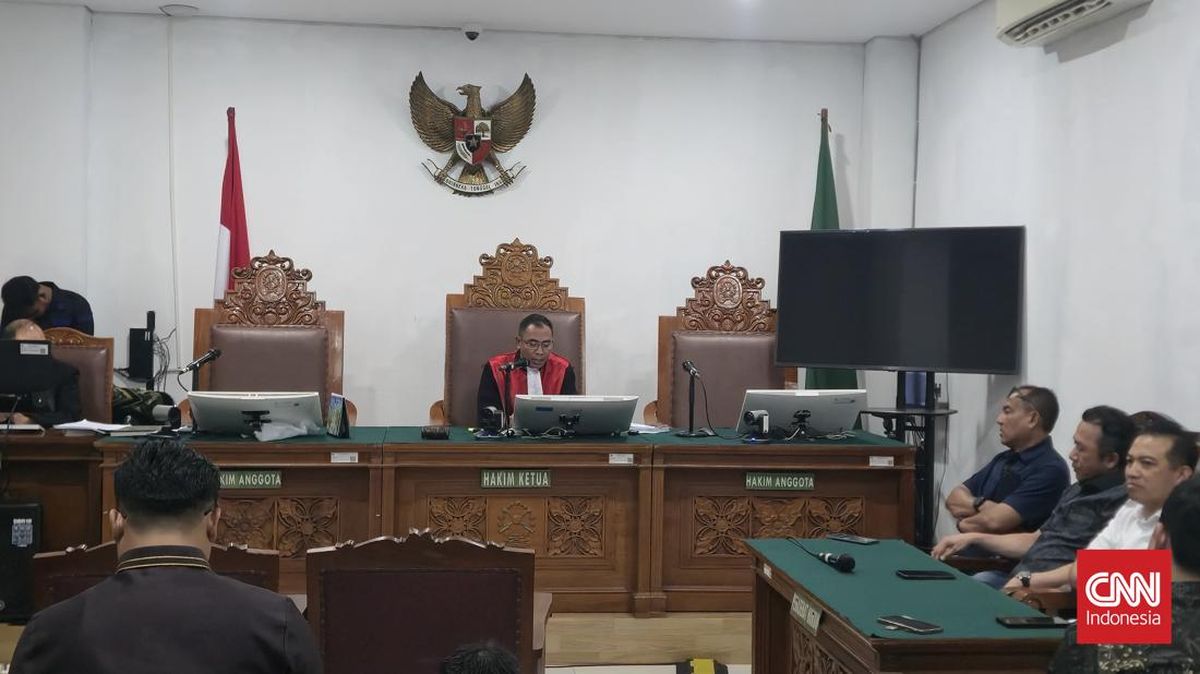
The legal team of former Junior Attorney General for Special Crimes Febrie Adriansyah has said the pretrial judge was hesitant in ruling on the challenge to his money laundering case. Febrie’s lawyer, Alvon Kurnia, said the ruling by sole judge Richard Edwin Basoeki did not apply the Miranda Rules, even though the Miranda Rules are a constitutional right of suspects, including the right to remain silent and the right to be accompanied by legal counsel.
Alvon said a pretrial hearing should serve as an effort to protect a suspect’s rights by referring to the Miranda Rules, particularly to ensure that law enforcement officials inform suspects of their rights. According to Alvon, the principle teaches that if a suspect’s rights are not conveyed by law enforcement officials, the legal process can be declared null and void.
“The point is that there are things that are not said, for example ‘you have the rights’. That becomes the basis for annulment. So if those words are not spoken, it becomes void. It is interesting that at this time that did not happen in the ruling,” he said after the hearing on Friday (28/8).
Alvon said the issue was relevant in Febrie’s case because, in his view, there were procedures that were not followed, but the judge considered them to be non-fundamental administrative matters. “Because at this time human rights seem not to be the reference, but only one perspective in that context,” he explained.
Alvon highlighted the judge’s consideration that mentioned administrative problems, but said those problems were not sufficient grounds to invalidate the legal process. “Because here it was repeatedly said that indeed there were administrative problems, but they were not fundamental problems and were not a basis for invalidating a legal process,” he said.
According to him, procedural errors should not be viewed separately from efforts to obtain substantive justice, because incorrect procedures can affect the entire legal process. “In fact, a procedural error will affect the process of obtaining substantive justice,” Alvon said.
Alvon also said the judge’s considerations in Febrie’s pretrial ruling showed hesitation. He then linked this to the principle of in dubio pro reo, namely the principle that if there is doubt, the doubt should benefit the person suspected or accused. He reminded that if a judge finds doubt in assessing a pretrial motion, it should not simply be transferred to the main case.
Alvon said the issue was also related to the human rights perspective in the criminal justice process. Therefore, if there is doubt about the validity of a stage of the legal process, it should be resolved through the pretrial mechanism.
Previously, sole judge at the South Jakarta District Court, Richard Edwin Basoeki, rejected the pretrial motion filed by former Junior Attorney General for Special Crimes Febrie Adriansyah against the Attorney General’s Office. Judge Edwin affirmed that the determination of suspect status in the money laundering case carried out by team 9 and the detention of Febrie were legally valid.
“Adjudicating, in the principal of the petition: rejecting the petitioner’s pretrial motion in its entirety,” he said when reading the ruling on Friday (28/8).
In his considerations, Edwin said the letter determining Febrie as a money laundering suspect number TAP-03/F/Fd.2/07/2026 dated 24 July 2026 contained a series of acts by Febrie carried out from 2018 to 2026. The judge stated that determining the entire time period and elements of Febrie’s acts was a matter for the main case and therefore not within the scope of a pretrial hearing.