
Febrie's Camp Claims Expert Testimony Strengthens Basis for Pretrial Motion
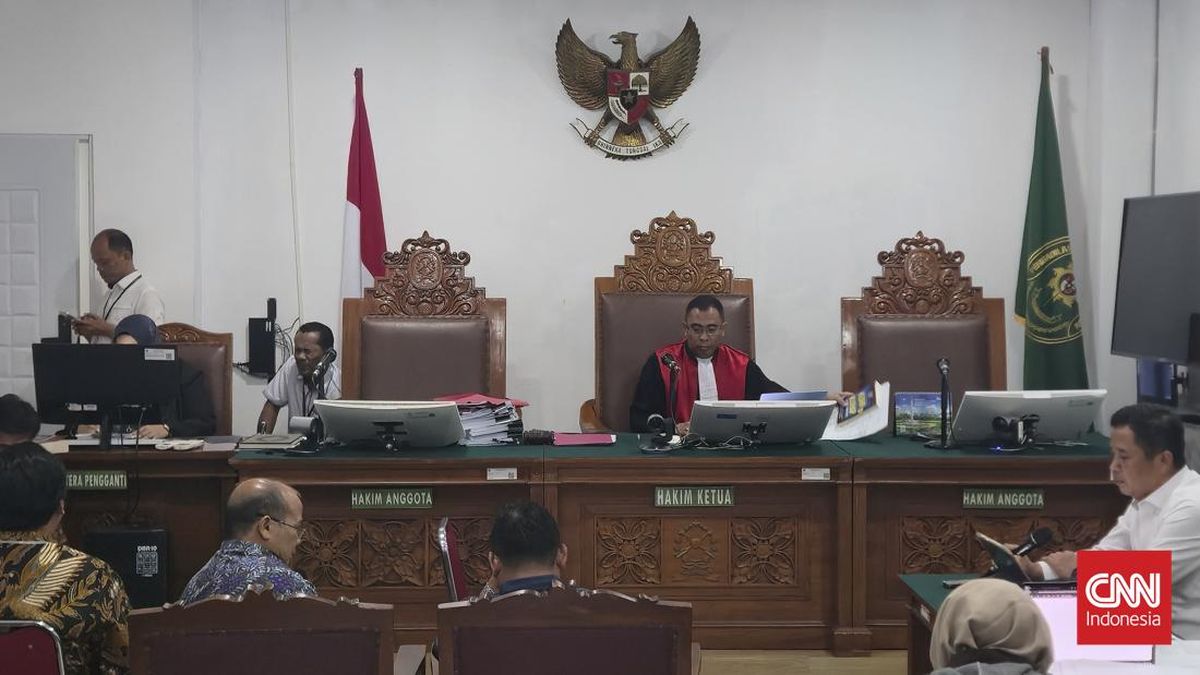
The legal team of former Junior Attorney General for Special Crimes (Jampidsus), Febrie Adriansyah, claims that expert testimony from the Attorney General’s Office (Kejagung) has further strengthened the basis for their pretrial motion.
This was conveyed by Febrie’s lawyer, Firman Wijaya, on the sidelines of the pretrial hearing at the South Jakarta District Court on Monday (24/8).
Firman argued that the suspicion levelled by investigators from the Attorney General’s Office’s Team 9 against his client lacks a clear criminal basis regarding trading in influence.
He instead highlighted the testimony of Gadjah Mada University law lecturer Fatahilah Akbar, who stated that trading in influence is not yet regulated under Indonesian positive law.
“Earlier, trading in influence was acknowledged as not yet having any regulation. If that is the modus operandi, including the article being charged, which article is it? What criminal offence is being alleged? It does not exist yet,” he said.
“Moreover, trading in influence — whose influence? It does not exist yet. Is it his family’s? Or whose? Because there must be a third party. Who is trading the influence? So it is imaginative, an imaginative article being charged,” he added.
On that occasion, Firman stressed that the principle of lex certa requires that the criminal legal basis be formulated clearly and firmly. According to him, the lack of clarity regarding the predicate offence could potentially conflict with the principle of presumption of innocence.
“In fact, the principle of lex certa must be clear and firm in the indictment. Moreover, it was also reinforced by the expert that in designating a suspect, one must not create a presumption of guilt. If there is a presumption of guilt, that means there is a legal basis being used. Yet the article being used against Mr Febrie Adriansyah — what predicate offence is it? It is not yet clear,” he said.
Besides trading in influence, Firman also highlighted the alleged money laundering offence (TPPU) linked to Febrie’s case.
According to Firman, the existence of 74 kilograms of gold and cash amounting to Rp543 billion in Febrie’s possession cannot automatically be concluded as proceeds of crime if the predicate offence is not yet known.
“How can this be interpreted under Article 74 — the gold and several foreign currencies as proceeds of crime or the result of a criminal offence? What criminal offence produced them? We do not know yet. How can one conclude that this is the result of a criminal offence?” he explained.
On the other hand, Firman also considered that the evidence submitted by the Attorney General’s Office was not much different from the documents held by Febrie’s side.
“Including what was shown — it turns out the investigation order is the same, the suspect designation is the same as our documents. The dates are also the same. So here there is actually no opposing evidence that the respondent can present to refute our arguments,” he said.
Previously, the Attorney General’s Office asserted that Febrie’s statement regarding the unclear or unproven predicate offence was very mistaken and contrary to applicable legal provisions. The Attorney General’s Office’s legal team said the suspect designation had expressly stated corruption as the predicate offence.
“And the money laundering investigation does not have to wait for the predicate offence to be proven first,” said the Attorney General’s Office’s legal team when providing their response.
In addition, the content of the suspect designation letter in the considering clause letter b also expressly states that the case under investigation is an alleged money laundering offence with the predicate offence being alleged corruption and/or in another legal process.
The Attorney General’s Office’s legal team also expressed surprise because Febrie, in his motion, acknowledged that the suspect designation clearly contained an allegation of money laundering with corruption as the predicate offence.