
Febrie Pretrial: Expert Calls Money Laundering a Follow-Up Crime
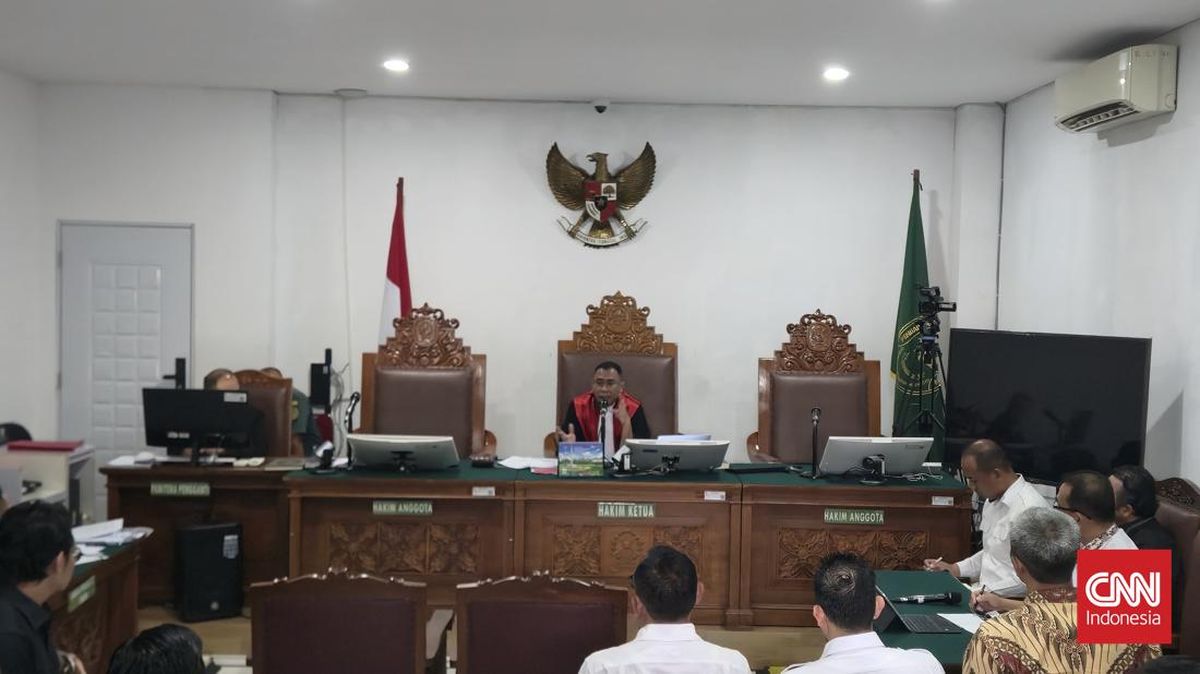
A criminal law expert from the Islamic University of Indonesia (UII), Mahrus Ali, said that a money laundering case (TPPU) cannot stand alone without a predicate offence (TPA).
The opinion was delivered by Mahrus when he was presented by the legal counsel of former Junior Attorney General for Special Crimes, Febrie Adriansyah, in a pretrial hearing at the South Jakarta District Court on Friday (21/8).
Mahrus argued that the predicate offence must first be processed by law enforcement until sufficient preliminary evidence is found before it can be developed into a money laundering case.
“Money laundering cannot occur without a predicate offence. It is impossible,” he explained.
Mahrus explained that investigators can find preliminary evidence of money laundering when conducting an investigation into the predicate offence. Once sufficient preliminary evidence is found, the money laundering investigation can then be combined with the predicate offence based on Article 75 of the Money Laundering Law.
According to him, this construction also confirms that money laundering is a follow-up crime, so the timing of the predicate offence must precede the money laundering.
Mahrus added that investigating money laundering without first investigating the predicate offence potentially violates Article 69, Article 74, and Article 75 of the Money Laundering Law.
“An investigation into the predicate offence must certainly be conducted first. Only then, from the investigation into the predicate offence, is it found that there are at least two pieces of evidence,” he said.
In fact, Mahrus asserted that a single investigation order that from the outset includes both the investigation of the predicate offence and money laundering is also not permitted.
“It is still not allowed because it violates Articles 74 and 75 plus Article 69,” he said.
Previously, the Attorney General’s Office (Kejagung) asserted that Febrie’s statement regarding the predicate offence being unclear or unproven was very mistaken and contrary to applicable legal provisions. The Kejagung legal team said the naming of the suspect had expressly stated corruption as the predicate offence.
“And the money laundering investigation does not have to wait for the predicate offence to be proven first,” said the Kejagung legal team when providing a response.
In addition, the content of the suspect determination letter in the considering clause letter b also expressly states that the case being investigated is a case of alleged money laundering with the predicate offence of alleged corruption and/or in another legal handling process.
The Kejagung legal team also admitted to being puzzled because Febrie in his lawsuit acknowledged that the suspect determination clearly contained allegations of money laundering with the predicate offence being corruption.
Although, according to the Kejagung, Febrie then questioned its scope and tempus delicti. Therefore, the Kejagung assessed that the Petitioner’s argument stating that the predicate crime was unclear contradicted the document that was actually submitted and quoted by the Petitioner himself.
“It should be understood that the characteristics of money laundering differ from the construction of ordinary crimes. Money laundering is a crime related to assets that are known or reasonably suspected to be the proceeds of crime, including those originating from corruption,” he explained.