
Febrie Adriansyah's Pretrial Hearing: Expert Questions Validity of Money Laundering Article
Criminal law expert from the Islamic University of Indonesia (UII), Mahrus Ali, stated that money laundering (TPPU) cases must now use Article 607 of the Criminal Code (KUHP).
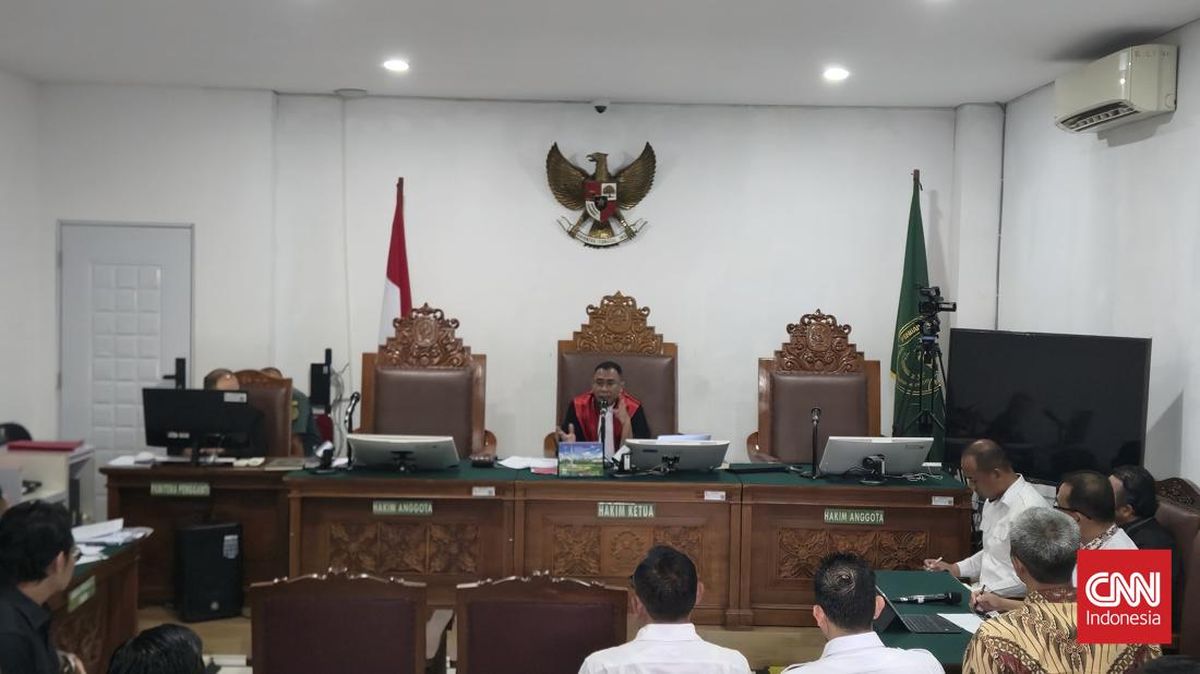
Mahrus made the statement when presented by the legal counsel of former Junior Attorney General for Special Crimes, Febrie Adriansyah, during a pretrial hearing at the South Jakarta District Court on Thursday (20/8).
He said the provision applies following the enactment of Law Number 1 of 2023 on the Criminal Code. Mahrus noted that under that law, provisions relating to money laundering are now regulated in Article 607 of the Criminal Code.
According to him, if a money laundering offence is committed after Law Number 1 of 2023 on the Criminal Code came into force, then the provision used is Article 607 paragraph (1) letters a, b, or c.
“When a person commits a money laundering offence, and the time of the offence is after Law Number 1 of 2023 came into force, then what must absolutely be used is Article 607 paragraph 1 letter a or letter b or letter c,” he said.
He explained that different conditions apply if the money laundering occurred before the new provision came into force. In that case, he said investigators must consider the principle of lex favorio, namely using the provision most favourable to the defendant when there is a change in legislation.
Mahrus said that after comparing the old provisions with Article 607 of the Criminal Code, the main difference lies in the criminal penalties. The TPPU Law stipulates a maximum penalty of 20 years’ imprisonment, while Article 607 of the Criminal Code stipulates a lower maximum penalty, namely 15 years or 5 years, depending on the form of the offence.
“From this, the conclusion is actually that investigators are obliged to use Article 607. They may not offer alternatives between Article 3, Article 4, and Article 5 of the TPPU Law,” he said.
In his testimony, Mahrus also emphasised that money laundering is a follow-up crime that cannot be separated from the predicate crime.
According to him, investigators must first investigate the predicate crime and find sufficient preliminary evidence before developing a money laundering case.
“Money laundering cannot occur without a predicate offence. It is impossible,” he said.
Previously, the Attorney General’s Office (Kejagung) asserted that Febrie’s statement about the predicate crime being unclear or unproven was highly erroneous and contrary to applicable legal provisions. The Kejagung legal team said the suspect designation explicitly states corruption as the predicate crime.
“And a money laundering investigation does not have to wait for the predicate crime to be proven first,” said the Kejagung legal team in its response.
In addition, the content of the suspect designation letter in the considering clause letter b also explicitly states that the case under investigation is an alleged money laundering offence with the predicate offence being alleged corruption and/or in another legal process.
The Kejagung legal team also expressed surprise that Febrie, in his petition, acknowledged that the suspect designation clearly contains an alleged money laundering offence with the predicate offence being corruption.
However, the Kejagung said, Febrie then questioned its scope and tempus delicti. Therefore, the Kejagung considers the petitioner’s argument that the predicate crime is unclear to be contrary to the document that the petitioner himself submitted and quoted.
“It should be understood that the characteristics of money laundering differ from the construction of ordinary criminal offences. Money laundering is a criminal offence relating to assets known or reasonably suspected to be the proceeds of crime, including those originating from corruption,” he explained.
Source: jawawa.id (https://jawawa.id/newsitem/febrie-adriansyahs-pretrial-hearing-expert-questions-validity-of-money-laundering-article-1787363491)
Originally published by CNN Indonesia (https://www.cnnindonesia.com/nasional/20260822065938-12-1395190/praperadilan-febrie-adriansyah-ahli-soroti-keabsahan-pasal-tppu), translated from Indonesian