
Febrie Adriansyah Refers to Possible ‘Retaliatory Backlash’ in His Case
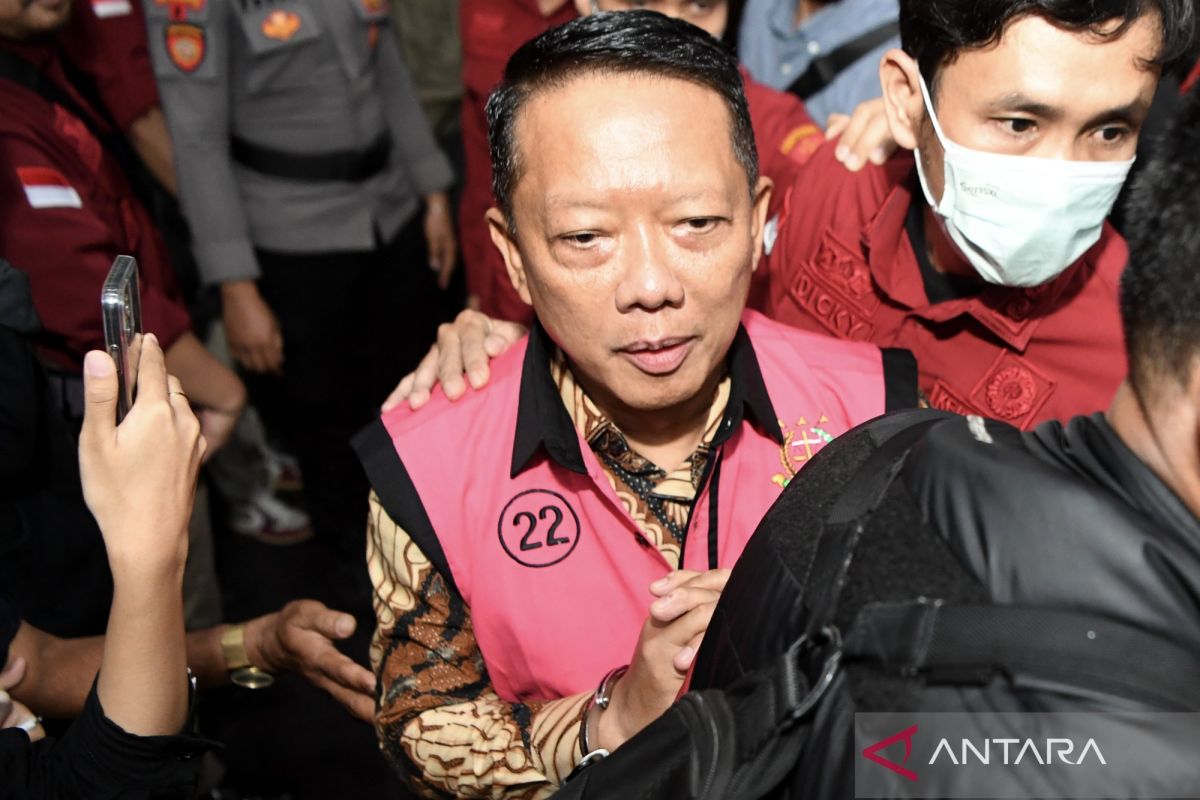
Jakarta (ANTARA) - Febrie Adriansyah, who served as deputy attorney general for special crimes at the Attorney General’s Office from 2021 to 2026, referred to an alleged “retaliatory backlash” in the corruption case in which he is a defendant.
As a former deputy attorney general who frequently handled major corruption cases, Febrie said he had often encountered powerful interests.
“However, I am not asking the panel to conclude without evidence that the case I am facing is a form of retaliatory backlash by certain parties,” Febrie said while reading his rebuttal at a hearing at the Corruption Court at the Central Jakarta District Court on Wednesday.
He said that during his tenure and leadership, the Attorney General’s Office’s special crimes division had often handled cases involving state finances, public funds, public services and natural resources.
He added that some of those cases involved major economic interests and parties with extensive financial resources.
Febrie said handling major cases required careful work, institutional courage, integrity and a strong sense of responsibility. These included cases concerning corruption in crude oil management and the management of the Free Nutritious Meals (MBG) programme.
He understood that handling major cases carried risks and consequences, but continued to perform his duties because he believed the law should operate without regard to whom it was applied.
Febrie said he was not seeking special treatment or immunity from the law. He was only asking for the same principles to be applied to him, so that the case in which he is a defendant could be assessed impartially on the facts and evidence, without prejudice or pressure.
He added that the situation carried a broader message: if someone performing their duties to expose major cases did not receive a fair process, it could cause concern among those who had knowledge of, or the courage to expose, similar wrongdoing.
“Let us not allow the impression to take hold that the courage to carry out one’s duty must be paid for with the loss of equal protection under the law,” he said.
The alleged corruption by the former deputy attorney general for special crimes involves extortion and money laundering. In the extortion indictment, Febrie is accused of seeking S$5 million, or around Rp55 billion, from Tan Kian, a witness in the Jiwasraya case.
He is alleged to have pressured Tan Kian, through an intermediary named Ferry Yanto Hongkiriwang, to prevent him from being named a suspect in the Jiwasraya corruption case.
Febrie is also charged with laundering Rp354.62 billion, comprising Rp346.74 billion and US$440,990, equivalent to Rp7.88 billion at an exchange rate of Rp17,880 to the US dollar.
The alleged money laundering took place while Febrie was director of investigations in the Attorney General’s Office’s special crimes division from 2019 to 2021, and while he served as its deputy attorney general from 2021 to 2026.
The indictment says the money laundering involved the receipt of shares, land and/or buildings derived from corruption while he was in office, through Don Ritto, also known as Idon, Nurman Herin and Ferry Yanto Hongkiriwang.
The alleged laundering methods included placing money in accounts under other people’s names, transferring illicit funds to trusted associates or other parties, placing them in companies he had established, or investing them as capital in other companies.
The indictment also alleges that funds were used to buy or pay for land and/or buildings, as well as a Toyota Fortuner registered in the name of Muhammad Agung Garisman; spent on personal needs; and kept in several safes, rented rooms, and the office or home of Puspita Lasambu.
For these alleged offences, Febrie faces penalties under Article 12(e) of Law No. 31 of 1999 on the Eradication of Corruption, and Article 607(1)(a) or Article 607(1)(b), in conjunction with Article 20(c) and Article 127(1) of the National Criminal Code, and Article II(8) of Appendix I, point 28, of Law No. 1 of 2026 on Criminal Penalty Adjustments.