
Feature: Gaza farmers struggle to cultivate remaining agricultural lands
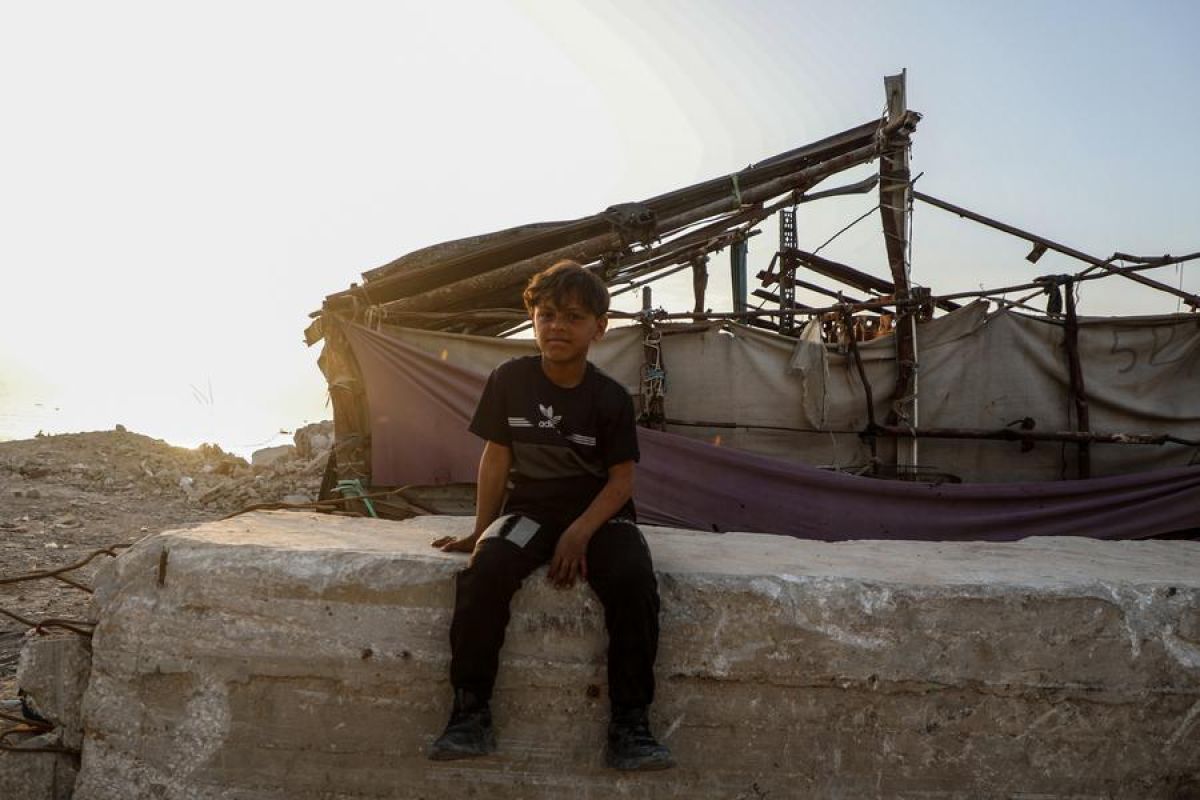
Gaza - On a plot of land measuring seven dunams (0.7 hectares) near the ‘Yellow Line’, Mohammed Al-Dahdouh (55) appears hunched over a small potato field. This land is only a tiny fraction of the more than 40 dunams (4 hectares) he once cultivated.
The military demarcation line, established under the ceasefire agreement, separates the area where Israeli forces are deployed from other parts of the Gaza Strip, making every planting season a gamble.
Since the war broke out on 7 October 2023, agricultural land in Gaza has shrunk drastically. Supplies of water, electricity, fuel, and farming equipment have become scarce or their prices have skyrocketed.
However, Al-Dahdouh, a father of six, refuses to abandon his cultivated land. Whenever artillery strikes approach, he flees to safety, and when the attacks cease, he returns to his fields.
Al-Dahdouh’s struggle reflects the fate of farmers across the enclave. In the city of Beit Lahia, northern Gaza, Ibrahim Abu Samhadana, a 42-year of-age farmer, is planting strawberries, zucchini, and eggplant while living in a tent beside the ruins of his home. His family’s 22-dunam (2.2 hectares) plot has vanished.
“The war has truly destroyed the agricultural sector,” said Abu Samhadana. Despite this, he continues to work his land. “I am determined to keep farming because it is the livelihood we have known since childhood,” said the farmer, who is also a father of six.
In southern Gaza, the guava season, which usually runs from September to December, shows a similar situation. Hani Al-Qudra’s land in Khan Younis has shrunk from approximately 1,350 dunams (135 hectares) before the war to about 200 dunams (20 hectares), and his workforce has decreased from around 100 people to just 15.
“Guava is one of the most important crops in the Gaza Strip; both residents and farmers rely on this crop for food needs and employment opportunities,” said Al-Qudra.
Consumers are also feeling the impact. At a market in Khan Yunis, Ahmed Al-Najjar, a 45-year-old father of three, said that guava, which used to be an affordable seasonal fruit, is now unaffordable for many families. “It saddens me when my children ask for it and I am unable to buy it,” said Al-Najar.
Experts describe a bleak situation. Agricultural specialist Mohammed Abu Shamala stated that the area of guava cultivation in Gaza has shrunk from approximately 1,700 dunams (170 hectares) before the war to less than 100 dunams (10 hectares). Meanwhile, damage to agricultural land and irrigation systems, along with increased salinity in the water, has lowered crop quality and limited the cultivation of several varieties.
A assessment by the Food and Agriculture Organisation (FAO) released in August found that only about 448 hectares, or approximately 3 per cent, of agricultural land in Gaza remains accessible and undamaged.
The Hamas-run Gaza agricultural authority estimates that losses in the agricultural sector have reached approximately 3.49 billion USD (1 USD = IDR 17,753). Before the war, the agricultural sector contributed about 10 per cent to Gaza’s economy and served as a livelihood for more than 560,000 people.
Now, for farmers like Al-Dahdouh, Abu Samhadana, and Al-Qudra, the persistent efforts to continue cultivating potatoes, vegetables, and guavas have become a struggle to maintain their livelihoods while preserving the remnants of Gaza’s agricultural sector.
When the bombardment subsides, Al-Dahdouh returns to his seven-dunam (0.7 hectares) plot, tending to his potato crops and preparing to plant tomatoes for the upcoming season. “I will continue to fight to farm and earn an income for my children,” said Al-Dahdouh.
Source: jawawa.id (https://jawawa.id/newsitem/feature-gaza-farmers-struggle-to-cultivate-remaining-agricultural-lands-1789811804)
Originally published by Antara (Indonesian) (https://www.antaranews.com/berita/5749036/feature-petani-gaza-berjuang-garap-sisa-sisa-lahan-pertanian), translated from Indonesian