
Fear, Wounds and Childhood Trauma in Paintings Made with Blood
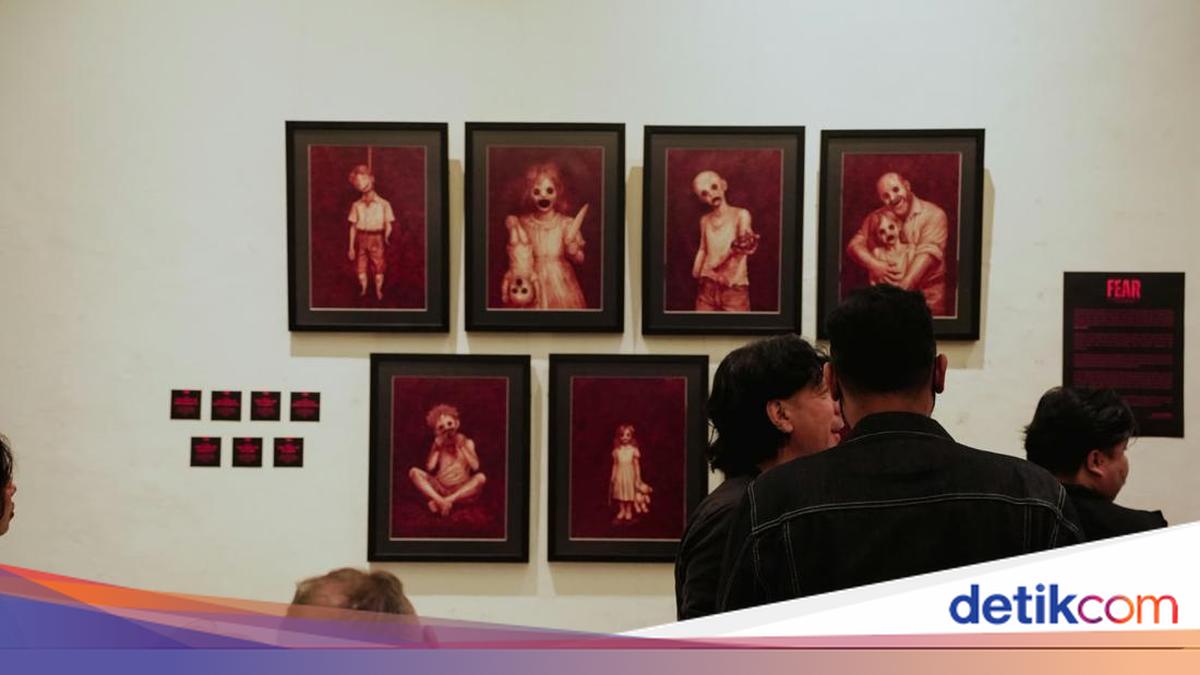
Home should be the safest place for a child to grow up. But for children living amid domestic violence, home can instead become a place of fear, wounds and lasting trauma.
That dark experience is the central thread of HELL, a solo exhibition by Papa Asmodeus at TAT Art Space in Denpasar, Bali, from 17 to 31 October 2026. Through paintings made with blood-based ink, Papa Asmodeus tells the story of a girl growing up in a violent family environment.
Blood in this exhibition is not merely a choice of material for creating unsettling images. It is part of an effort to bring to light experiences that are often difficult to talk about, particularly when violence takes place at home and behind closed doors.
“Blood becomes a language for expressing something that is difficult to discuss directly,” Asmodeus said in a statement on Tuesday (20 October 2026).
He explained that the story developed for the exhibition is told from the perspective of a girl. Through this viewpoint, HELL highlights how domestic violence not only leaves physical wounds, but also shapes a person’s understanding of safety, family relationships and themselves.
The effects of violence on children are not always visible to those around them. Fear can take hold in everyday life, while traumatic experiences remain buried without necessarily finding a way to be expressed.
HELL seeks to bring domestic issues into the public sphere. Visitors encounter not only works of art, but also stories of experiences that often escape notice because they are regarded as private family matters.
With Skinner Ohrami as artistic director, HELL goes beyond two-dimensional paintings. The exhibition combines art installations, a short film, poetry and musical performances to create a broader experience.
This approach allows the story in the paintings to unfold through a range of media. Images, narrative and sound contribute to an atmosphere connected with fear, violence and trauma.
The short film, directed by Skinner, was produced by Koerang Tidoer Studio in collaboration with LUMA By Symbiotica. The audiovisual work offers another visual interpretation of the story told by Papa Asmodeus.
The HELL project also marks Skinner Ohrami’s official debut as an art director. The surrealist artist is a co-founder of STIGMA Collective Exhibition and is known for an interest in macabre and grotesque aesthetics, as well as the darker sides of human psychology.
“In the context of HELL, a dark visual approach is not simply an attempt to create a sensation. This aesthetic is part of how the exhibition addresses human experiences that may be uncomfortable to witness, but are important to understand,” Skinner said.
Performances further broaden the experience for visitors. On opening night, the exhibition featured poetry readings by Ihsan Jarot, Cika and Chika, as well as a violin and cello duet by Ronald Stefano and Dananjaya. Ihsan Jarot also contributed as the exhibition’s writer.
When Violence Is Treated as a Family Matter
Behind its choice of materials and artistic approach, HELL addresses issues that extend beyond unsettling imagery. The exhibition places domestic violence, mental health and the experiences of children growing up amid violence within the scope of public discussion.
Violence at home is often difficult to see from the outside. Family relationships can become a reason to conceal problems, while children caught up in conflict do not always receive adequate attention.
Through the story of a girl, HELL invites visitors to reconsider the assumption that home is always synonymous with protection. The exhibition also creates space to reflect on how violence can become normalised in everyday life and leave psychological consequences long after the events themselves.
The art in this exhibition does not offer a simple answer to domestic violence. Instead, HELL presents a visual and narrative experience that encourages visitors to confront aspects of family life that are often hidden.
Source: jawawa.id (https://jawawa.id/newsitem/fear-wounds-and-childhood-trauma-in-paintings-made-with-blood-1792468230)
Originally published by detikBali (https://www.detik.com/bali/budaya/d-8715003/ketakutan-luka-trauma-anak-anak-dalam-lukisan-darah), translated from Indonesian