
Fauzi Bowo: Ali Sadikin Laid the Foundations for Jakarta's Cultural Development
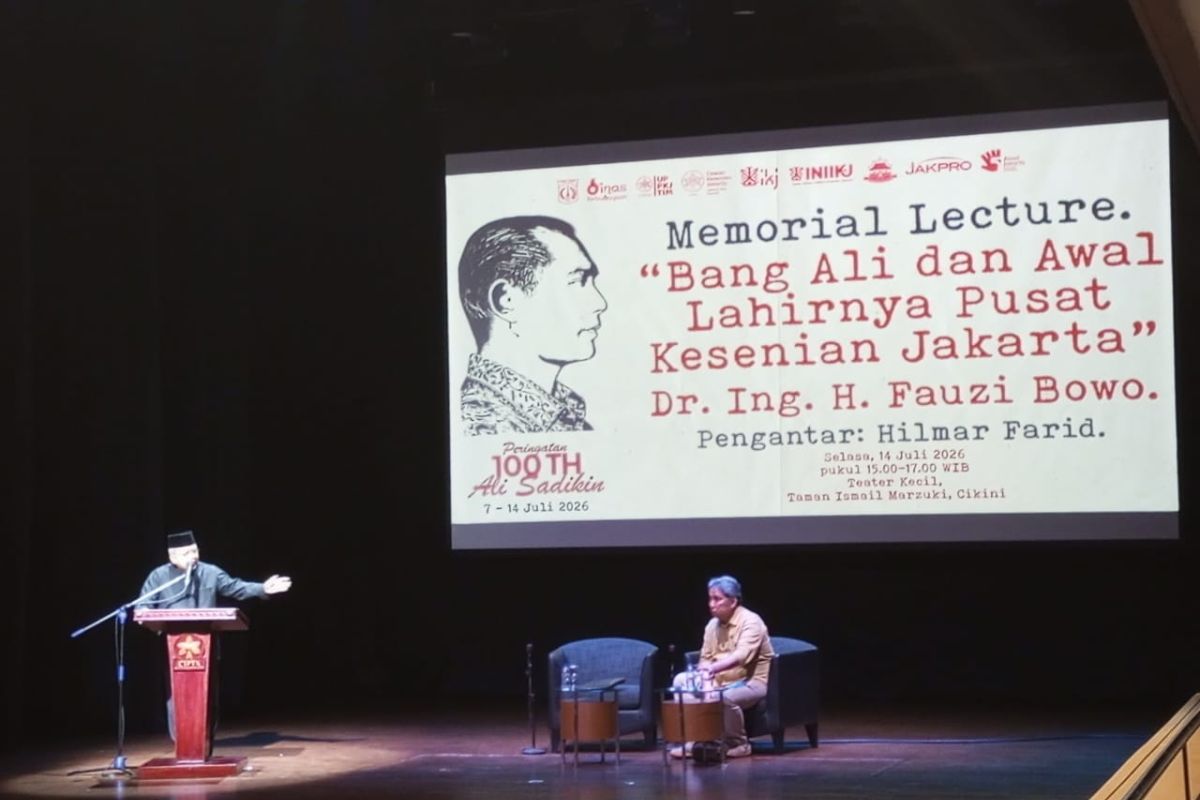
Former Jakarta Governor Fauzi Bowo, who served from 2007 to 2012, has stated that his predecessor Ali Sadikin, governor from 1966 to 1977, laid the foundations for the capital’s cultural development, which became the bedrock for Jakarta’s advancement as a metropolitan city. “Culture as a foundation for development is not merely a complement,” Fauzi Bowo said during the commemoration of the 100th anniversary of Ali Sadikin’s birth in Jakarta on Friday. The man familiarly known as Foke assessed that several of Ali Sadikin’s key ideas were reaffirmed as a reference for reading the direction of Jakarta’s cultural development today, including amidst the challenges of the digital era. He said this thinking began with a simple question in early 1968: “Where did the artists who used to gather in the Senen area go?”. Foke believes they stopped gathering because the meeting place no longer existed. “From that point, the conviction was born that the government is obliged to provide space for artists to create, because a city’s progress cannot be measured solely by tall buildings or economic growth, but also by the artistic and cultural life of its people,” he said. He stated that culture builds character, strengthens a city’s identity, and serves as a space for dialogue between community groups, meaning the government must not be passive towards its growth even if such activities are not always fiscally profitable. Foke said that Bang Ali held the view that the arts must live and develop according to the pulse desired by Jakarta itself. “This principle was realised through the formation of the Jakarta Arts Council in June 1968, tasked with advising the Governor on fostering Jakarta’s culture, whether requested or not,” he said. A similar pattern was seen in the establishment of the Betawi Cultural Institute in 1977, whose management was handed over to the community, while the DKI Jakarta Government only provided guidance and assistance as needed. Fauzi Bowo also recalled that there was no stronger symbol of Ali Sadikin’s cultural vision than Taman Ismail Marzuki (TIM). The location of the monument, inaugurated on 10 November 1968, was deliberately chosen in central Jakarta to be easily accessible. According to him, TIM is not merely a complex of performance buildings, but a manifestation of the state’s responsibility to provide space for creativity to flourish. From this point, cross-disciplinary artists began to spread, from theatre, music, dance, literature, and fine arts to film, creating, discussing, and meeting with intellectuals, students, and the general public, thereby fostering a dynamic cultural climate that established Jakarta as a centre for the development of contemporary Indonesian art.