
Father who neglected child sentenced to 100 hours of community service in Banda Aceh
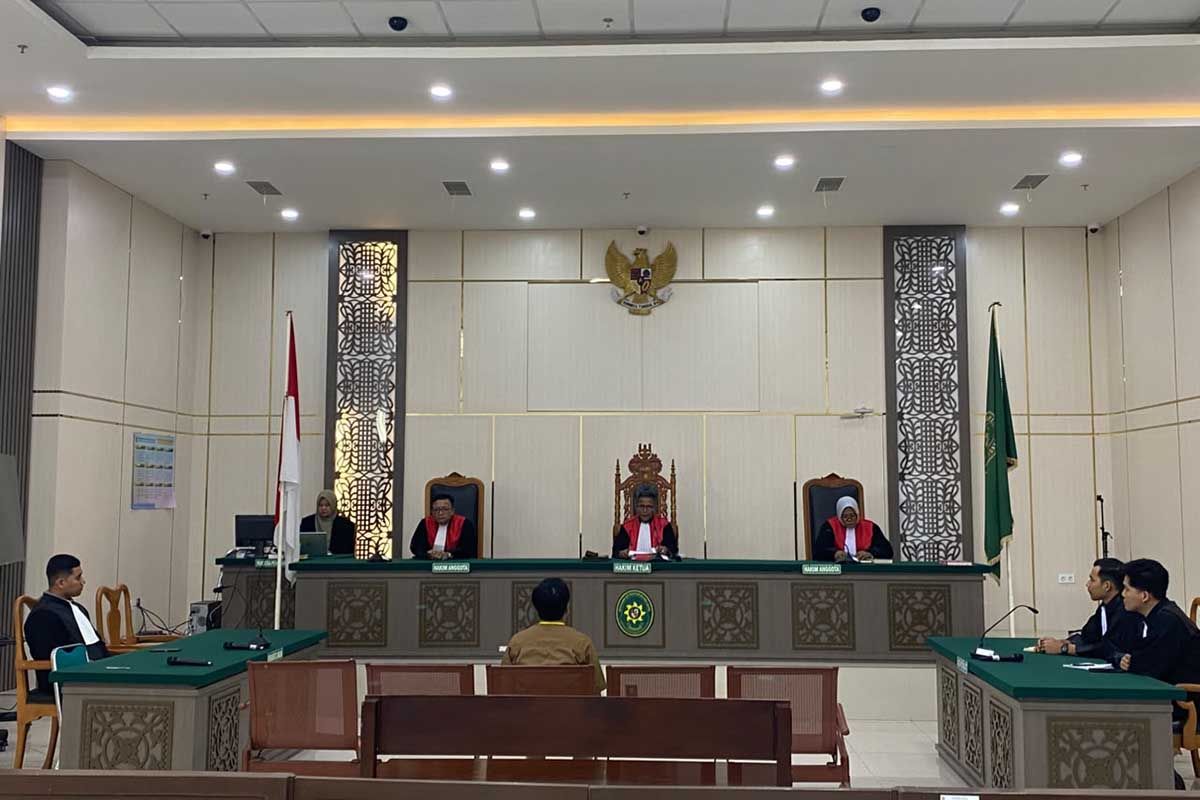
The panel of judges at the Banda Aceh District Court has sentenced a father to 100 hours of community service after he was found guilty of neglecting his biological child. The identity of the defendant has been withheld because the case involves a minor. This ruling is the first of its kind at the Banda Aceh District Court since the implementation of the alternative sentencing system under the new Criminal Code. The panel of judges handed down a four-month prison sentence, but the punishment will not be served through incarceration; instead, it has been commuted to 100 hours of community service. The verdict was read by a panel of judges chaired by Fauzi, with members Said Hamrizal Zulfi and Annisa Sitawati. The community service will be carried out at the Jami Al Hidayah Mosque in Gampong Peurada, Syiah Kuala District, Banda Aceh, under the supervision of the public prosecutor. The case began when the defendant failed to fulfil his obligations as a father to his biological child following a divorce in 2014. For years, the defendant did not provide proper financial support, care, education, or protection for the child. Court proceedings revealed that although the defendant had been a civil servant since 2019 and had a steady income, he continued to neglect his responsibilities towards the child. Furthermore, a psychological assessment presented during the trial indicated that the victim suffers from post-traumatic stress disorder, which has affected their emotional state, behaviour, and development. In its considerations, the panel of judges stressed that divorce does not eliminate a parent’s obligations towards their child. All elements of the criminal offence of child neglect were met, as the defendant consciously allowed the child to be deprived of the basic rights that should have been fulfilled. The panel of judges also took into account several mitigating factors, including the defendant’s admission of guilt, his cooperative attitude during the trial, his lack of a prior criminal record, and the fact that he had reconciled with the victim and the victim’s family. The panel considered a restorative justice approach to be more appropriate in this case, as it is oriented not only towards punishment but also towards restoring family relationships and serving the best interests of the child. This ruling represents a significant milestone in the implementation of the new Criminal Code at the Banda Aceh District Court, demonstrating that law enforcement can proceed in tandem with efforts towards recovery, victim protection, and the rehabilitation of offenders.