
Father Rarely Involved in Child-Rearing? Here Are Seven Possible Effects
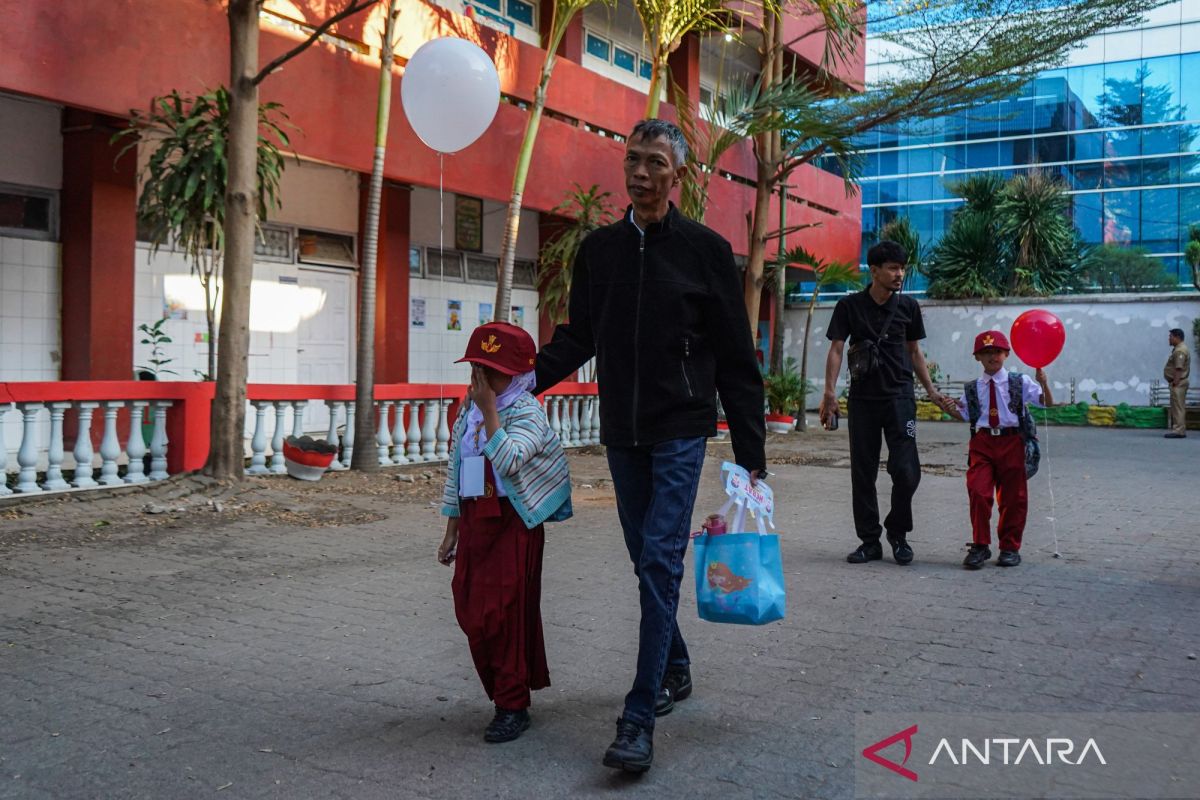
Jakarta (ANTARA) – A father’s involvement in raising a child plays an important role in supporting the child’s growth and development. This role goes beyond providing for the family financially: it also includes emotional support, communication, education and participation in everyday activities.
When fathers are rarely present or less involved in their children’s lives, some caregiving needs may not be met. This may affect children’s social, emotional and behavioural development, as well as their ability to learn.
However, the effects are not the same for every child. They depend on the quality of family relationships, support from other caregivers and the environment in which the child grows up.
A systematic review published in the journal BMC Psychology in November 2024 examined the relationship between fathers’ involvement and emotional regulation among children aged 0–5. It highlighted the importance of both the quality and quantity of fathers’ involvement in supporting children’s emotional development.
So what effects may arise when fathers are less involved in raising their children?
- Children may have difficulty managing their emotions
One area that may be affected is a child’s ability to recognise and manage emotions. Children learn to understand feelings through everyday interactions with those closest to them, including their fathers.
A father’s involvement through communication, attention and responses to a child’s feelings can help build a sense of security. Conversely, if such interaction is very limited, children may lose one opportunity to learn how to express their feelings, cope with disappointment and control their emotional responses.
This does not mean, however, that children who rarely interact with their fathers will necessarily develop emotional problems. Mothers, family members and other caregivers who provide consistent attention can still be important sources of support.
- Children’s social skills may be affected
Interactions with parents are among the first settings in which children learn how to communicate and build relationships with others.
Through playing, talking and doing activities together, children can learn to share, co-operate, understand other people’s perspectives and resolve conflicts.
A study published in BMC Public Health in October 2024, involving 460 primary caregivers of children under 18 months old in Kenya, found that fathers’ involvement in caregiving, play and affection, household chores and learning activities was associated with higher cognitive, language, motor and social-emotional development scores in children.
The findings suggest that fathers’ involvement is linked not only to family closeness but also to various aspects of children’s development.
Fathers can also support children’s language and thinking skills through conversation, reading books, telling stories and helping with learning activities.
Such interaction helps children discover new vocabulary, understand information and develop curiosity.
A clinical report by the American Academy of Pediatrics, updated and reaffirmed in April 2022, summarised research on fathers’ role in child development. One study discussed in the report found that communication between fathers and children at age three was a predictor of better language development.
If fathers are rarely involved in communication and learning activities, children may have fewer opportunities to receive additional stimulation at home. Nevertheless, language development is influenced by many factors, including interaction with mothers, education and the social environment.
- Children may develop behavioural problems
Limited involvement by fathers may also be associated with children’s behavioural development. Children need guidance to understand rules, boundaries, responsibilities and how to solve problems.
When fathers are positively involved, children have opportunities to learn from their example and through direct interaction. Conversely, a lack of guidance may make learning about discipline and behavioural self-control less effective, especially if other adults do not provide consistent parenting.
A systematic review published in Acta Paediatrica found that most of the longitudinal studies analysed showed a positive association between fathers’ involvement and child development. Such involvement was linked to fewer behavioural problems and a number of better social and psychological outcomes.
Even so, children’s behaviour cannot be explained solely by whether their fathers are involved. Parenting by both parents, family circumstances, social environment and children’s experiences also have an influence.
Fathers can be people children turn to for conversation, help and support when they face problems. A warm and responsive relationship helps children feel valued and cared for.
If communication with their fathers is infrequent, children may feel they have less space to share their experiences or difficulties with them. Over time, this may affect emotional closeness if no effort is made to build a better relationship.
The American Academy of Pediatrics report also noted that, in one study it reviewed, fathers’ involvement from infancy was associated with fewer symptoms of mental health problems in children at age nine. The finding points to a link between paternal involvement early in life and children’s psychological well-being later on.
- Risk-taking behaviour in adolescence may become more likely
As children enter adolescence, they face various changes, from developing their identity and friendships to dealing with social pressures. At this stage, parental communication and guidance remain important.
A father’s involvement can provide supervision, support and guidance as children begin to face more complex decisions. An open relationship can also help teenagers feel comfortable discussing problems without fearing immediate judgement.
The American Academy of Pediatrics report summarised several longitudinal studies indicating that fathers’ involvement was associated with a lower likelihood of risk-taking behaviour and depressive symptoms among adolescents. This association does not mean that a father’s absence directly causes a child to engage in risky behaviour.
- The family’s caregiving burden may become unbalanced
The effects of limited paternal involvement may be felt not only by children but also by other family members.
When most caregiving responsibilities fall to mothers, their physical, time and emotional burdens may increase. This could reduce the time they have to rest, work or meet their own needs.
The World Health Organization (WHO) and UNICEF, in their 2022 report Nurturing Care and Men’s Engagement, stressed that fathers and men as caregivers play an important role in providing care that supports children’s development. The report also highlighted the need for support from families, communities, health services and policies to increase fathers’ involvement.
Fathers do not have to demonstrate their involvement through major activities or by spending entire days with their children. Simple actions, done consistently, can help build closeness.
Here are some steps fathers can take:
- Set aside time every day
Fathers can make dedicated time to play, talk, read books or simply listen to their children’s stories without being distracted by work or their mobile phones.
- Take part in everyday care
Helping to bathe children, prepare meals, change their clothes and put them to bed are all aspects of caregiving that parents can share.
- Build open communication
Listen to children’s stories without rushing to judge. Give them the opportunity to express their feelings, opinions and worries.
- Support children’s education
Fathers can help with homework, read with their children, attend school meetings, or support their interests and talents.
- Show affection and appreciation
Expressions of love, hugs, attention and praise for children’s efforts can help build a warm relationship.
- Share responsibilities with a partner
Caregiving should be a shared responsibility. Fathers and mothers can communicate and divide tasks according to their family’s circumstances and needs.
- Set an example in everyday life
Children learn from their parents’ behaviour. Fathers should therefore demonstrate respect for others, responsibility, emotional self-control and constructive problem-solving.
Limited paternal involvement is not the only factor determining a child’s development. Every child has different family circumstances, experiences, personality and environment.
Children who grow up without their fathers’ direct involvement can still thrive if they receive safe, loving and consistent care from their mothers or other trusted adults.
What matters is not simply whether a father is physically present, but the quality of the relationship he builds. A father living in the same home is not necessarily emotionally involved, while a father living separately can still fulfil his caregiving responsibilities through consistent communication, attention and support.
A World Bank review published in The World Bank Research Observer in August 2025 also discussed fathers’ role in supporting early childhood development, particularly in low- and middle-income countries. It emphasised that fathers’ involvement should be understood as part of caregiving and developmental stimulation, not merely as presence in the same household.
Fathers’ involvement is an important part of raising children. Attention, communication, educational guidance and emotional support can help foster children’s social, language and behavioural development, as well as their ability to manage emotions.
Limited paternal involvement may reduce children’s opportunities to receive this support. However, the effects are not inevitable and should not be used to blame children, mothers or families in different circumstances.
Good caregiving requires responsive, consistent adults who support one another. Fathers should therefore see their role as more than that of breadwinner: they should also take an active part in their children’s lives and development.
Source: jawawa.id (https://jawawa.id/newsitem/father-rarely-involved-in-child-rearing-here-are-seven-possible-effects-1794635555)
Originally published by Antara (Indonesian) (https://www.antaranews.com/berita/5853551/ayah-jarang-terlibat-mengasuh-anak-ini-7-dampaknya), translated from Indonesian