
FATF Updates Money Laundering Risk List: Is Indonesia Safe?
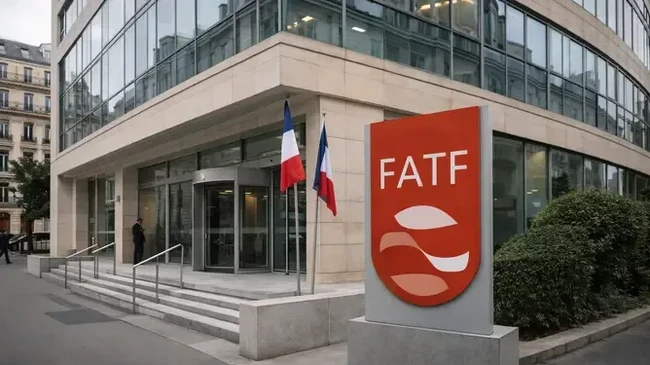
Jakarta, CNBC Indonesia — The Financial Action Task Force (FATF), the international body for the prevention and eradication of money laundering, has updated its list of countries under high-risk monitoring, commonly known as the greylist.
This was revealed through information published by the Centre for Financial Transaction Reports and Analysis (PPATK), an FATF member.
“The Financial Action Task Force (FATF) has officially published an update to its two main public documents concerning global compliance with standards on Anti-Money Laundering, Countering the Financing of Terrorism, and Countering the Financing of Proliferation of Weapons of Mass Destruction (AML/CFT/CPF),” according to information on the PPATK website on Tuesday (14/7/2026).
The updated documents cover the list of high-risk jurisdictions subject to a call for action (the blacklist) and jurisdictions under increased monitoring (the grey list).
“This publication serves as a crucial reference for the global financial services sector in applying a risk-based approach and mitigation measures such as Customer Due Diligence (CDD) and Enhanced Due Diligence (EDD),” the PPATK report stated.
In the June 2026 update, the FATF announced no changes to the countries on the blacklist, the list of high-risk jurisdictions. Three countries remain on the list: North Korea (DPRK), Iran and Myanmar.
The FATF reiterated that North Korea poses a serious threat to the international financial system, particularly regarding proliferation financing risks. Countries are asked to continue applying countermeasures, including severing correspondent relationships with North Korean banks and restricting transactions with individuals from the country.
As for Iran, despite cooperation efforts, the FATF assessed that the country has yet to complete the majority of its Action Plan since 2016. The FATF urged the application of countermeasures such as prohibiting the establishment of new branches of financial institutions and restricting virtual asset transactions.
Meanwhile, Myanmar remains under stringent monitoring with an obligation to apply EDD — in-depth verification and investigation procedures within anti-money laundering processes. The FATF warned that countermeasures would be considered if no significant progress is made by October 2026.
The composition of the greylist, however, has changed, with Bosnia and Herzegovina and Iraq newly added. The PPATK stated that both countries were included after evaluation results revealed strategic weaknesses, although they have expressed high-level political commitment to carrying out reforms through agreed Action Plans.
On the other hand, the FATF officially removed Algeria and Namibia from the greylist. The decision was taken after on-site visits confirmed that both countries had completed their entire Action Plans and demonstrated sustainable implementation of reforms.
The greylist currently comprises 22 jurisdictions: Angola, Bolivia, Bosnia and Herzegovina, Bulgaria, Cameroon, Côte d’Ivoire, the Democratic Republic of the Congo, Haiti, Iraq, Kenya, Kuwait, Lao PDR, Lebanon, Monaco, Nepal, Papua New Guinea, South Sudan, Syria, Venezuela, Vietnam, the Virgin Islands (UK), and Yemen.
As for Indonesia, at last month’s FATF Plenary and Working Groups Meetings, the country reaffirmed its commitment to strengthening its regime for combating money laundering, terrorism financing and the financing of weapons of mass destruction.
As is widely known, Indonesia became a full FATF member in October 2023. Indonesia will subsequently begin its Mutual Evaluation in 2029/2030.
Source: jawawa.id (https://jawawa.id/newsitem/fatf-updates-money-laundering-risk-list-is-indonesia-safe-1784001066)
Originally published by CNBC Indonesia (https://www.cnbcindonesia.com/news/20260714093521-4-750602/fatf-masukan-2-negara-dalam-daftar-berisiko-pencucian-uang-ri-aman), translated from Indonesian