
Fate of Non-ASN Teachers Still Uncertain, Here Are Some Proposed Solutions
Non-ASN teachers are considered to have not yet received certainty and fair treatment in the national education system.
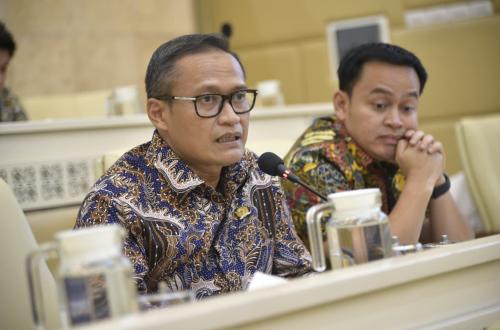
According to Gerindra Party politician Azis Subekti, the existence of non-ASN teachers has so far been the main pillar of education, especially in remote areas and regions that still lack teaching staff. Therefore, he believes that the issue of non-ASN teachers cannot be viewed merely as an administrative civil service matter.
“The problem of non-ASN teachers is not just a matter of bureaucratic status. This is about social justice and how far the state is carrying out the constitutional mandate in the field of education,” said Azis, who is a member of Commission II of the DPR RI from the Gerindra Faction for the Central Java VI electoral district, in his statement in Jakarta on Friday (8/5/2026).
He said that in many areas, schools continue to operate due to the dedication of honorary teachers who have taught for years under constraints, even with incomes far from decent.
“There are teachers who have to teach several classes at once so that the learning process continues. There are also those who are willing to travel on damaged roads and spend their own money to ensure children can still go to school,” he stated.
Azis assessed that Circular Letter of the Minister of Education, Culture, Research, and Technology Number 7 of 2026, which provides space for non-ASN teachers to continue teaching until 31 December 2026, can indeed be a temporary solution. However, he reminded that the policy should not stop as an administrative deadline without concrete resolution.
“If 2026 is only used as an administrative time limit without a fair and humane resolution design, then the state is actually only postponing a larger problem in the future,” he emphasised.
He also highlighted the issue of exclusion errors in the education data system, particularly the Basic Education Data (Dapodik). According to him, there are still many teachers who are actively teaching but not included in the reorganisation scheme due to administrative obstacles and data synchronisation issues.
“They are present every day in the classroom, known to the school and the community, but as if they do not exist in the system just because of technical administrative issues,” he said.
Azis stressed that the state must not rely too much on administrative data without opening up space for factual verification in the field.