
Fatal Tesla Incidents Involving Sudden Stops on Motorways Bring Autopilot Technology Under Scrutiny
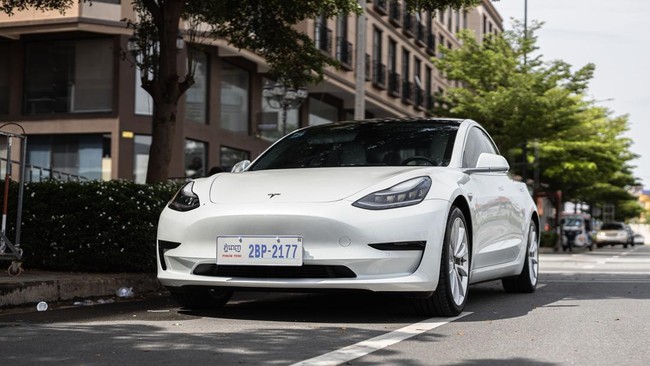
A series of fatal accidents involving Tesla vehicles has once again come under scrutiny. According to an investigation by the website Electrek, indications suggest that Tesla’s Level 2 driver-assistance system was active within 30 seconds before the vehicles were involved in accidents.
Two accidents occurred under similar circumstances. A Tesla suddenly stopped in the middle of a busy motorway and was subsequently struck by another vehicle, resulting in the driver’s death, according to reports cited from TechRadar on Thursday (3/9/2026).
The first accident occurred at approximately 03:00 on 31 October 2025 in Mesa, Arizona. A Tesla sedan came to a halt in the middle of the motorway before being struck by a Ford F-350 pickup truck.
The second case occurred at approximately 21:25 on 6 October 2025 in Seminole County, Florida. A 2020 Tesla Model 3 stopped in the middle lane heading eastbound on Interstate 4 (I-4). The vehicle was then clipped by a semi-truck, pushed, and subsequently collided with another truck.
According to Electrek, previously released accident reports did not reveal the cause of why both Teslas stopped so abruptly. However, matching these with edited Tesla accident reports shows that automated driving technology was active during both incidents.
Under the Standing General Order regulations, car manufacturers are required to report accidents when Level 2 driver-assistance systems are active within 30 seconds before an impact. Tesla is also obligated to comply with these rules.
In the Florida accident report obtained by Electrek, the status of automated driving technology involvement was recorded as “Verified Engaged”. The report also noted that the vehicle was in a stopped state at 0 miles per hour before the accident.
However, Tesla withheld several key pieces of information in the report, citing ‘confidential business information’. The redacted sections include the chronology of the accident, the software version, and information regarding whether the road was within the system’s approved operational area.
Due to this redaction, it remains uncertain whether the vehicles were using Autopilot or the more advanced Full Self-Driving (FSD) technology. The exact cause of the vehicles suddenly stopping in the middle of the road also remains unknown.
The Electrek report does not directly blame Tesla’s automated driving system. However, one possibility highlighted is the phenomenon of ‘phantom braking’, where the system brakes suddenly due to detecting an obstacle that does not actually exist.
Other possibilities remain open. The driver could have experienced a medical condition or fallen asleep, leading the driver-assistance system to subsequently bring the vehicle to a halt.
Currently, Tesla is also facing an investigation by the National Highway Traffic Safety Administration (NHTSA) regarding how the company reports accidents involving Level 2 driver-assistance systems.
This series of cases has also raised further questions regarding driver trust in driver-assistance technology. Level 2 systems essentially still require human supervision and cannot yet handle all road conditions independently.
Consequently, although Tesla’s technology is becoming increasingly sophisticated, automated driving systems are not yet fully capable of replacing the driver. Drivers must remain prepared to take control whenever the system encounters a situation it cannot manage.