
Farmers' Organisations Spotlight Government Plan for Mandatory Palm Oil Exports Via State-Owned Enterprises
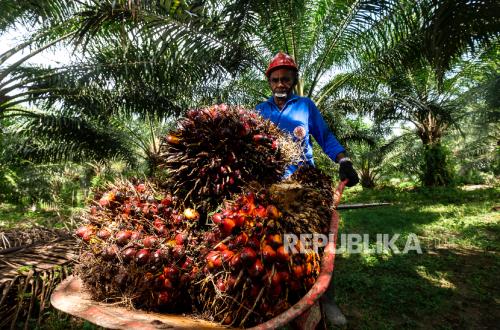
Jakarta — The Indonesian Palm Oil Farmers Organisations Association (POPSI) has voiced serious concerns over the draft Government Regulation on the Governance of Exports of Strategic Natural Resource Commodities through State-Owned Enterprises (SOEs). It would place palm oil as a commodity that can only be exported via an SOE.
The information was conveyed by the President of the Republic of Indonesia in the Macro Economic Outline presentation at the Nusantara Building, DPR RI, Senayan, Central Jakarta, on Wednesday, 20 May 2026.
POPSI assessed that the policy draft could fundamentally alter the national palm oil trade structure and open up substantial room for monopolisation of trade and control of the export chain by groups close to power.
“We question why a policy of this magnitude is discussed without involving palm oil farmers. Palm oil is not just about exports; it affects the livelihoods of millions of farming families and regional economies across Indonesia,” said POPSI Chairman Mansuetus Darto in a press statement in Jakarta, on Wednesday.
Earlier, President Prabowo Subianto announced that the government would require exports of natural resource commodities (including palm oil) to be conducted through government-designated state-owned enterprises as sole exporters. Prabowo said the move was part of the government’s effort to strengthen the governance of SDA exports while preventing leakage of state revenue.
Mansuetus regrets that strategic policy discussions were conducted without adequate involvement of palm oil farmers, farmer cooperatives, farmer organisations, or business actors. After all, they have long been the backbone of the national palm oil industry.
He also warned the government not to repeat historical mistakes in commodity trade governance. Specifically, according to Mansuetus, the experience of forming the Clove Buffering and Marketing Agency (BPPC) at the end of President Suharto’s era.
In that period, the clove trade was centralised and controlled by groups close to power. As a result, farmers lost the freedom to sell their harvests, prices fell at the farm gate, rent-seeking practices grew, and the national clove industry suffered long-lasting damage. “The state must not repeat the same mistakes with palm oil,” said Mansuetus.
Source: jawawa.id (https://jawawa.id/newsitem/farmers-organisations-spotlight-government-plan-for-mandatory-palm-oil-exports-via-state-owned-enterprises-1779545546)
Originally published by Republika (https://ekonomi.republika.co.id/berita/tfc6x3484/organisasi-petani-soroti-rencana-pemerintah-ekspor-sawit-wajib-lewat-bumn), translated from Indonesian