
Farmers in West Java Brace for the Dry Season
Entering the dry season this year, challenges in agriculture are expected to intensify with increasing risks of extreme weather and the possibility of prolonged drought in several parts of Indonesia. This situation not only affects agricultural productivity but also could impact food supply stability for communities if not anticipated early.
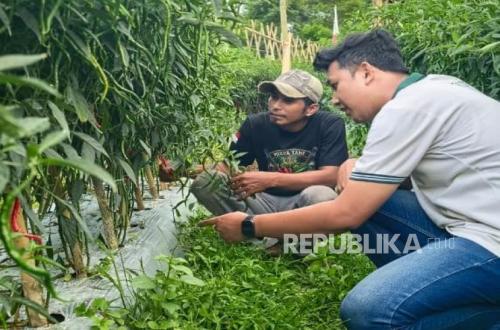
As part of efforts to strengthen climate resilience based on education and on-site adaptation, hundreds of farmers in Sukabumi, West Java today joined a field meeting at a horticultural production centre for curly chilli. The event served as a space for sharing knowledge on cultivation strategies to face summer, agricultural risk management and the use of varieties more adaptive to climate pressure and disease attacks.
During the activity, farmers received education on the importance of changing cultivation patterns amid a climate that is increasingly difficult to predict. From water management, efficient fertilisation, timing of planting, to using varieties that suit dry-season conditions were discussed directly in the field.
One innovation introduced at the field meeting is the use of TANGGUH 77 F1 curly chilli seeds, a hybrid variety designed to be adaptive to hot weather. This variety has resistance to several major threats that often reduce chilli production in the dry season, such as Gemini virus (GV), bacterial wilt, and stem end rot.
In addition, the plant tolerates low to mid elevations well. TANGGUH 77 F1 also has high yield potential up to 21 tonnes per hectare with a relatively short harvesting period, around 73–75 days after planting. Such characteristics are considered important in helping farmers maintain productivity amid rising climate pressures.
Adom, a chilli farmer from Tugu Village, Kebandungan District, Sukabumi, said the main challenge that farmers face during the summer is the increasing risk of virus attacks on chilli plants. Accordingly, selecting a suitable variety becomes a key step to keeping plant growth optimal. “Its virus resistance is indeed extraordinary. Safe and virus-free. The fruits are also good. A healthy-looking plant condition gives farmers peace of mind while going through the planting season amid unpredictable weather,” he said.
General Manager Commercial PT East West Seed Indonesia (EWINDO), Budi Hariyono, explained that farmers are the main actors in the food system because they face the climate and production risks in every planting season. On the other hand, the private sector plays a role in delivering innovation, research, and access to technology that can help farmers adapt. The government also has an important role through policy, coaching, agricultural infrastructure development, and the provision of climate and food information systems that support decision-making at the farmer level.