
Farmers Facing Harvest Failure Can Claim Rp 6 Million per Hectare Insurance, Here's How
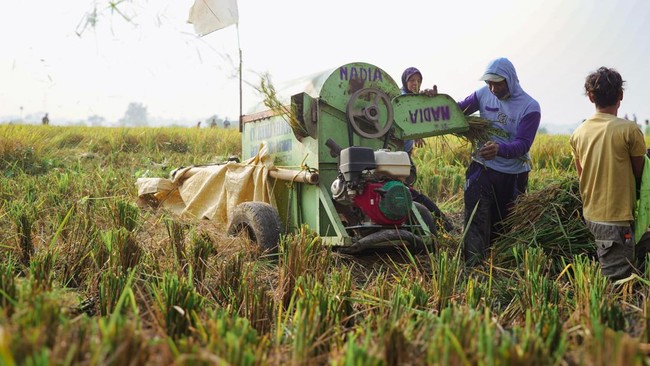
The Ministry of Agriculture is encouraging farmers to insure their farmland as a measure to address the potential impacts of El Niño. Through the Rice Farming Insurance (AUTP) programme, farmers only need to pay a premium of around Rp 36,000 per hectare per season, as the majority of the premium is subsidised by the government.
Ministry Secretary General Suwandi stated that insurance is part of the government’s mitigation strategy to minimise farmers’ losses in the event of harvest failure or crop damage due to drought. “We have insurance. So, if mitigation to minimise the impact of risk includes insurance, and the Minister of Agriculture’s directive is to provide free seed assistance for those affected by crop failure,” Suwandi said when met at the parliament complex in Jakarta on Wednesday.
He explained that farmers participating in the programme can file a claim if their land experiences crop failure, following verification by field officers. “It depends on each farmer who submits a proposal to the insurance provider. The farmer registers and pays the premium. The premium is 80% subsidised by the government, with the farmer paying only 20%. If there is a crop failure, they can claim around Rp 6 million per hectare. They just need to report it, and the field officer will verify whether it is truly a crop failure,” he clarified.
According to Suwandi, the premium paid by farmers is relatively small compared to the protection benefits received. “The premium is around Rp 36,000 per hectare, for one planting season, roughly four months. But if there is a crop failure, they can claim Rp 6 million,” he said.
Beyond the insurance programme, the Ministry also confirmed that farmers not yet enrolled in AUTP will still receive assistance if affected by harvest failure. “But outside of that, those without insurance will receive free seed assistance directly from the Minister,” he stated.
Suwandi also urged farmers to prepare for the dry season by implementing various anticipatory measures to minimise the risk of crop failure. “We ask farmers to be ready and alert, to anticipate by using farming techniques with water-efficient irrigation, simple methods. Then use drought-resistant seeds that have been recommended, and monitor and maintain the crops. Field officers are moving on the ground to oversee this, there is what we call a drought brigade,” Suwandi concluded.