
Farmers Convert Water Pumps to LPG, Slash Fuel Costs by Over 80%
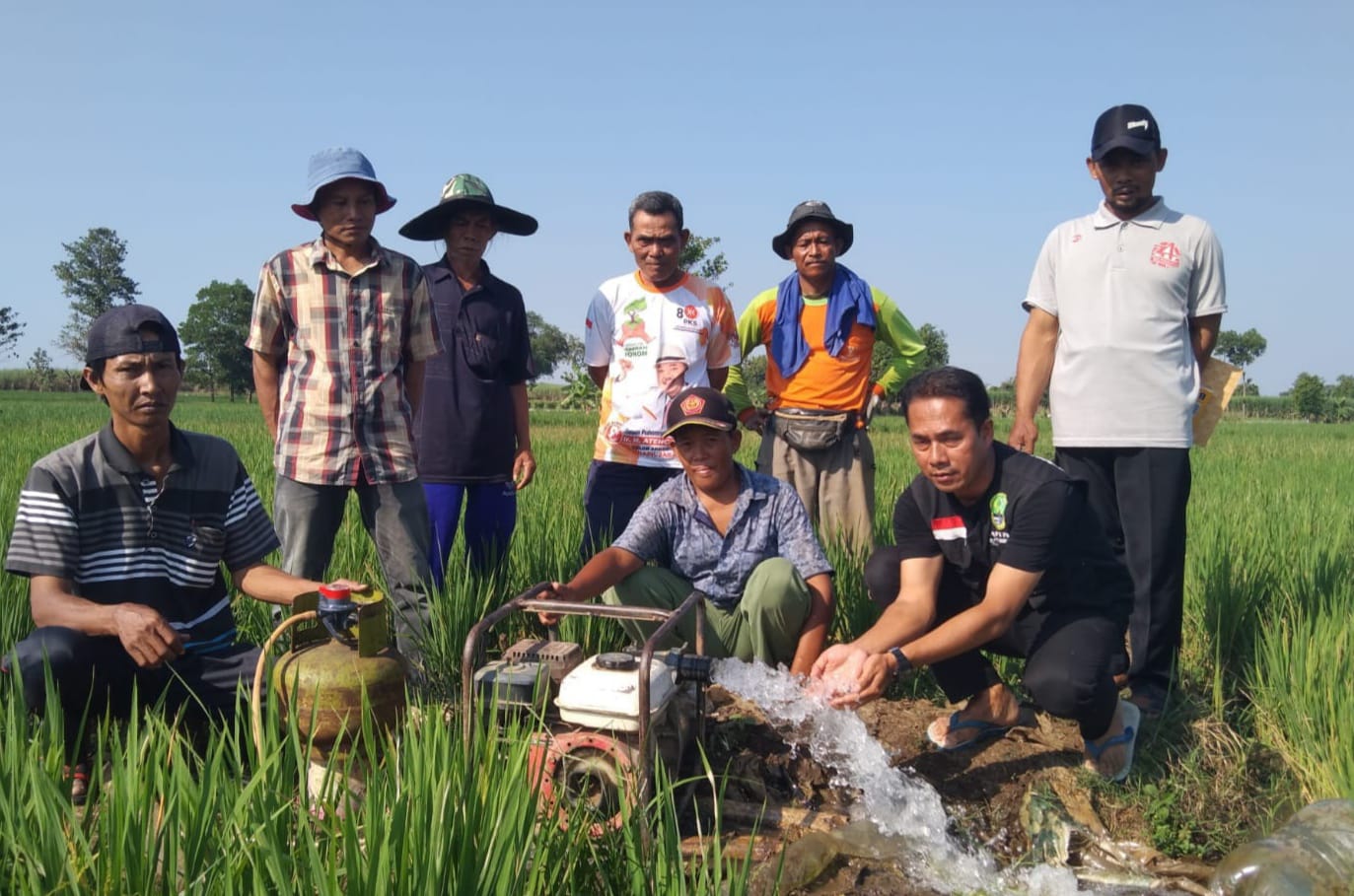
Farmers are converting the fuel source for their water pumps from petrol to 3 kg LPG canisters, achieving savings of more than 80 per cent on fuel purchases.
Based on information gathered, the threat of crop failure looms over farmers this dry season. One of those affected is Engkus Kusnadi, a farmer in Kertajati District, Majalengka Regency. “Water in the irrigation channels is still there, but it is no longer flowing into the rice fields because the discharge is too small,” Engkus said on Tuesday (28/7).
Consequently, farmers have started using water pump engines to move water from the irrigation channels to the fields. However, operating a water pump requires significant additional costs. “The additional cost is for buying fuel, namely Pertalite,” Engkus explained.
A 3-inch diameter water pump used to irrigate rice fields consumes about 1.1 litres of Pertalite per hour. If operated for 24 hours, the fuel requirement reaches 26.4 litres at a cost of around Rp264,000 per day. “That is not a small amount of money. Especially if it gets very dry, the water pump will be used more often,” he said.
To save on fuel costs, farmers are now modifying water pump engines to use 3 kg LPG canisters. One canister, often called a ‘melon’ gas canister, can be used for up to 18 hours, meaning only 1.5 canisters are needed for a full day’s operation. “The total cost incurred is only around Rp33,000 per day,” Engkus stated.
This results in operational savings of Rp231,000 each day, or about 87.5 per cent compared to using Pertalite. Engkus noted that these savings greatly assist farmers who must incur extra costs to maintain water availability in their fields. “If we were still using Pertalite, the daily operational cost for the pump could reach around Rp264,000. After switching to 3 kg LPG, the cost dropped to about Rp33,000 per day. The difference is huge and truly eases the burden on farmers in the middle of a dry season like this,” he said.
According to him, this cost efficiency allows farmers to continuously operate water pumps so that rice plants do not suffer from drought, which could potentially lead to crop failure. The money saved can be used for other needs such as fertiliser or plant care against pest attacks. “Our hope is that the government will also continue to maintain the availability of LPG so that farmers do not have difficulty obtaining supplies during the dry season,” Engkus hoped.
The Head of the Food Security, Agriculture, and Fisheries Office (DKP4) of Majalengka Regency, Gatot Sulaeman, explained that the local government is continuously monitoring areas affected by drought. “Kertajati District is one of the most affected areas, with rice plants covering approximately 5,258 hectares at 45–75 days after planting,” Gatot said. The total area of rice plants in Majalengka Regency reaches 39,550.94 hectares this planting season.
Gatot explained that the shrinking irrigation water supply demands quick and efficient action. “We continue to strive so that farmers can maintain their planting productivity,” he stated. Gatot also urged farmers to keep coordinating with agricultural extension officers in their respective areas, utilise available water sources in turns, and implement efficient irrigation patterns to reduce the risk of crop failure due to drought.
Source: jawawa.id (https://jawawa.id/newsitem/farmers-convert-water-pumps-to-lpg-slash-fuel-costs-by-over-80-1785235892)
Originally published by Media Indonesia (https://mediaindonesia.com/jabar/berita/915608/hemat-bahan-bakar-untuk-mesin-pompa-air-petani-gunakan-lpg-tabung-melon), translated from Indonesian