
Farmer Regeneration in Indonesia Deemed Too Slow
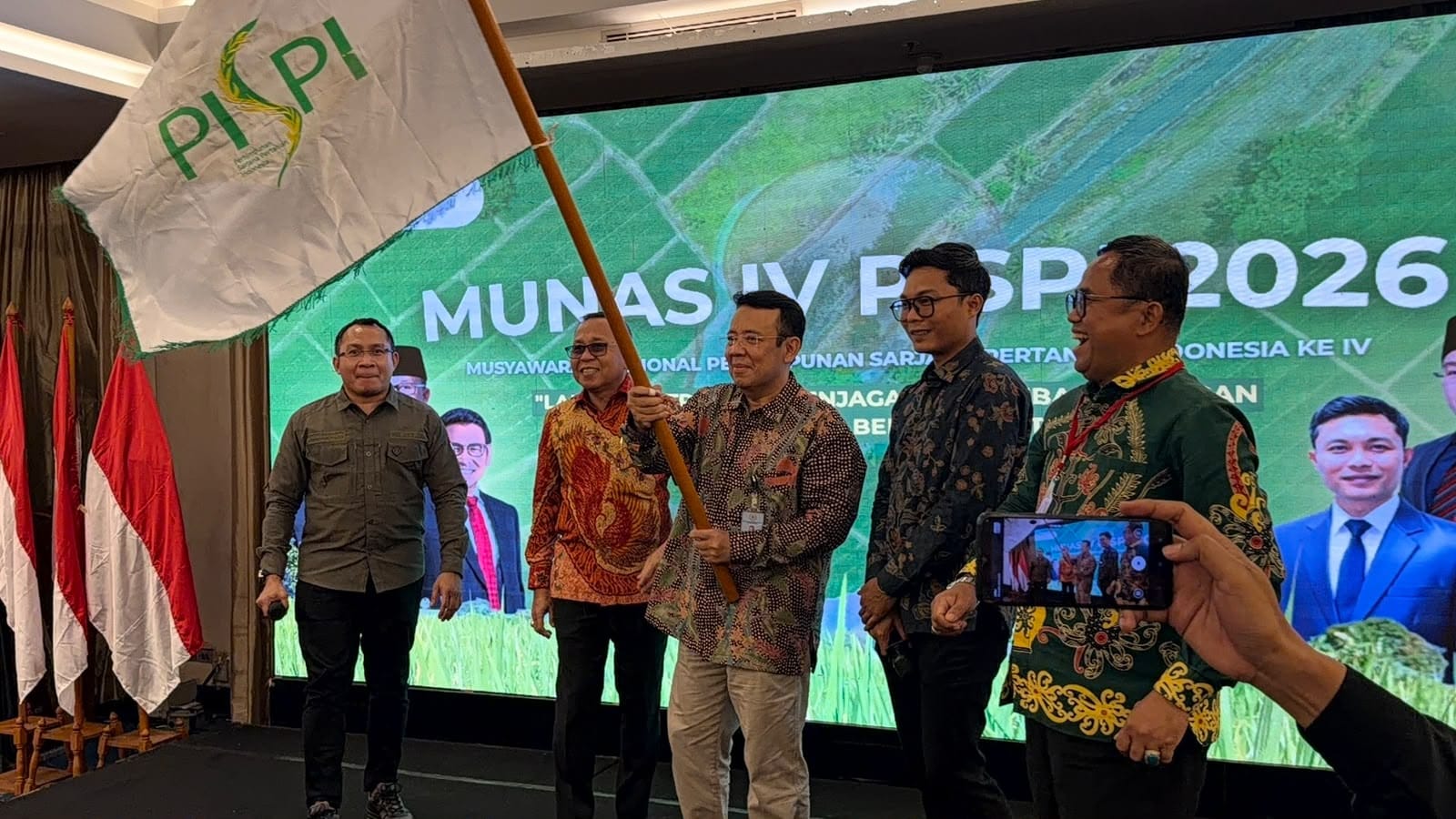
The Indonesian Association of Agricultural Scholars (PISPI) has assessed that Indonesian agriculture is currently and will in the future be faced with the immediate need to resolve the problem of poor farmer regeneration. While current rice production achievements are in line with the President’s ‘Asta Cita’ expectations, the issue is not only about increasing production but also ensuring a new generation is available to manage the agricultural sector in the next two decades. The phenomenon of young people choosing to leave city jobs to enter the agricultural sector is a positive sign, with technological support, mechanisation, and digital marketing beginning to develop farming as a business sector with economic opportunities. However, this change is not yet sufficient to answer the regeneration problem, as access to land, capital, technology, and markets remain challenges for young people wanting to enter the sector.
Professor Achmad Tjachja Nugraha of the Agribusiness Study Programme at UIN Syarif Hidayatullah Jakarta stated that the generation of farmers is not merely a question of who will work in the fields, but concerns the future of Indonesia’s food security. ‘If we do not prepare the younger generation to enter the agricultural sector today, then in 20 years we will face a much bigger problem,’ he said. As Chairman of BPP PISPI, Achmad assessed that the government and stakeholders need to create an ecosystem that makes the agricultural sector attractive to the youth, who require clear economic prospects to consider farming as both a profession and a business. He noted that without access to land, capital, technology, and market economic prospects, their spirit will be difficult to develop into a sustainable agricultural enterprise.
Achmad argued that agriculture must be developed with an agripreneurship approach, where the young generation needs to understand business management, financing, marketing, and processing of agricultural products to gain added value. Education is a crucial factor, with universities playing a role in linking agricultural knowledge with entrepreneurial and technological skills, although the declining interest in agricultural education is a significant burden. He emphasised that government support for strengthening agricultural infrastructure for the education sector is non-negotiable, including creating a linked agribusiness ecosystem. Technological developments, such as mechanisation and digital marketing, can attract young people, but it is essential to ensure a market ecosystem exists so young farmers know to whom they will sell, the added value they can obtain, and how to have a bargaining position. Ultimately, the issue of farmer regeneration is directly linked to food security, requiring not just land and technology but human resources capable of managing the entire food production chain, making it a part of the national food security strategy.