
Farmer Corporations Penetrate Export Markets and Strengthen Local Food Security
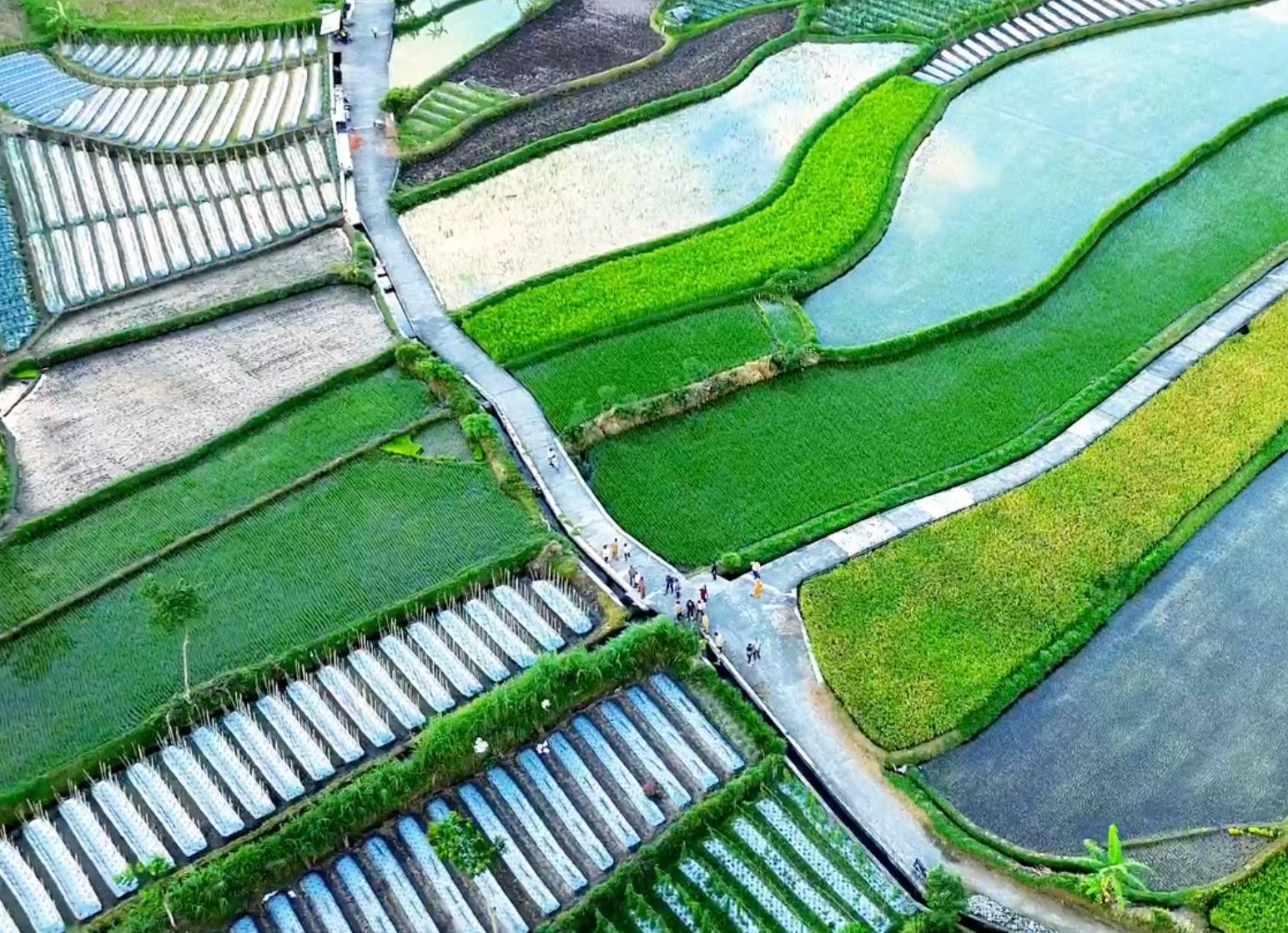
The programme for the development of integrated farming systems in upland areas, known as The Development of Integrated Farming System in Upland Areas (UPLAND), is officially entering its exit strategy phase in 2026. This strategic project, initiated by the Ministry of Agriculture, has successfully transformed subsistence farmers into 46 independent corporate entities that have successfully penetrated both export and domestic markets.
Funded by the Islamic Development Bank (IsDB) and the International Fund for Agricultural Development (IFAD), the UPLAND programme has completed interventions across 14 regencies, covering a total development area of 14,216 hectares.
The Director General of Agricultural Land and Irrigation (LIP) at the Ministry of Agriculture, Hermanto, explained that the greatest achievement of this project is not merely physical development, but the institutional transformation of farmers in regions that previously faced logistical constraints.
“We have laid a vital infrastructure foundation for productivity, including irrigation, dryland piping, the construction of small dams, and farm roads as the arteries for agricultural distribution. The greatest success lies in the institutional transformation of the farmers,” Hermost stated in a press release in Jakarta on Thursday (25/6/2026).
Ministry of Agriculture data shows a significant surge in trade volume for selected supported farmer corporations on the international stage. In Magelang Regency, supported farmer groups managed to drastically increase coffee exports to Dubai from 18 tonnes to 80 tonnes this year. Similar achievements were recorded by corporations in Purbalingga, which shipped 300 tonnes of pepper, and farmers in Subang, who successfully exported 3 tonnes of premium mangosteen to the Chinese market.
In the domestic market, organic rice from Magelang has successfully entered modern retail markets and become a regular supplier for the KFC fast-food chain in the region. In Tasikmalaya, farmer corporations have even established strategic partnerships with the regency government to supply organic rice requirements for Civil Servants (PNS).
“The achievements of these corporations, which have successfully penetrated international and local markets, serve as an important milestone. They act as models for other corporations in terms of professional management and compliance with quality standards,” added Hermanto.
The implementation of the UPLAND programme is part of the manifestation of instructions from the President of Indonesia, Prabowo Subianto, regarding the acceleration of national food self-sufficiency. In line with this, Minister of Agriculture Amran Sulaiman ensured that policy focus is directed towards value chain efficiency through mechanisation. As a result, planting intensity in intervention areas such as Magelang has surged to 5 harvests within a two-year period.
As the funding phase approaches its conclusion in 2026, the Ministry of Agriculture is now shifting its focus towards managerial assistance. Hermanto emphasised that both central and regional governments are committed to ensuring farmers are not left behind.
“The existing infrastructure will be maintained as a productive asset, and we are currently integrating these corporations with the banking ecosystem and private partnerships to ensure that access to capital and markets remains sustained,” concluded Hermanto.
Source: jawawa.id (https://jawawa.id/newsitem/farmer-corporations-penetrate-export-markets-and-strengthen-local-food-security-1782384636)
Originally published by Media Indonesia (https://mediaindonesia.com/ekonomi/904273/korporasi-petani-tembus-pasar-ekspor-dan-perkuat-ketahanan-pangan-lokal), translated from Indonesian