
Farm-gate Chilli Prices Fall, So Why Are They Still High in Markets?
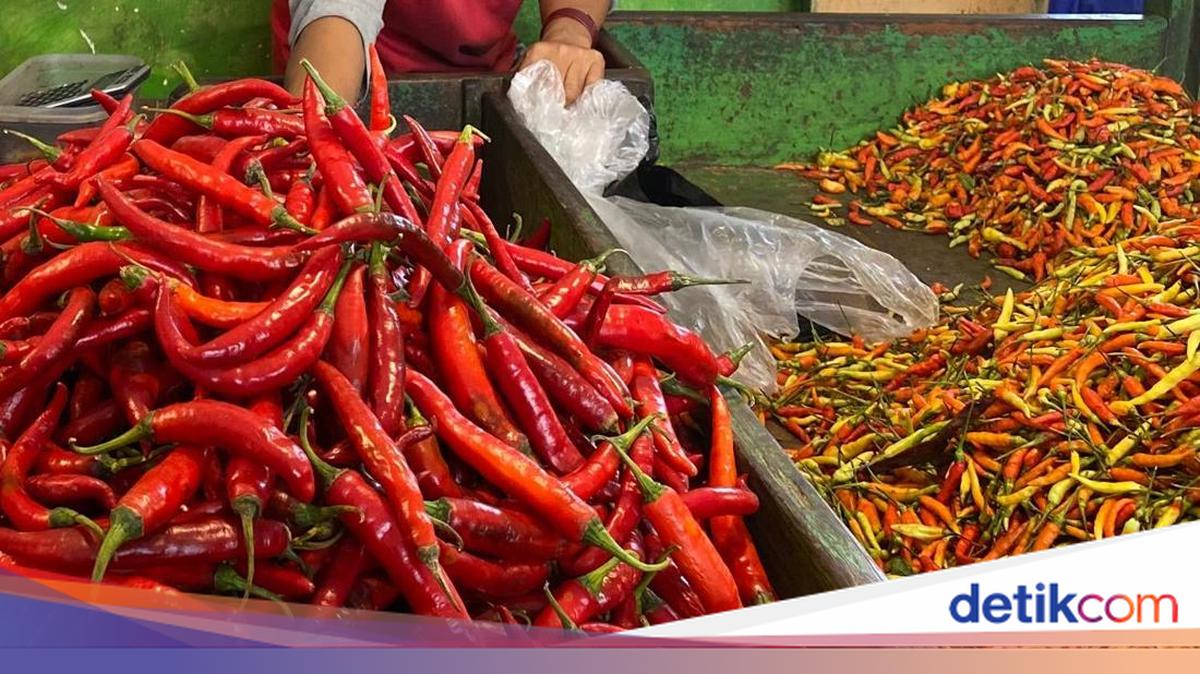
Chilli prices in markets remain high. Red bird’s-eye chillies are selling for as much as Rp 102,950 per kilogram, even though prices at farm level have begun to fall.
Tunov Mondro Atmodjo, an adviser to the Indonesian Chilli Champions Association (ACCI), said farm-gate prices had declined over the past two weeks from around Rp 60,000 per kg to between Rp 42,000 and Rp 50,000 per kg.
Extreme weather continues to pose a challenge to chilli production. Drought has prevented plants from producing at their full capacity.
“Extreme weather has a significant impact on chilli production; drought causes chilli plants to stop producing,” Tunov told detikcom on Sunday (25 October 2026).
He said that under these conditions, the harvest could reach only around 50 per cent of potential production. He added that this was still a good result given the unfavourable weather.
Tunov expects chilli prices will not fall significantly in the near future because production remains below capacity. Nevertheless, he said supplies in the market remained safe and sufficient.
“I think that even if prices fall, they will not fall much because the plants are not producing at full capacity. In this weather, harvesting even 50 per cent is already a good result,” he added.
He also highlighted the supply chain’s contribution to chilli prices. According to Tunov, in many places chillies still move through an old-style distribution system, passing through several intermediaries before reaching consumers.
“The supply chain for chillies in particular still follows the old pattern, requiring several intermediaries before the produce reaches consumers. However, in a number of production centres, farmer groups are increasingly supplying markets directly, and there is also cooperation between regions,” he said.
Tunov said the association had stepped up affordable-price market activities in several provinces, including Jakarta. The initiative involves various institutions, including the Ministry of Agriculture, the Ministry of Home Affairs, Bank Indonesia and regional governments.
Looking ahead to Christmas and New Year 2026/2027, Tunov said chilli prices were likely to remain stable if the weather gradually improved.
“I think prices will tend to remain stable through the Christmas and New Year period if the weather is favourable. They will not collapse, but nor will they be excessively high; they will remain at a safe level,” he added.
Measures to prevent a price surge ahead of Christmas and New Year
National Food Agency (Bapanas) Chief Secretary Ito Hediarto said the national chilli supply would be sufficient ahead of Christmas and New Year. He said distribution needed to be maintained, particularly shipments by sea.
“As for chillies, supplies are sufficient; we just need to keep an eye on distribution,” Ito said in a statement.
Ito explained that shipments to areas reached by sea were often delayed in transit. This can reduce supplies in destination areas and ultimately push prices up.
To keep prices in check, Bapanas monitors developments at its inflation meetings held every Monday. Ito said chillies and rice were two commodities that typically become more expensive towards the end of the year.
To address distribution problems, Bapanas provides Food Distribution Facilities (FDP). The programme helps move supplies from surplus areas to areas in need, reducing distribution costs and helping chillies reach consumers at more affordable prices.
Around 69.5 per cent of the FDP budget has been spent. This leaves approximately 30.5 per cent available for areas experiencing extreme price increases.
Ito also assured the public that rice would be available throughout the Christmas and New Year period. Bapanas has coordinated with state-owned Perum Bulog to ensure that rice under the Food Supply and Price Stabilisation (SPHP) programme, as well as food assistance, is available every month.
“God willing, the public need not worry: rice will be available every month, including in December,” Ito added.
Previously, data from the National Strategic Food Price Information Centre (PIHPS), managed by Bank Indonesia, showed that red bird’s-eye chilli prices had fallen by 0.82 per cent. However, they remained at Rp 102,950 per kg.
Curly red chillies also fell by 1.6 per cent to Rp 86,100 per kg, while green bird’s-eye chillies stood at Rp 79,400 per kg, down 0.44 per cent. By contrast, large red chillies rose by 0.47 per cent to Rp 75,600 per kg.