
Farewell Zhu Rongji, the Architect of Modern China
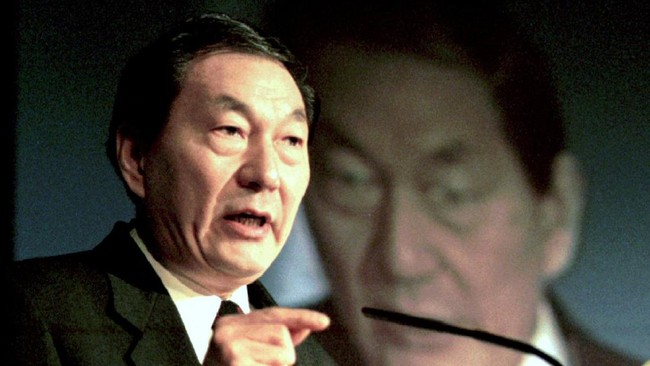
The death of Zhu Rongji at the age of 97 on 12 August 2026 marked the end of an era of great technocrats who once shaped the foundation of China’s economic rise. The world knows Deng Xiaoping as the father of reform and opening up. However, if Deng designed China’s new direction, it was Zhu who translated that vision into institutions, policies, and governance capable of transforming the Bamboo Curtain country into a global economic power.
Zhu’s greatest legacy was not only impressive economic growth, but the building of state capacity. When the bureaucracy was still fragmented, inflation repeatedly disrupted national stability, state-owned enterprises burdened the state budget, and the financial system was still very fragile, Zhu chose the path of institutional reform, not political mobilisation. Many of the foundations that underpin China’s economic strength today, from the modern taxation system and banking reform to integration into the global economy, were born from policies he designed.
Nevertheless, Zhu’s legacy has gradually sunk beneath the dominance of the Xi Jinping era narrative. China’s development priorities now place greater emphasis on national security, technological self-reliance, and an increasingly strong state role in the economy. Zhu came from a different generation. Zhu believed that state power is actually built through efficient institutions, competitive markets, fiscal discipline, and openness to the world economy.
Therefore, remembering Zhu Rongji is not enough merely by reviewing his life journey. His political and economic record is the clearest mirror of how China changed from a poor country constrained by a planned economic system into the world’s second-largest economy. Understanding the rise of modern China means understanding the figure who built its driving engine.
Unlike many Chinese Communist Party leaders who gained legitimacy from revolutionary struggle, Zhu Rongji came from the technocratic class. The Tsinghua University electrical engineering graduate joined the government after the founding of the People’s Republic of China in 1949 with the belief that economic development must be managed scientifically, not merely driven by ideology.
However, the beginning of his career was marked by the political turmoil of the Mao Zedong era. In 1958, after criticising the radical economic approach in the early implementation of the Great Leap Forward, Zhu was labelled a ‘rightist’ in the Anti-Rightist Campaign. He was removed from the bureaucracy and endured years of political marginalisation. That experience shaped his view of government. Zhu remained loyal to the Communist Party, but became increasingly convinced that political dogma must not override economic rationality. For him, government legitimacy is born from performance, administrative discipline, and the ability to create prosperity.
A second chance came after Deng Xiaoping launched the reform and opening-up policy in 1978. Zhu’s reputation as a clean, intelligent, and firm official made him quickly stand out among reformists. His career developed not because of political patronage, but because of his ability to solve complex economic problems.
His name became widely known when he served as Deputy Mayor, then Mayor of Shanghai in 1988. At that time Shanghai was still China’s largest industrial centre, but faced a sluggish bureaucracy, lagging infrastructure, inefficient state enterprises, and inflationary pressure. Zhu improved the city administration with an engineer’s approach, namely tightening fiscal discipline, improving bureaucratic governance, accelerating infrastructure development, and opening greater space for foreign investment without losing state control.
His greatest momentum came after the Tiananmen political crisis in 1989. When economic reform slowed and foreign investor confidence declined, Deng Xiaoping needed a technocrat capable of restoring the economy without shaking political stability. Zhu became one of the trusted figures because he was respected by both reformist groups and conservative circles within the party.
In 1991, Zhu was appointed Vice Premier under Li Peng while also leading the People’s Bank of China. This appointment reflected Deng’s great trust in him. China at that time faced high inflation, uncontrolled credit expansion, and weak monetary policy coordination. Zhu responded with aggressive monetary tightening, strengthening the central bank’s authority, limiting credit expansion, and improving financial sector supervision. The policy was unpopular, but succeeded in reducing inflation without triggering a systemic crisis.
The fiscal reform he led in 1994 was even more decisive. Previously, most tax revenue was controlled by local governments so the central government lost the capacity to finance the national agenda. Through reform of the tax-sharing system, Zhu restored fiscal balance between the centre and the regions. This policy drastically increased state revenue and became the foundation for financing toll roads, high-speed rail networks, industrial modernisation, and poverty alleviation programmes in the following decades.
When appointed Prime Minister in 1998 alongside President Jiang Zemin, Zhu Rongji faced far heavier challenges. The Asian Financial Crisis shook the region, state-owned enterprises continued to lose money, banking was burdened with large amounts of non-performing loans, while China was still outside the World Trade Organisation (WTO). Many urged that reform be slowed to avoid social upheaval. Zhu instead took the opposite path. State-owned enterprise reform became his policy.
Source: jawawa.id (https://jawawa.id/newsitem/farewell-zhu-rongji-the-architect-of-modern-china-1787223196)
Originally published by CNBC Indonesia (https://www.cnbcindonesia.com/opini/20260820172337-14-761069/selamat-jalan-zhu-rongji-sang-arsitek-china-modern), translated from Indonesian