
Farabi El Fouz: West Java's High Layoff Rate Requires Concrete Action
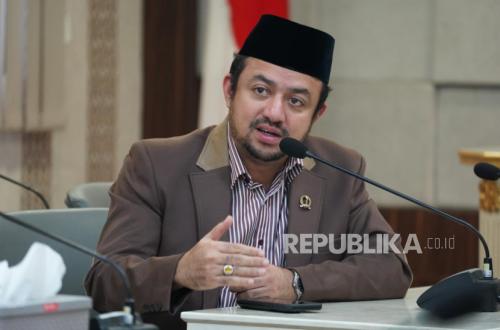
REPUBLIKA.CO.ID, BANDUNG – Farabi El Fouz, a member of Commission V of the West Java (Jabar) Regional House of Representatives (DPRD), believes the high number of lay-offs (PHK) in West Java must be addressed with concrete and collaborative steps so that their impact on the economy and public welfare does not spread further.
According to data from the Ministry of Manpower (Kemnaker), West Java recorded the highest number of lay-offs in Indonesia between January and June 2026. As many as 6,727 workers in West Java lost their jobs, or around 20.77 per cent of the total 32,389 workers affected by redundancies nationally.
According to Farabi, these figures warrant collective attention given that West Java is one of Indonesia’s largest manufacturing hubs, employing millions of workers. Anticipatory measures are therefore needed to prevent the wave of lay-offs from continuing.
“The high number of lay-offs must be a serious concern for all parties. The regional government, central government, businesses, and trade unions need to sit down together to find solutions so that the business world can survive whilst workers’ rights remain protected,” Farabi told Republika on Monday (20/7/2026).
Farabi urged the West Java Provincial Government to strengthen coordination with regency and city administrations to map out the industrial sectors under pressure. Such mapping would allow policies to be better targeted, both in preventing lay-offs and in assisting workers who have already lost their jobs.
In addition, Farabi called for stronger vocational training, reskilling, and upskilling programmes tailored to current industry needs. In his view, improving competencies is one of the key measures to give laid-off workers a better chance of returning to employment or starting their own businesses.
“Workers affected by lay-offs must not be left unemployed for long. The government must accelerate training programmes and widen access to job placement services so they can quickly find new opportunities,” he said.
Farabi also expressed hope that investment entering West Java would have a direct impact on job creation for local communities. He argued that a conducive investment climate must be maintained so businesses can grow and absorb more labour.
He affirmed that the West Java DPRD will continue to exercise its oversight function over manpower policies to ensure the programmes prepared by the government genuinely address the public’s needs.
“The hope is that lay-off figures can be reduced, businesses keep growing, and workers’ welfare in West Java continues to be safeguarded through appropriate and sustainable policies,” Farabi said.