
FAO Commends Indonesian Farmers' Resilience Amid Global Fertiliser Crisis
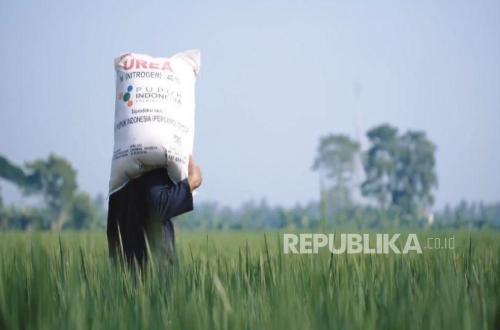
Amid a global fertiliser crisis that is suppressing food production in many countries, the Food and Agriculture Organization of the United Nations (FAO) has noted that Indonesian farmers continue to produce. The FAO has positioned Indonesia as one of the pillars of world rice reserves. This affirmation is contained in the official Food Outlook report, June 2026 edition, released by the FAO in Rome on 17–18 June 2026, which simultaneously places Indonesia as the largest rice producer in Southeast Asia and the fourth largest in the world.
In its analysis, the FAO assesses that stable prices at the producer or farmer level have been the primary incentive encouraging farmers to continue prioritising rice cultivation. The FAO recorded this pattern occurring in Indonesia alongside the Republic of Korea, Pakistan, and the Philippines. Conversely, a number of major Asian producers are projected to experience production declines, including Cambodia, India, Myanmar, Nepal, Sri Lanka, and Thailand.
Based on the FAO report, Indonesia’s rice production is projected to reach 38.5 million tonnes in the 2025/2026 period and 38.6 million tonnes in 2026/2027. Indonesia’s position is only below India (151.9 million tonnes), China (143.2 million tonnes), and Bangladesh (41.5 million tonnes), and far above all other ASEAN countries such as Vietnam (28.3 million tonnes), Thailand (23.3 million tonnes), Myanmar (16.8 million tonnes), and the Philippines (12.1 million tonnes).
“The FAO has once again placed Indonesia as the highest rice-producing country in Southeast Asia and the fourth highest in the world after India, China, and Bangladesh,” said Minister of Agriculture and Head of the National Food Agency, Andi Amran Sulaiman.
Most notably, Indonesia recorded the highest production increase among all the world’s major producers. FAO data shows Indonesia’s rice production is predicted to surge from 34.0 million tonnes (2024/2025) to 38.5 million tonnes (2025/2026), an increase of 4.5 million tonnes. This figure far exceeds the increases of India (+1.7 million tonnes), Bangladesh (+1.1 million tonnes), and China (+1.0 million tonnes). Among the four largest world producers, only China and Indonesia are experiencing positive growth.
In accordance with the report, the FAO also projects Indonesia’s rice ending stocks to rise from an average of 5.6 million tonnes to 7.5 million tonnes (2025/2026) and 7.8 million tonnes (2026/2027). The FAO cites the thickening of Indonesia’s stocks as one of the factors supporting the stability of world rice reserves, which at the end of 2026/2027 are estimated to reach 213.8 million tonnes, the second-highest record in history.
According to the FAO report, the weakening production in several countries is inseparable from two major pressures now looming over the world’s farmers: the El Niño climate anomaly and the global fertiliser crisis.
Since the conflict in the Middle East closed the Strait of Hormuz at the end of February 2026, a route that accommodates up to a third of the world’s fertiliser trade, which was subsequently followed by China’s restriction on nitrogen fertiliser exports, international fertiliser prices have soared sharply. Ship traffic in the Strait of Hormuz was reported to have plummeted by more than 95 percent, and world urea prices surged by 40 to 60 percent in a matter of weeks.
The impact is real on the ground, especially in ASEAN countries dependent on imported fertiliser. In Thailand, many farmers are choosing not to replant because costs are no longer covered by harvest yields.